
Companion Plants
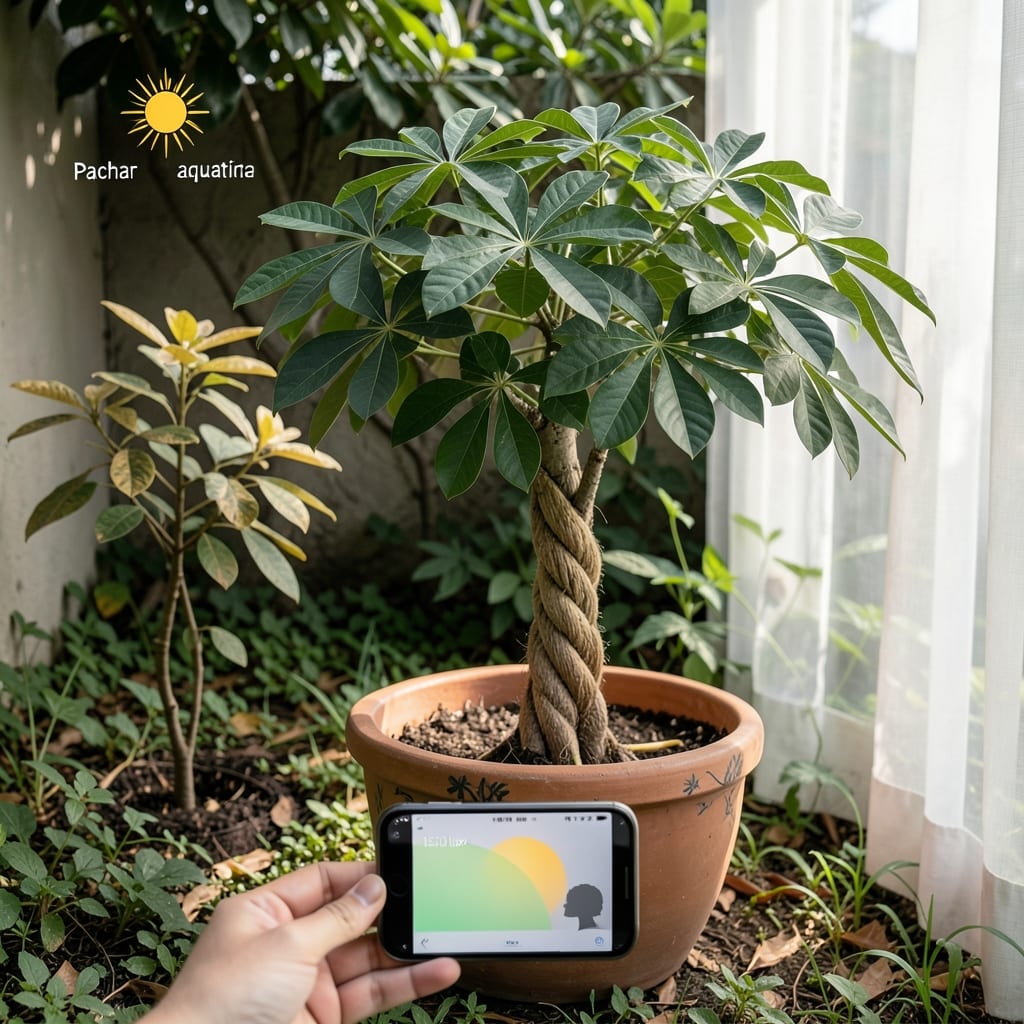
Wondering how much light does a money tree plant need to thrive? If your 🌿 Pachira aquatica is struggling with droopy leaves or sparse growth, light might be the culprit—and fixing it could transform your plant's health overnight.
Money trees love bright, indirect sunlight, but too much direct sun can scorch those glossy leaves while too little leaves them stretching desperately toward any light source. The key is finding that sweet spot where your plant gets enough energy without stress. I'll show you exactly how to spot the signs of poor lighting and adjust your space to keep your money tree happy and growing strong.
From choosing the best window placement to supplementing with artificial light when needed, we'll cover all the basics. You'll learn which rooms in your home provide ideal conditions and how to rotate your plant for even growth. Let's get your money tree back to its vibrant best!
Whether you're dealing with yellowing leaves or just want to prevent future problems, these simple adjustments will make a world of difference. Ready to give your money tree the perfect light setup?


Ideal light requirements for a healthy money tree plant
Your money tree (Pachira aquatica) thrives in bright indirect sunlight, mimicking its natural habitat under tropical forest canopies. This means placing it near a window where sunlight filters through sheer curtains—think east or west-facing windows for gentle morning or afternoon light. Direct midday sun can scorch those delicate leaves, while too little light causes leggy growth and pale foliage.
The perfect light setup delivers 4-6 hours of filtered light daily. In nature, money trees grow under dappled shade, so recreating this environment indoors is key. If your plant starts stretching toward the light, it's begging for more brightness. Conversely, crispy leaf edges signal too much harsh sunlight. Balancing these extremes keeps your money tree lush and healthy.
Here's the light intensity scale for money trees:
| Requirement | Specification |
|---|---|
| Optimal Light | Bright indirect sunlight (4-6 hours) |
| Minimum Tolerance | Low to medium indirect light (2-4 hours) |
| Maximum Tolerance | 2-3 hours of morning/afternoon sun |
| Avoid | Direct midday sun or north-facing windows |
The science behind money trees' light needs lies in their native tropical environment. These plants evolved to grow under taller trees that filter harsh sunlight, preventing leaf burn while still capturing enough energy for photosynthesis. When you provide bright indirect light, you're replicating this natural balance, allowing your money tree to produce the chlorophyll it needs for vibrant growth.
For indoor growers, this often means positioning your plant 2-3 feet from an east or west window. South-facing windows can work but require sheer curtains to diffuse the intensity. If your home lacks natural light, supplement with a grow light placed 12-18 inches above the plant for 6-8 hours daily. LED grow lights with a 5000-6500K color temperature mimic natural sunlight perfectly.
Seasonal adjustments are crucial—summer months demand more frequent monitoring as sunlight intensifies. Move your money tree slightly farther from windows during peak sun hours (10 AM-3 PM) to prevent leaf scorch. In winter, when natural light dims, consider rotating your plant every few weeks to ensure even growth and prevent lopsided development.
Pro tip: Use a light meter (or your phone's light sensor app) to measure light levels. Ideal conditions for money trees fall between 10,000-15,000 lux. If readings drop below 5,000 lux, supplement with artificial lighting immediately. This simple tool removes the guesswork and helps you fine-tune your plant's environment for optimal health.
Remember that money trees are adaptable but not indestructible. While they can tolerate medium indirect light for short periods, prolonged low light leads to weakened growth and increased susceptibility to pests. The goal is to find that sweet spot where your plant receives enough light to thrive without stress—this balance is what transforms a struggling money tree into a stunning, vibrant centerpiece.
When your money tree gets the right light, you'll notice darker green leaves, faster growth, and a thicker, more robust trunk. That's the reward for getting the lighting just right! 🌿
Ideal light requirements for a healthy money tree plant
Your money tree (Pachira aquatica) thrives in bright indirect sunlight, mimicking its natural tropical habitat. Think of it like a sunbather who avoids harsh midday rays but still craves plenty of light. Too little light leads to weak growth, while too much direct sun can scorch those beautiful leaves. The ideal spot balances both—like a cozy reading nook with plenty of natural light but no harsh glare.
For optimal growth, aim for 4-6 hours of filtered light daily. This means placing your plant near an east or west-facing window where morning or afternoon sun gently illuminates the leaves without intense heat. South-facing windows can work too, but only if you use a sheer curtain to diffuse the light. Remember, money trees are adaptable—they can tolerate lower light conditions for short periods, but prolonged dimness will stunt their growth.
| Light Requirement | Specification |
|---|---|
| Ideal Light Type | Bright indirect sunlight |
| Daily Light Hours | 4-6 hours |
| Best Window Placement | 2-3 feet from east/west window |
| Direct Sun Tolerance | Short bursts only (morning/evening) |
| Low Light Adaptability | Survives but grows slowly |
The science behind money trees' light needs comes down to photosynthesis. These plants evolved in tropical rainforests where sunlight filters through dense canopies, creating dappled light conditions. Too little light means they can't produce enough energy, leading to weak stems and sparse leaves. Too much direct sun causes oxidative stress in the leaves, resulting in brown patches or crispy edges. Think of it like Goldilocks—you want the light to be "just right."
If you notice your money tree's leaves developing a pale green or yellowish cast, it's a sign of insufficient light. The plant stretches toward light sources, creating long, leggy stems with sparse foliage—a condition called etiolation. On the flip side, brown or crispy leaf edges indicate too much direct sun. Both issues are fixable with simple adjustments to your plant's location or light exposure. The key is observing your plant's response and making gradual changes.
For indoor growers, grow lights can be a game-changer during winter months when natural light is scarce. A full-spectrum LED grow light placed 12-18 inches above your money tree for 12-14 hours daily can mimic ideal growing conditions. Just be sure to keep the light on a timer to maintain a consistent cycle. This is especially helpful in north-facing rooms or basements where natural light is limited.
Pro tip: Rotate your money tree quarter-turn every 2-3 weeks to ensure even growth. Plants naturally grow toward light sources, so regular rotation prevents lopsided development and helps maintain that balanced, bushy shape we all love. This simple habit can make a dramatic difference in your plant's overall appearance and health over time.