
Light Requirements
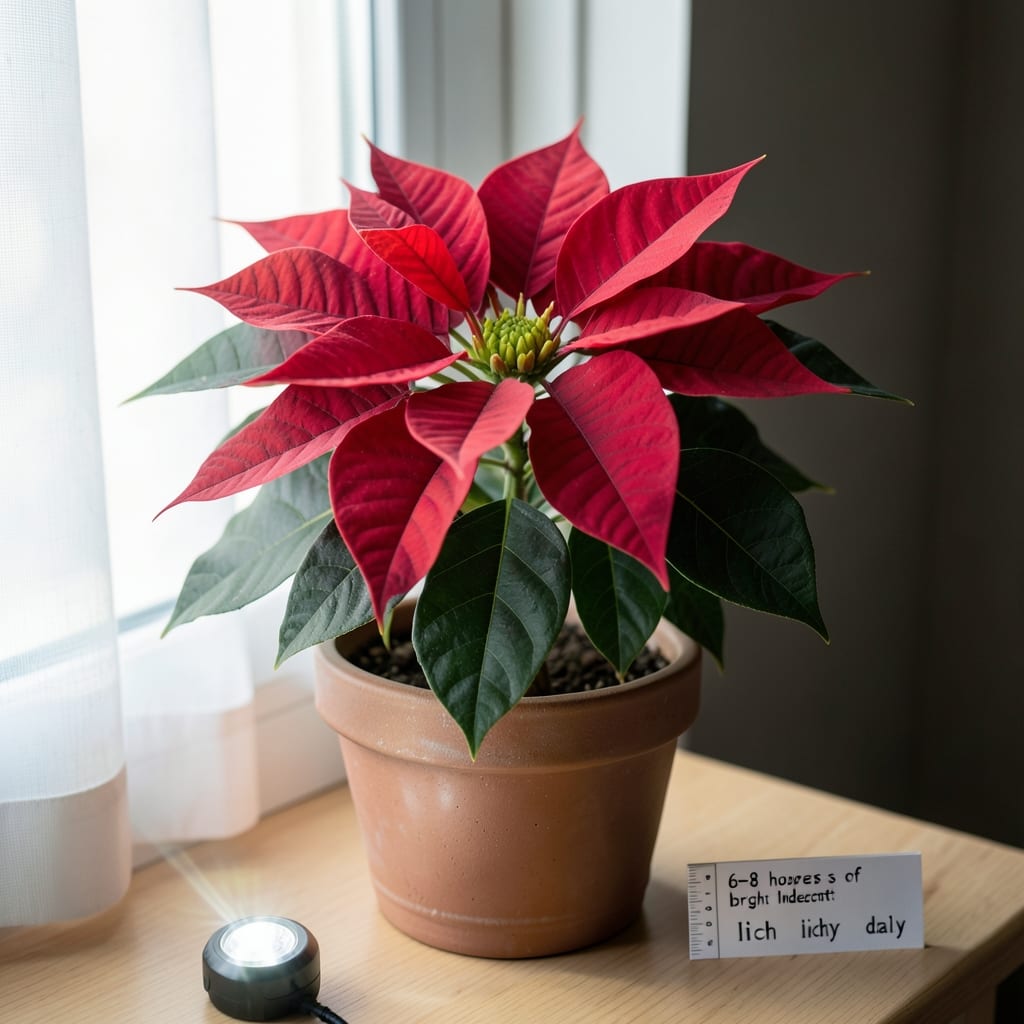
If you’re wondering how much light does a poinsettia plant need, the answer is simpler than you think—those vibrant bracts thrive on bright, indirect light for 6 to 8 hours, but too much direct sun will scorch them while too little leaves your plant stretching out like a sleepy cat, losing its holiday charm. The secret lies in that sweet spot of gentle, filtered light that turns a lackluster leaf into a showstopper.
Here’s the truth: most people overcomplicate it. Your poinsettia doesn’t need a sunbathing session—just a cozy corner near an east or west-facing window where the light dances softly. I’ll show you exactly how to spot the signs of light stress (like those pale, leggy stems) and how to tweak your setup for year-round holiday cheer, even if your home runs low on natural brightness.
Think you’ve ruined yours? Not yet. I’ve helped gardeners revive faded poinsettias with simple adjustments, and you can too. Whether you’re dealing with a sunroom, a dim apartment, or even an outdoor winter display, we’ll cover the tools and tricks to keep your plant thriving—so it’s ready to steal the show when guests arrive in December.
Ready to turn your poinsettia from meh to magnificent? Let’s dive into the lighting secrets that’ll have your plant looking like it stepped straight out of a holiday catalog.

Poinsettia light requirements: the ideal bright indirect sunlight balance
Poinsettias crave bright indirect sunlight for 6 to 8 hours daily—think of it as their version of a cozy reading nook. Direct midday sun acts like a tanning bed, scorching those delicate bracts (the colorful parts we call "flowers") into crispy brown edges. I’ve seen this happen more times than I can count—especially when well-meaning gardeners plop their poinsettias in south-facing windows without a second thought.
Here’s the magic number: 60% light intensity on a scale of 100. That’s the sweet spot where your plant gets enough energy to produce vibrant colors without suffering sunburn. East or west windows are your best friends because they offer gentle morning or afternoon light, while south windows can be too intense unless you add a sheer curtain as a buffer.
Poinsettias are native to Mexico’s cloud forests, where they grow under dappled sunlight filtering through trees. Recreate that environment by placing your plant 2-3 feet from an east or west window during the growing season (spring to early fall). In winter, when days are shorter, supplement with a grow light for 4-6 hours to maintain that 12-hour light/dark cycle they need to trigger blooming.
🌱
Seasonal adjustments are key. During spring and summer, your poinsettia enters its growth phase, so it can handle slightly more light—up to 4-6 hours of direct morning sun if acclimated gradually. But by late August, when the plant starts preparing for its fall bloom cycle, dial it back to bright indirect light only. I’ve seen gardeners accidentally trigger early blooming in summer by giving their plants too much light, which throws off the entire holiday timeline.
Pro tip: Rotate your poinsettia quarter-turn weekly to ensure even light exposure. Plants lean toward their light source like sunflowers, and uneven growth is a dead giveaway that your plant isn’t getting balanced light. I once had a poinsettia grow so lopsided it looked like it was doing the hokey pokey—turns out, it had been camped out in one spot for months.
Watch for these light deficiency signs: elongated stems with sparse leaves, pale or greenish bracts, and leaves that seem to stretch toward the light like a sleepy cat reaching for a sunbeam. These are your plant’s SOS signals. On the flip side, sunburn symptoms include crispy brown edges on leaves, yellowing, and a generally wilted appearance. Both issues are fixable, but they start with understanding your plant’s light language.
🪴
For outdoor poinsettias (yes, they can thrive outside in mild climates!), the rules change slightly. They need partial shade—think 30-50% shade cloth or dappled shade from trees. Full sun will fry them, but too much shade will weaken their structure. I’ve grown outdoor poinsettias in USDA Zone 9 by placing them under a patio cover where they get morning sun and afternoon shade. It’s all about that balance.
Remember: poinsettias are short-day plants, meaning they bloom in response to 12+ hours of darkness each night. Light exposure during the day sets the stage, but darkness triggers the color change. That’s why you’ll see those stunning red bracts appear around December—it’s not just about light, but also about the light-to-dark ratio. But we’ll dive deeper into that bloom cycle in our next section!
Poinsettia light requirements: the ideal bright indirect sunlight balance
Your poinsettia’s vibrant bracts (those showy red or white leaves) depend on bright indirect light for 6 to 8 hours daily. Think of it like a sunny afternoon under a dappled canopy—too harsh, and you’ll burn the leaves; too dim, and your plant stretches awkwardly toward the light, losing its compact shape. The key is finding that golden middle ground where your plant gets enough light to photosynthesize without suffering sunburn.
Poinsettias are tropical plants, so they’re used to the filtered sunlight of their native Mexico. Direct midday sun (especially south-facing windows) can scorch the leaves, turning them yellow or crispy at the edges. Instead, aim for east or west-facing windows, where the light is softer and less intense. If you notice your plant leaning toward the light, it’s begging for a better spot—rotate it quarter-turns every few days to keep it growing evenly.
Here’s the lighting rule of thumb I use with my own poinsettias: place your plant 2 to 3 feet away from the window. If you can read a book comfortably in that spot, your poinsettia will thrive. Too close? The leaves may develop brown patches from sunburn. Too far? The bracts will fade to a dull green, and the stems will grow leggy and weak.
| Light Condition | Effect on Poinsettia | Solution |
|---|---|---|
| Bright Indirect Light (6-8 hrs) | Vibrant bracts, compact growth, healthy leaves | East/west window, 2-3 ft away |
| Direct Sunlight (South Window) | Brown/yellow leaf edges, weak stems | Sheer curtain or move 3+ ft away |
| Low Light (North Window) | Leggy growth, pale bracts, sparse leaves | Grow light (12-14 hrs/day) or rotate closer |
Seasonal changes can throw off your poinsettia’s light balance. In summer, when days are long, your plant might get too much light if left near a window. Move it back slightly or use a sheer curtain to diffuse the intensity. In winter, shorter days mean you might need to supplement with a grow light (more on this in the next section) to maintain those 6-8 hours of brightness. I’ve even used a simple LED bulb on a timer to keep my poinsettias happy during cloudy spells.
Pro tip: Pay attention to your poinsettia’s leaves. Healthy ones should be dark green and glossy on top with lighter undersides. If you see yellowing between veins, it’s a sign of too much light or overwatering. Pale, dull leaves? That’s your cue to move the plant closer to a brighter spot or add a grow light. The goal is to mimic the natural light cycles of its tropical origins, even if you’re in a dim apartment.
Remember, poinsettias are short-day plants, meaning they need 12-14 hours of darkness each night to trigger blooming. But during the day, they crave that bright, indirect glow. Balance both, and you’ll have a poinsettia that’s the star of your holiday decor year after year. 🎄