
Light Requirements
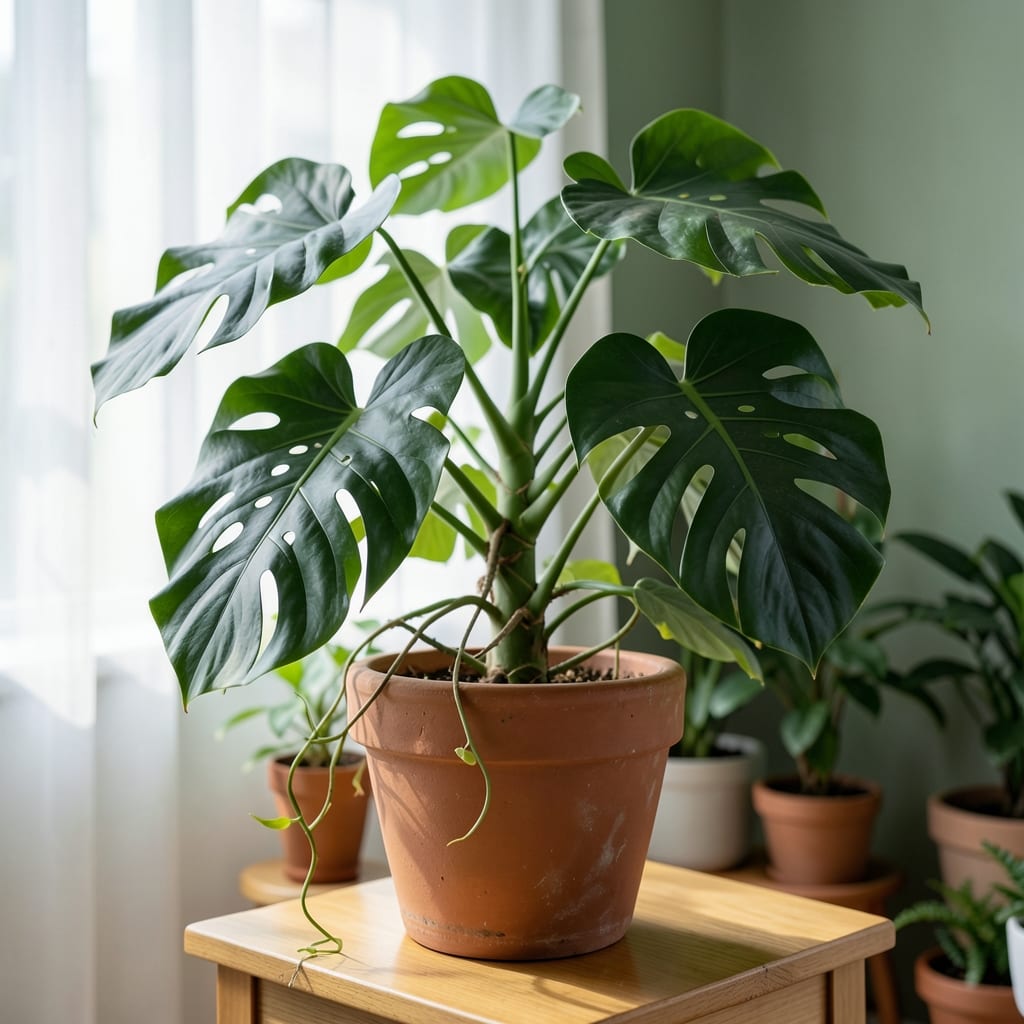
Optimal light requirements for Swiss Cheese plant variegation
The Swiss Cheese Plant (Monstera deliciosa variegata) thrives in bright indirect light, where its stunning variegated leaves can develop their signature white or yellow patterns. Unlike its solid-green counterpart, variegated varieties need slightly more light to maintain vibrant colors—4-6 hours daily is ideal. Too little light fades those gorgeous patterns, while direct sun risks scorching the delicate foliage.
Variegated Swiss Cheese Plants are less forgiving than solid-green types. Their white or yellow leaf sections lack chlorophyll, so they can’t photosynthesize as efficiently. This means they need consistent, moderate light to prevent leggy growth or pale variegation. Think of it like giving them a sunbath with sunscreen—enough to glow, but protected from harsh rays.
Seasonal adjustments are key. In spring and summer, when sunlight is intense, place your plant 3-5 feet from an east-facing window or use sheer curtains to diffuse light. During fall and winter, when natural light dims, supplement with a grow light for 6-8 hours daily to maintain energy production.
Here’s how light intensity affects your plant’s health:
North-facing windows are your best bet for consistent indirect light year-round, while east-facing windows provide gentle morning sun. Avoid south or west windows unless you use UV-filtering curtains—these spots can turn your plant’s leaves into sunburnt crisp. Rotate your plant quarter-turns every 2 weeks to ensure even growth and prevent lopsided development.
Variegated Swiss Cheese Plants also benefit from natural light cycles. Mimic outdoor conditions by placing them near a window where they receive morning light and afternoon shade. If you notice the variegation dimming over time, it’s a clear sign to move the plant to a brighter spot or supplement with artificial light.
Pro tip: Use a light meter app to measure foot-candles (aim for 500-1,000 fc). Most smartphones can do this with a simple app download. This helps you quantify the light your plant is actually getting, so you can make precise adjustments. For example, a 10-foot north window might only provide 200 fc, while a 3-foot east window could hit 800 fc—both require different solutions.
If you’re growing a solid-green Swiss Cheese Plant, it’s more adaptable to lower light. But variegated types? They’re dramatic divas that demand attention. Give them the right stage lighting, and they’ll reward you with show-stopping foliage all year round. 🌿
Optimal light requirements for Swiss Cheese plant variegation
The Swiss Cheese Plant (Monstera deliciosa) thrives in bright indirect light, where its stunning variegated leaves can truly shine. Unlike solid-green varieties, variegated plants need slightly more light to maintain their creamy white or yellow patterns. Too little light fades these colors, while too much causes leaf burn—especially on delicate variegated foliage.
Ideal light conditions mimic dappled forest sunlight, with 4-6 hours of bright indirect light daily. This means placing your plant near an east or north-facing window, where morning sun gently illuminates the leaves without harsh afternoon rays. South-facing windows can work but require sheer curtains to diffuse intensity.
| Light Condition | Variegated Leaf Impact | Growth Effect |
|---|---|---|
| Bright Indirect Light (4-6 hrs) | Vibrant white/yellow patterns | Healthy, upright growth |
| Low Light (<3 hrs) | Faded variegation, green dominance | Leggy, sparse growth |
| Direct Sunlight (2+ hrs) | Brown scorch marks | Stunted, crispy leaf edges |
Seasonal adjustments are key. In summer months, move your plant 5-6 feet back from south-facing windows to prevent leaf burn. Conversely, during winter’s low-light months, supplement with a 12-hour grow light to maintain variegation intensity. Rotate the pot quarter-turn weekly to ensure even light exposure on all sides.
Variegated Swiss Cheese Plants often need 10-20% more light than their solid-green counterparts. If you notice dull, green-dominated leaves, it’s time to adjust. Place the plant closer to a window or add a reflective surface (like a white wall) to bounce extra light onto the foliage. This simple trick can double the effective light your plant receives.
For indoor growers, LED grow lights with a 5000K color temperature mimic natural daylight perfectly. Position the light 6-12 inches above the plant and run it for 12-14 hours daily. Avoid incandescent bulbs, which emit too much heat and can damage delicate leaves. Test your light setup by monitoring leaf color—bright, crisp variegation means you’ve nailed it!
Remember, the goal is balance. Your Swiss Cheese Plant’s variegation is its signature feature, and proper light ensures it stays show-stopping. Start with bright indirect light, observe your plant’s response, and adjust gradually. With the right light, your variegated beauty will reward you with lush, patterned leaves for years to come. 🌿