
Trees
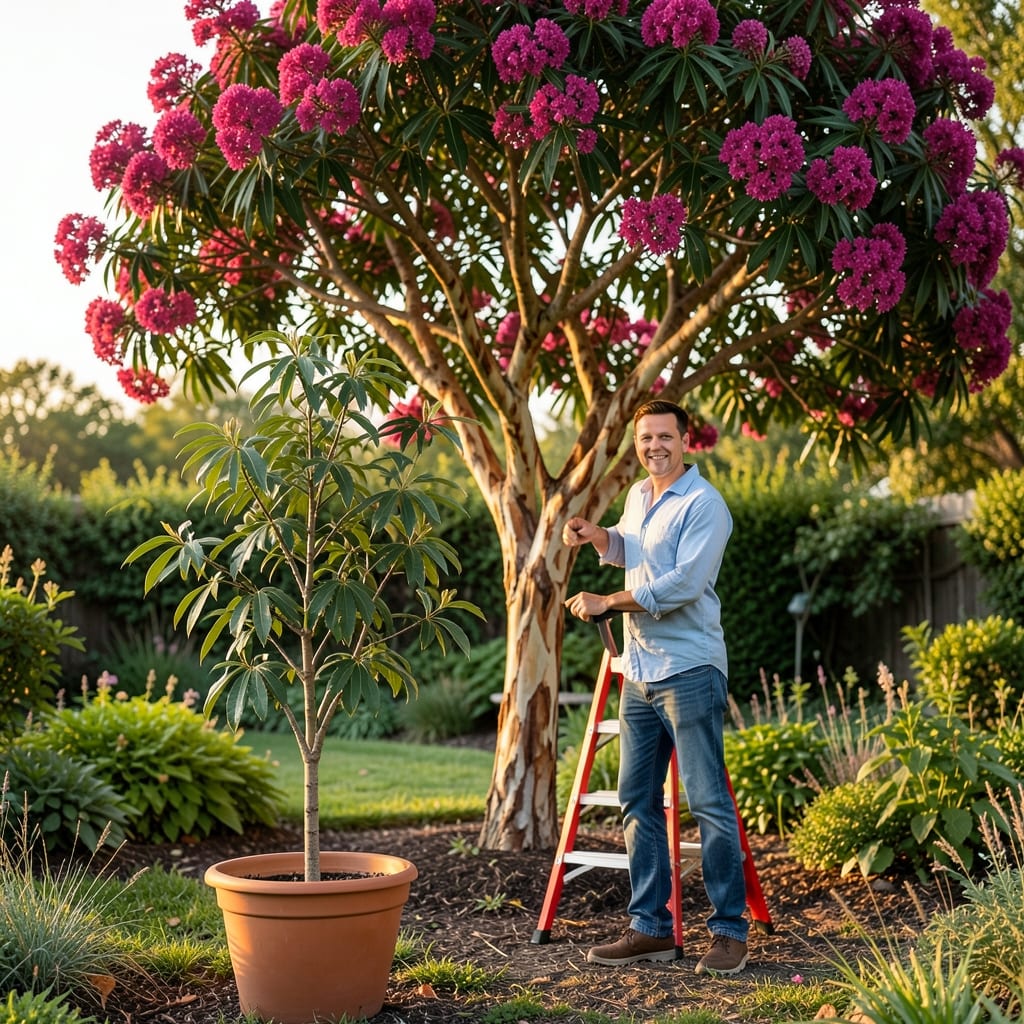
If you're wondering how tall can a crepe myrtle tree grow, the answer might surprise you—this stunning 🌳 can range from a compact 6-foot shrub to a towering 30-foot giant, depending on the variety you choose.
For homeowners with limited space, dwarf crepe myrtles offer a perfect solution, staying between 3 and 6 feet tall while still delivering vibrant blooms. On the other end of the spectrum, standard varieties can reach heights of 20 to 30 feet, making them ideal for larger landscapes or as shade trees.
What you plant isn't just about height—it's also about your goals. Need a low-maintenance border plant? A dwarf variety fits the bill. Want a dramatic focal point? Go for a standard or even a 30-foot giant. The key is understanding how each type grows and how to manage it for your space.
In this guide, I’ll break down the differences between dwarf, semi-dwarf, and standard crepe myrtles, plus tips for controlling growth and keeping your tree healthy. Whether you're working with 6a USDA zone conditions or just love the idea of a blooming tree, you’ll find the perfect fit for your yard.

Crepe myrtle height variations: dwarf to 30-Foot giants explained
Crepe myrtles are one of the most versatile trees for gardeners because their height variations let you choose the perfect size for your space. Whether you need a 3-foot shrub or a 30-foot shade giant, there’s a variety to match your needs. The key difference lies in the cultivar selection—some are bred for compact growth, while others naturally reach towering heights.
Dwarf varieties are ideal for small gardens, patios, or container growing, while standard types thrive as landscape focal points or street trees. Even within these categories, growth rates vary based on climate conditions, soil quality, and pruning habits. Let’s explore the height ranges you can expect from each type.
| Variety | Mature Height | Growth Habit | Best For |
|---|---|---|---|
| Dwarf (e.g., 'Arapaho,' 'Centennial Spirit') | 3–6 ft | Compact, multi-stemmed | Small gardens, containers, borders |
| Semi-Dwarf (e.g., 'Natchez,' 'Tonto') | 10–15 ft | Upright, moderate spread | Medium yards, privacy screens |
| Standard (e.g., 'Muskogee,' 'Catawba') | 20–30 ft | Tall, pyramid-shaped | Large landscapes, shade trees |
| Giant (e.g., 'Sioux,' 'Pocomoke') | 25–30+ ft | Fast-growing, wide canopy | Park-like settings, large estates |
The 'Centennial Spirit' crepe myrtle, for example, stays under 6 feet tall, making it perfect for urban gardens or front yards where space is limited. Meanwhile, the 'Sioux' variety can soar to 30 feet or more, providing dramatic shade and seasonal color for expansive properties. Even within these categories, growth rates can vary—some dwarf varieties might reach 7 feet in ideal conditions, while giants could top 35 feet in optimal climates.
If you're planting in USDA Zone 6a, like much of the Midwest, expect slightly slower growth compared to warmer southern climates. However, with proper care—including well-draining soil and regular pruning—you can still achieve the mature heights listed above. For instance, a 10-foot semi-dwarf like 'Natchez' might take 5–7 years to reach maturity, while a 25-foot giant like 'Pocomoke' could take a decade or more.
One common misconception is that all crepe myrtles grow into large trees. In reality, dwarf varieties are specifically bred to stay small, and their growth can be further controlled with pruning techniques like tip-trimming or structural pruning. This makes them ideal for container gardening or even as balcony plants in urban settings.
For those with limited space but a love for crepe myrtles, consider multi-stemmed dwarf varieties. These grow as shrubs with several trunks, creating a full, bushy look without the height. They’re perfect for foundation plantings or as privacy screens along fences. On the other hand, if you’re aiming for a shade tree or a landscape centerpiece, standard or giant varieties will deliver the dramatic effect you’re after.
Another factor influencing height is the root system. Crepe myrtles have fibrous roots that spread widely, which can affect both stability and nutrient uptake. In small gardens, this means choosing a dwarf variety to avoid root competition with other plants. In larger spaces, the extensive root system helps stabilize taller trees, reducing the risk of wind damage.
If you're still unsure which height to choose, consider your long-term goals. Will you need to prune regularly to maintain size? Do you want a tree that blooms at eye level or one that provides overhead shade? For example, a 6-foot dwarf will give you easy access to blooms for cutting flowers, while a 25-foot giant will offer year-round shade and a grand focal point for your yard.
No matter which variety you select, remember that crepe myrtles thrive in full sun and well-draining soil. With the right conditions, even a dwarf variety can exceed its expected height slightly, while giants may grow faster in ideal climates. Always check the specific cultivar details before planting to ensure it fits your space and vision.
Crepe myrtle height variations: dwarf to 30-Foot giants explained
Crepe myrtles are one of the most versatile trees you can plant, offering height variations that fit almost any landscape. The smallest varieties stay between 3 and 6 feet, perfect for containers or small gardens, while the tallest types can soar to 30 feet or more, creating stunning shade and privacy. What makes this range possible? It all comes down to the cultivar you choose and how you care for it.
For example, the 'Arapaho' variety is a dwarf crepe myrtle, typically reaching 6 to 8 feet at maturity, making it ideal for urban yards or patios. On the other end, the 'Natchez' variety can grow 25 to 30 feet, perfect for large estates or as a focal point in a backyard. Understanding these differences helps you pick the right tree for your space and goals.
| Variety | Mature Height | Best For |
|---|---|---|
| Dwarf (e.g., 'Arapaho') | 3–6 ft | Containers, small yards |
| Semi-Dwarf (e.g., 'Tonto') | 10–15 ft | Medium spaces, borders |
| Standard (e.g., 'Natchez') | 20–30 ft | Large yards, shade trees |
| Giant (e.g., 'Muskogee') | 25–30+ ft | Privacy screens, estates |
What’s fascinating is how quickly these trees grow. A standard crepe myrtle can add 3 to 5 feet per year in ideal conditions, while dwarf varieties grow more slowly, gaining only 1 to 2 feet annually. This rapid growth means you’ll see dramatic changes in just a few years, especially if you plant in full sun and well-draining soil—both critical for maximizing height potential.
Climate also plays a role in height. In warmer USDA zones (7-10), crepe myrtles thrive and can reach their full height faster. In cooler zones like 6a, growth may be slower, but with proper care, they’ll still mature to their expected size. For example, a 'Tonto' variety might take a few extra years to hit 15 feet in a cooler climate compared to a sunnier region.
If you’re worried about a crepe myrtle outgrowing its space, don’t be! Pruning can help manage height, especially for standard varieties. I’ll cover pruning techniques in the next section, but for now, know that even the tallest varieties can be shaped to fit your landscape. The key is to prune at the right time—late winter or early spring—to encourage healthy growth without stunting blooms.
Whether you’re after a compact shrub or a towering shade provider, crepe myrtles deliver stunning blooms and year-round interest. The secret is choosing the right variety for your space and giving it the care it needs to thrive.