
Trees
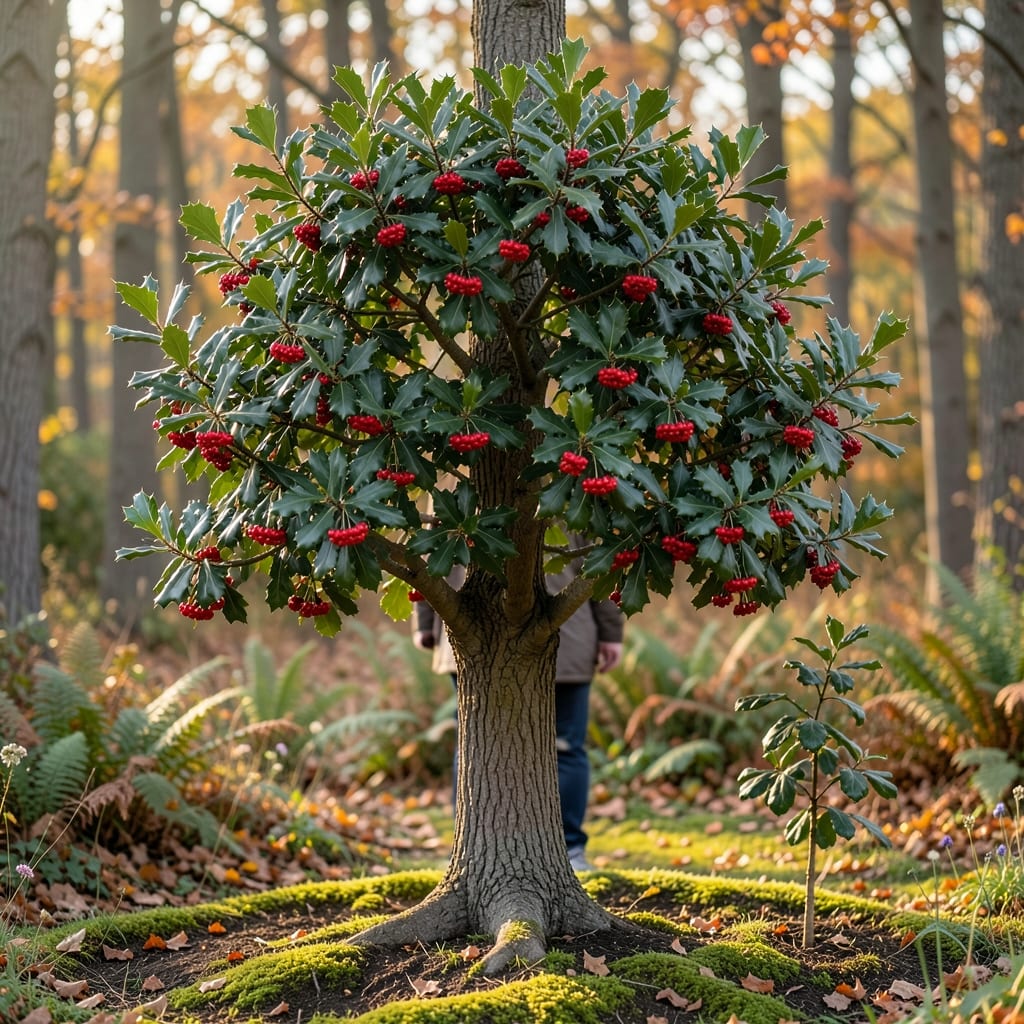
If you're dreaming of a Holly Tree 🌳 that adds year-round elegance to your landscape, you might be surprised by just how tall these beauties can grow—some dwarf varieties stay cozy at 10 feet, while others stretch toward the sky like natural skyscrapers, reaching 40 feet or more. The difference comes down to species, growing conditions, and a little strategic pruning.
Picture this: an American Holly standing proudly at 30 feet, its glossy leaves and bright red berries creating a holiday-worthy display, while an English Holly in your neighbor’s yard stays compact at 15 feet, perfect for small gardens. Whether you’re planning a grand backyard centerpiece or a tidy hedge, understanding these height variations is the key to choosing the right variety for your space.
But here’s the good news—you’re not stuck with whatever nature deals you. With the right pruning techniques, even the tallest holly trees can be shaped to fit your vision. Discover how to manage growth, whether you’re working with a 6a zone climate or a cozy urban patio, so your holly tree stays healthy and harmonious with your landscape.
Ready to find the perfect holly for your space? Let’s break down the height ranges, growth habits, and expert tips to help you grow the holly tree of your dreams—no matter how big (or small) you envision it.


Holly tree height variations: dwarf to giant species compared
Holly trees aren’t one-size-fits-all—their mature heights can vary dramatically, from 8-foot dwarf shrubs to 60-foot towering giants. This diversity means you can find the perfect holly for everything from a cozy urban patio to a sprawling estate landscape. The key lies in species selection, as American Holly and English Holly lead the height spectrum, while lesser-known varieties offer compact alternatives.
For example, the Sky Pencil Holly stays a modest 10-12 feet tall, making it ideal for small gardens, while the Ilex opaca (American Holly) can soar to 40-60 feet in ideal conditions. Understanding these differences helps you avoid surprises—like planting a 30-foot tree where only 15 feet fits. Let’s explore the height ranges and growth habits of the most popular holly varieties.
🌱
| Variety | Mature Height | Growth Rate | Best For |
|---|---|---|---|
| Sky Pencil Holly | 10–12 ft | Slow (6–12 in/year) | Small gardens, hedges |
| Dwarf English Holly | 12–15 ft | Moderate (12–18 in/year) | Residential yards, borders |
| Blue Prince Holly | 15–20 ft | Moderate (12–18 in/year) | Privacy screens, medium spaces |
| American Holly (Ilex opaca) | 30–60 ft | Fast (18–24 in/year) | Large estates, woodland edges |
| Chinese Holly | 20–30 ft | Moderate (12–18 in/year) | Urban landscapes, containers |
| Winter Red Holly | 25–35 ft | Fast (18–24 in/year) | Specimen trees, focal points |
The Sky Pencil Holly is a standout for small spaces, growing just 10-12 feet tall while delivering year-round interest with its slender form and glossy leaves. Meanwhile, the American Holly is the undisputed giant of the group, capable of reaching 60 feet in ideal conditions—perfect for creating a natural privacy barrier or a grand landscape statement.
If you’re working with limited space, the Dwarf English Holly or Blue Prince Holly offer a happy medium, topping out at 15-20 feet while still providing lush foliage and berries. These varieties thrive in USDA Zone 6a and beyond, making them versatile for a wide range of climates. For urban gardeners, the Chinese Holly is a fantastic choice—it stays under 30 feet and adapts well to container gardening.
One common misconception is that all holly trees grow equally fast. In reality, growth rates vary by species. For instance, the Sky Pencil Holly grows at a slow, steady pace (6–12 inches per year), while the American Holly can shoot up 18–24 inches annually under optimal conditions. This means a 10-foot holly might take 5 years to mature, while a 30-foot specimen could reach full height in just 10–15 years.
Pruning plays a crucial role in managing height. Even the tallest holly trees can be topped or shaped to fit your space, though aggressive pruning may reduce berry production. For example, if you plant a Winter Red Holly near your home’s roof, regular late-winter pruning can keep it under 25 feet while maintaining its ornamental appeal. Always use sterilized pruning shears and remove no more than 25% of the canopy in a single session
Holly tree height variations: dwarf to giant species compared
Holly trees offer a stunning range of heights, from dwarf varieties perfect for small gardens to towering giants that dominate large estates. The American Holly (Ilex opaca) typically reaches 30-40 feet, while the English Holly (Ilex aquifolium) often stays between 15-25 feet. Even within these species, cultivars vary dramatically—some stay under 10 feet, while others stretch toward 60 feet in ideal conditions.
Choosing the right variety depends on your space and vision. For urban backyards or small patios, dwarf holly trees like 'Sky Pencil' (8-10 feet) or 'Blue Princess' (12-15 feet) are ideal. Meanwhile, large landscapes or privacy screens benefit from standard varieties like 'Southern Magnolia Holly', which can exceed 40 feet with proper care.
🌳
| Variety | Average Height | Growth Rate | Best For |
|---|---|---|---|
| American Holly ('Sky Pencil') | 8-10 ft | Slow (1-2 ft/year) | Small gardens, containers |
| English Holly ('Blue Princess') | 12-15 ft | Moderate (2-3 ft/year) | Hedges, urban landscapes |
| American Holly (Standard) | 30-40 ft | Fast (3-5 ft/year) | Large estates, privacy screens |
| Southern Magnolia Holly | 40-60 ft | Very fast (4-6 ft/year) | Woodland borders, rural properties |
| Winterberry Holly (Female) | Moderate (2-3 ft/year) | Wetland gardens, wildlife habitats |
Even the tallest holly trees can be managed with pruning techniques. For example, heading back (cutting just above a leaf bud) encourages bushier growth, while thinning cuts (removing entire branches) maintains an open canopy. Always prune in late winter or early spring to avoid stressing the tree during its active growing season.
If you're working with limited space, consider container-grown holly trees. Dwarf varieties like 'Dwarf Burford' thrive in large pots, allowing you to move them seasonally or place them on patios. Just ensure the container has drainage holes and use a well-draining potting mix to prevent root rot.
For holiday enthusiasts, the red berries of holly trees add festive color, but remember—only female trees produce berries. Plant a male pollinator nearby (like 'Jim Dandy') to ensure fruit production in American or English Holly varieties. This small step can transform your yard into a winter wonderland of glossy leaves and vibrant berries.
🌿