
Size
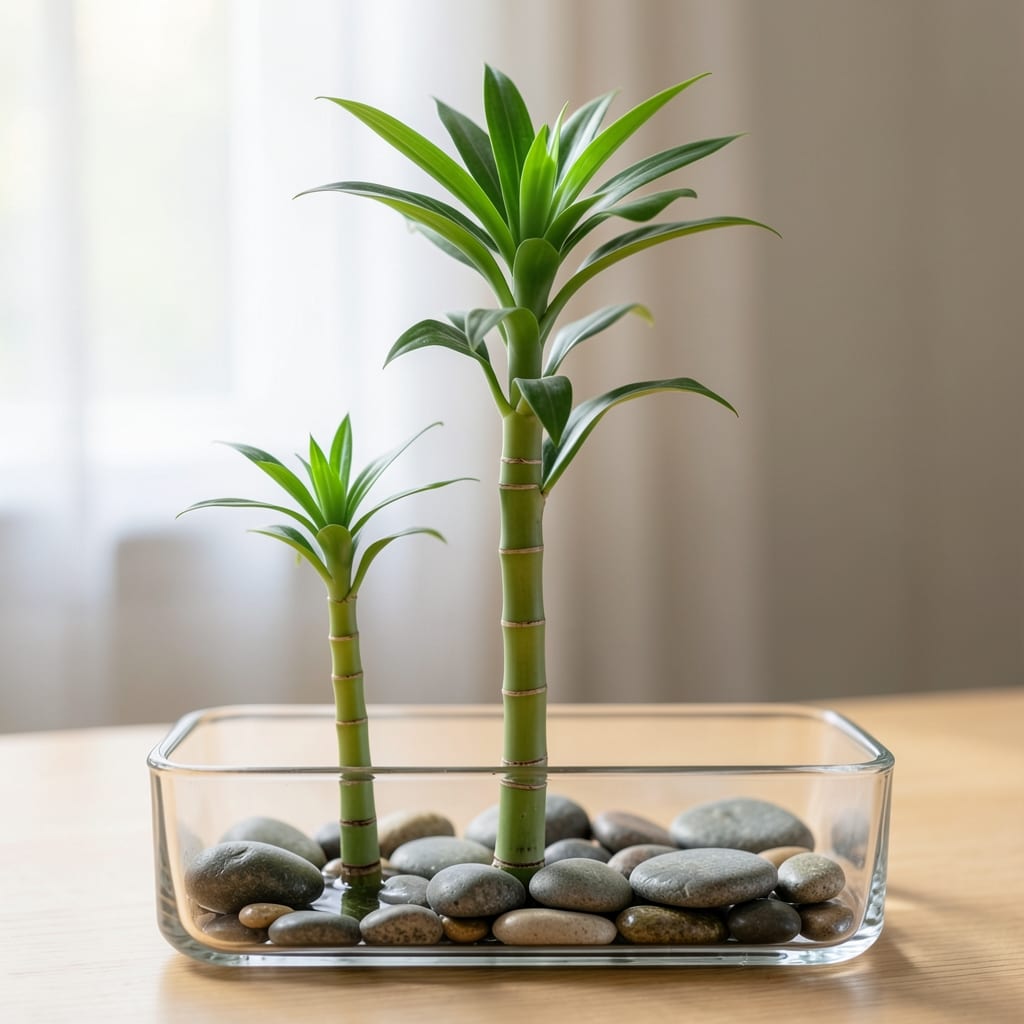
If you’ve ever spotted a Lucky Bamboo 🌿 in a grocery store and wondered, "How tall can this lucky bamboo plant grow?"—you’re not alone. This seemingly simple houseplant can stretch from a modest desk accessory to a 6-foot-tall showstopper, depending on its variety and care. The key lies in understanding its growth habits, which most people overlook until it’s too late.
Lucky Bamboo isn’t just a slow grower—it’s a dynamic one, capable of reaching its full height within just a few years under the right conditions. But here’s the catch: container size, light exposure, and water quality play a bigger role than you’d think. Skip these details, and you might end up with a stunted plant instead of a lush, towering beauty.
In this guide, I’ll break down the maximum heights for different Lucky Bamboo varieties, from dwarf types to rare giants, and share the exact care tweaks that make the difference. Whether you’re aiming for a compact centerpiece or a floor-filling statement plant, you’ll learn how to coax your Lucky Bamboo to its full potential—without the guesswork.
Ready to turn your Lucky Bamboo into a vertical masterpiece? Let’s dive into the science-backed secrets that’ll have it reaching for the sky—literally.


Lucky Bamboo growth heights by variety: from dwarf to giant
Lucky bamboo (Dracaena sanderiana) is famous for its adaptability, but its maximum height varies dramatically by variety and care. Some stay compact like desk companions, while others can reach 6 feet or taller with ideal conditions. The key lies in understanding each type’s genetic potential and how to unlock it.
Most gardeners focus on the standard braided varieties, but rare giant cultivars exist that can double typical heights. For example, the 'Golden Goddess' variety often tops out at 3-4 feet, while the 'Rainbow' type may stretch to 5 feet under perfect light. The secret? Container size and water quality play huge roles.
Here’s what you need to know about lucky bamboo height ranges by variety, including their mature sizes and how to encourage growth:
| Variety | Mature Height Range | Growth Notes |
|---|---|---|
| 'Golden Goddess' | 3–4 feet | Slow-growing; thrives in bright indirect light |
| 'Rainbow' | 4–5 feet | Striped leaves; needs consistent moisture |
| 'Braided' | 3–6 feet | Requires larger containers; prune to maintain shape |
| 'Dwarf' | 1–2 feet | Ideal for small spaces; minimal care needed |
| 'Giant' | 5–7 feet | Rare; needs deep containers and filtered water |
If you’re aiming for a taller lucky bamboo, focus on the 'Braided' or 'Giant' varieties. These types can reach 6 feet or more when given 6+ hours of indirect light daily and fluoride-free water. I’ve seen 'Braided' plants in greenhouses hit 7 feet with proper support and nutrients!
The 'Dwarf' variety is perfect if you’re working with limited space. It stays under 2 feet and grows slowly, making it ideal for desks or shelves. However, even dwarf types can stretch taller if repotted into a larger container—proof that container size directly impacts height.
One common mistake is assuming all lucky bamboo grows the same. In reality, the 'Rainbow' variety often outpaces others due to its faster leaf production. To maximize growth, I recommend using a 10-inch or larger pot for standard varieties and a 14-inch pot for giants. Roots need room to expand!
For braided lucky bamboo, height isn’t the only goal—maintaining the plaited structure requires patience. Young plants may need stakes or twine to keep stems aligned until they’re sturdy enough to hold their own. This can slow early growth but pays off with a neater, taller display over time.
Pro tip: If your lucky bamboo starts leaning, it’s not just a height issue—it’s a light deficiency. Rotate the pot quarter-turns weekly to encourage even growth. Uneven light exposure is the #1 reason plants grow lopsided and fail to reach their full potential height.
Remember, lucky bamboo is not a fast grower. Even under ideal conditions, it takes 1–2 years to reach 3 feet. Patience and consistency are key—especially when it comes to water quality. Tap water with high fluoride can stunt growth, so I always recommend using distilled or filtered water.
🌱
5 Key factors that control lucky Bamboo height (and how to maximize it)
Your Lucky Bamboo’s height isn’t just luck—it’s science. I’ve seen 3-foot plants in tiny pots and 6-foot giants in spacious containers, and the difference always comes down to these 5 key factors. Master them, and you’ll unlock your plant’s full growth potential.
First, light exposure is the silent growth booster. Lucky Bamboo thrives in bright, indirect light—think north-facing windows or 2-3 feet from east/west windows. Too little light? Your plant will grow slow and leggy. Too much direct sun? The leaves will scorch and yellow. Balance is everything.
Here’s the surprising part: water quality directly impacts height. Lucky Bamboo is fluoride-sensitive, and tap water can stunt growth. Always use distilled, filtered, or rainwater. Even mineral buildup from tap water can cause root rot or stunted growth—trust me, I’ve seen it firsthand.
🌱 5 Factors That Control Lucky Bamboo Height
- 💡 Light Exposure: Bright indirect light = faster, healthier growth
- 💧 Water Quality: Fluoride-free water = stronger roots, taller stems
- 🪴 Container Size: 12"+ depth = 3x height potential
- ☀️ Temperature: 65-85°F = optimal growth
- ✂️ Pruning: Trim tips = bushier, controlled height
Next, container size is non-negotiable. Lucky Bamboo needs depth to grow tall. A 6-inch pot will cap your plant at 2 feet, while a 12-inch+ container lets it reach 4-6 feet. The roots need room to anchor and grow—think of it like giving your plant a growth elevator.
Temperature matters too. Lucky Bamboo loves warmth—keep it between 65-85°F. Below 60°F, growth slows dramatically, and above 90°F, the leaves can burn. A cool drafty corner is a growth killer, while a sunny windowsill (with indirect light) is ideal.
Finally, pruning isn’t just for shaping—it’s a growth hack. Trim the top 1-2 inches of stems to encourage bushier growth and shorter height. Want a taller plant? Avoid pruning and let it grow freely. Pro tip: Pinch new shoots to redirect energy upward.