
Size
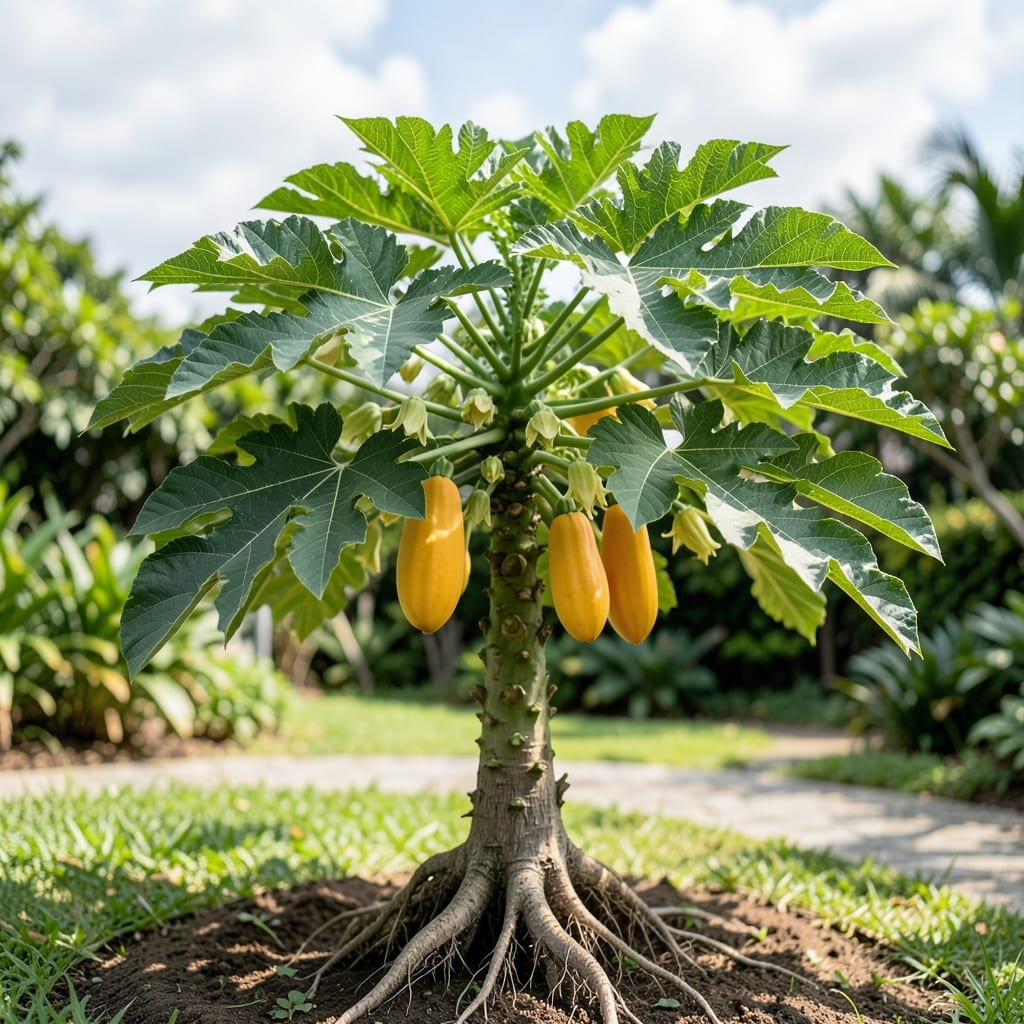
If you’ve ever wondered just how tall a papaya tree 🍈 can grow, the answer might surprise you—especially when you factor in the right growing conditions. These tropical giants can easily reach 10–20 feet tall, but in ideal climates like USDA zones 10–12, they’ve been known to stretch toward 30 feet or more.
The secret to their impressive height lies in variety, climate, and a little gardener know-how. Some papaya trees grow faster and taller than others, while pruning and support can help manage their size in smaller spaces. Whether you’re a seasoned gardener or just starting out, understanding these factors will help you grow a thriving papaya tree that’s both productive and stunning.
Let’s break down what influences a papaya tree’s height—from the genetics of different varieties to the climate conditions that push them to new heights. You’ll also discover practical tips to encourage (or control) growth, so your tree stays healthy and happy, no matter where you live.
Ready to learn how to maximize your papaya tree’s potential? By the end of this guide, you’ll know exactly what to expect—and how to give your tree the best chance to reach its full, sun-drenched glory.


Papaya tree height by variety: natural growth limits and record-breaking exceptions
Papaya trees (Carica papaya) are fast-growing tropical giants, but their final height depends heavily on the variety you choose. Most standard varieties reach 10–20 feet tall, while exceptional specimens in ideal climates can soar to 30 feet or more. Understanding these differences helps you plan space and support needs from the start.
The Solo variety, for example, is one of the most popular for home gardens, typically maturing between 12–18 feet. Its rapid growth—gaining 3–5 feet per year—makes it a favorite for gardeners eager to harvest fruit quickly. Meanwhile, the SunUp variety tends to stay slightly shorter, around 10–15 feet, but its compact growth habit suits smaller gardens.
For those chasing height records, the Red Maradol variety can push boundaries, especially in tropical climates. These trees often exceed 20 feet and may even reach 30 feet in ideal conditions, though they require more space and structural support. The key difference? Genetics—some varieties are bred for vertical growth, while others prioritize fruit yield over height.
Here’s how genetics and environment interact to shape your papaya tree’s height potential:
| Variety | Mature Height Range | Growth Rate (Per Year) | Best For |
|---|---|---|---|
| Solo | 12–18 ft | 3–5 ft | Home gardens, fast fruit |
| SunUp | 10–15 ft | 2–4 ft | Small spaces, containers |
| Red Maradol | 20–30 ft | 4–6 ft | Tropical climates, large gardens |
| Kapoho Solo | 15–22 ft | 3–5 ft | Cold-hardy varieties, subtropical zones |
Even within the same variety, climate conditions can dramatically alter height. For instance, a Solo papaya in USDA zone 11 might max out at 15 feet, while the same tree in zone 12 could easily hit 20 feet or taller. This is because warmer temperatures and higher humidity accelerate growth rates, allowing the tree to allocate more energy to vertical expansion.
One common misconception is that all papaya trees grow equally tall. In reality, dwarf varieties don’t exist—instead, some trees simply grow slower due to environmental stress, like limited sunlight or poor soil drainage. If your tree isn’t reaching expected heights, check these factors first: Is it getting 6+ hours of direct sun? Is the soil well-draining and rich in organic matter? These tweaks can make a surprising difference in growth.
For gardeners in cooler climates (zones 9–10), expect slightly shorter trees—perhaps 10–15 feet—unless you provide extra warmth with row covers or greenhouses. The Kapoho Solo variety is a great choice here, as it’s bred to tolerate slightly cooler temperatures while still reaching impressive heights.
If you’re growing papaya in a container, height will naturally be limited by pot size. Roots constrained by container walls signal the tree to focus on foliage over vertical growth, often capping height at 8–12 feet. To encourage taller growth in pots, choose a large container (20+ gallons) and prune lower branches to redirect energy upward.
For those chasing the ultimate height, consider these growth-boosting tips: Use a trellis or bamboo stakes to support the trunk, apply balanced fertilizer (10-10-10) every 4–6 weeks during growing seasons, and ensure the tree gets consistent moisture without waterlogging. With these adjustments, even standard varieties can push their height limits.
Climate zones that double papaya tree height: tropical vs. subtropical secrets
Climate plays a huge role in determining how tall your papaya tree 🍈 can grow. In USDA zones 10–12, where temperatures stay consistently warm and humidity is high, these trees can easily reach 20–30 feet tall. That’s nearly double the height they’d achieve in cooler subtropical zones!
The key factors are temperature, humidity, and sunlight exposure. Papayas thrive in tropical climates where nights stay above 60°F (15°C) year-round. In these conditions, they grow aggressively, with some varieties even exceeding 30 feet in ideal settings.
In subtropical zones (9–10), growth slows significantly. Trees may only reach 10–15 feet tall unless given extra care, like greenhouse protection or container cultivation to extend the growing season.
Papaya Tree Height by Climate Zone
| Climate Zone | Average Height | Temperature Needs | Key Growth Factor |
|---|---|---|---|
| Tropical (Zones 10–12) | 20–30 ft | 60–90°F (15–32°C) | Year-round warmth |
| Subtropical (Zones 9–10) | 10–15 ft | 50–85°F (10–29°C) | Seasonal protection |
| Temperate (Zones 8 or lower) | 5–8 ft (potted) | Below 50°F (10°C) stunts growth | Container cultivation |
*Note: Heights vary by variety and care practices.
Humidity also matters—papayas love 70%+ relative humidity. In dry climates, growth slows unless you mist leaves or use drip irrigation to maintain moisture levels. Even in ideal zones, strong winds can stunt growth, so planting near a windbreak helps maximize height.
Sunlight is another critical factor. Papayas need 6+ hours of direct sun daily to grow tall and strong. In shady conditions, trees become leggy and weak, rarely exceeding 10 feet in height. If you’re growing in a subtropical zone, consider planting near a south-facing wall to capture extra sunlight.
For gardeners in cooler climates, the solution is simple: grow in containers and bring them indoors during cold months. With proper care, you can still enjoy a 10–15 foot papaya tree—just with a little extra effort to mimic tropical conditions. The payoff? A taller, healthier tree with bigger, sweeter fruit!