
Flowers
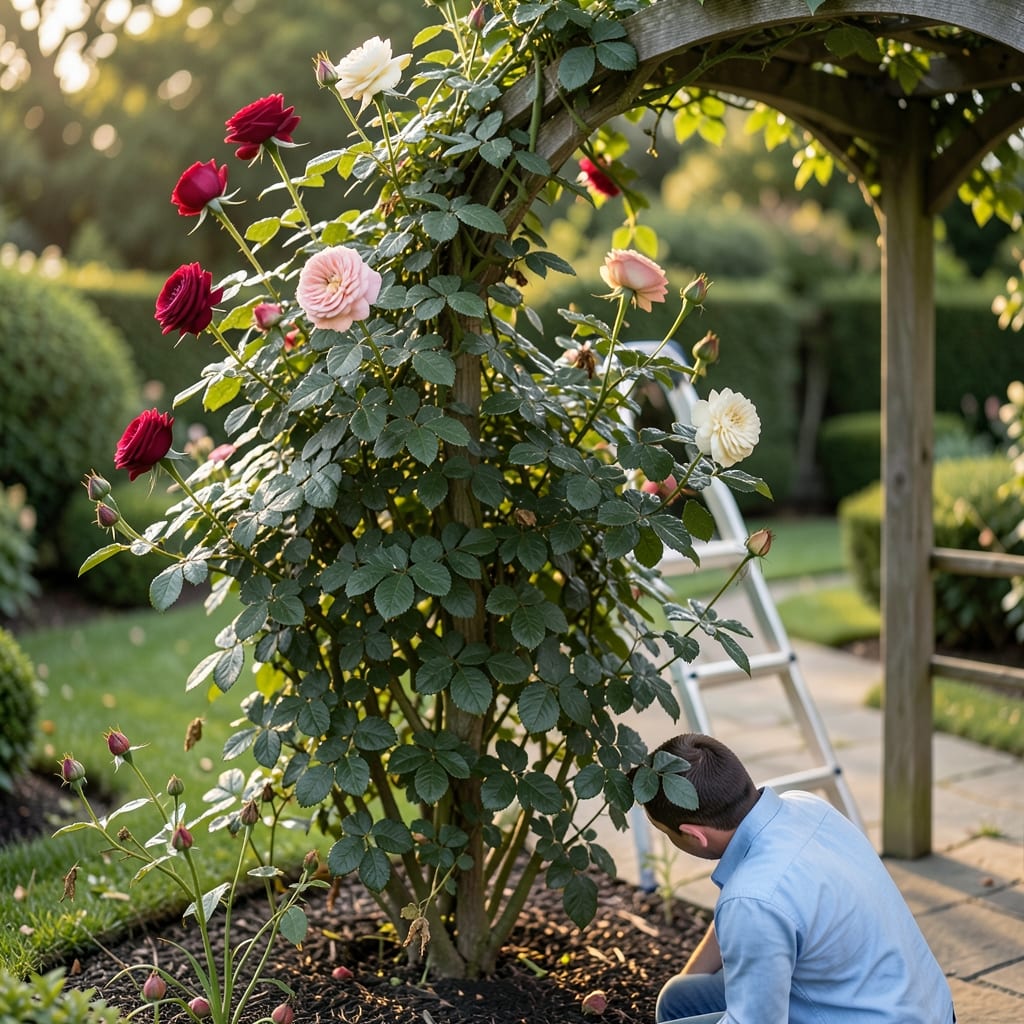
Wondering how tall a rose can grow before it reaches for the sky or stays close to the ground? The answer depends entirely on the variety you choose—because some roses stretch taller than a two-story house, while others barely rise above your knees.
If you're planning your garden layout or dreaming of a romantic trellis, knowing these height differences is the key to making the right selection. From towering climbers that need a sturdy fence to compact shrubs perfect for small spaces, each type has its own growth story.
I’ll break down the height ranges for popular rose varieties, including how climate and care can push them even higher—or keep them neatly contained. Whether you’re in Zone 6a or another region, you’ll discover how to predict and control your rose’s growth before you even plant it.
Ready to transform your garden with roses that fit perfectly? Let’s find out exactly how tall your 🌹 rose can grow—and how to shape it to match your vision.


Rose height by variety: tallest climbing roses vs compact shrubs
Roses aren’t one-size-fits-all—they range from waist-high shrubs to tree-like climbers that scale your home’s second story. The variety you choose determines whether your rose will need a trellis or fence or happily thrive in a container on your patio. Let’s explore the extremes and everything in between.
Climbing roses are the tallest of the bunch, often reaching 10–20 feet with proper support. These varieties are bred to grow vertically, making them perfect for arbors, pergolas, or even old-fashioned garden gates. Shrub roses, on the other hand, typically stay between 3–6 feet, while ground cover roses sprawl horizontally instead of upward.
Hybrid teas—those classic showstopper blooms—usually max out around 4–5 feet, making them ideal for cutting gardens or as focal points in borders. Meanwhile, miniature roses barely top 18 inches, perfect for rock gardens or fairy-tale-inspired landscapes. The key? Match the variety to your space and vision.
| Variety Type | Height Range | Growth Habit | Best For |
|---|---|---|---|
| Climbing Roses | 10–20 ft (with support) | Vertical, long canes | Arbors, fences, trellises |
| Shrub Roses | 3–6 ft | Bushy, multi-stemmed | Borders, hedges, containers |
| Hybrid Teas | 4–5 ft | Single-stemmed, upright | Cut flowers, garden focal points |
| Miniature Roses | 12–18 in | Compact, bushy | Rock gardens, fairy gardens |
| Ground Cover Roses | 1–3 ft (sprawling) | Low-growing, spreading | Slopes, under trees, borders |
Take the 'New Dawn' climbing rose, for example—a 12–15 foot beauty that thrives in Zones 4–9 and blooms continuously from spring to frost. It’s a favorite for privacy screens or adding vertical interest to backyard retreats. On the opposite end, the 'Fairy' miniature rose stays under 18 inches but packs big floral punch in tiny blooms.
Even within categories, surprises lurk. Some shrub roses like 'Knock Out' can reach 4–5 feet, while others like 'The Fairy' stay under 2 feet. Always check the mature height label when shopping, as nurseries often list minimum and maximum ranges. A rose labeled “3–5 feet” might lean toward 3 feet in shady conditions or stretch to 5 feet in full sun.
Don’t overlook seasonal growth habits either. Many roses grow 2–3 feet per year until they reach maturity, which can take 2–3 years. If you’re impatient for height, choose a pre-established rose from a nursery—it’ll skip the slow start and bloom immediately.
Pro tip: If you love the look of a tall climbing rose but lack vertical space, opt for a semi-climbing variety like 'Iceberg', which tops out around 6 feet but still produces abundant blooms. It’s a compromise that works beautifully on smaller trellises or obelisks.
Ready to pick your perfect rose? Start by measuring your space and matching it to the height ranges above. Your garden’s vertical potential is just a cane away!
Climate-Zone height adjustments: how cold or warm weather affects rose growth
Your climate zone plays a surprising role in how tall your rose will grow. A 'New Dawn' climbing rose might reach 12+ feet in Zone 8, but the same variety could max out at 8 feet in Zone 5. Cold winters stunt growth, while warm climates encourage rapid vertical expansion.
Roses in colder zones (Zones 3-5) often grow 20-30% shorter than their warm-zone counterparts. This happens because cold stress triggers dormancy earlier, limiting stem elongation. In contrast, Zone 9-11 roses can grow 1-2 feet taller due to extended growing seasons.
Sunlight exposure also interacts with climate. In shady northern climates, roses may stay 3-5 feet shorter than in sunny southern zones. For example, a 'Knock Out' rose might reach 4 feet in Zone 6 with full sun, but only 2.5 feet in Zone 4 with partial shade.
| Zone | Height Modifier | Climate Impact | Pruning Tip |
|---|---|---|---|
| Zones 3-5 | -20% to -30% | Cold winters limit growth | Prune lightly in early spring |
| Zones 6-7 | Standard growth | Balanced seasonal growth | Standard seasonal pruning |
| Zones 8-9 | +10% to +20% | Longer growing season | Prune after first bloom |
| Zones 10-11 | +20% to +30% | Year-round growth potential | Minimal winter pruning |
Seasonal growth patterns also vary by zone. In Zones 3-6, roses experience two distinct flushes of growth—spring and summer—while Zones 7-11 often see continuous growth if conditions are ideal. This means a 'Blaze' rose might grow 3 feet in its first year in Zone 5, but 4 feet in Zone 8.
To maximize height in cooler zones, plant early-blooming varieties like 'Dr. Huey' (6-8 feet) that take advantage of spring warmth. In warm zones, choose heat-tolerant climbers such as 'Zephirine Drouhin' (15+ feet) that thrive with extended growing seasons.
Always check your local microclimate—a sheltered spot in Zone 4 might produce roses 1 foot taller than an exposed location. Use these adjustments to select varieties that will thrive—and reach their full height—where you live. 🌡️🌿