
Size
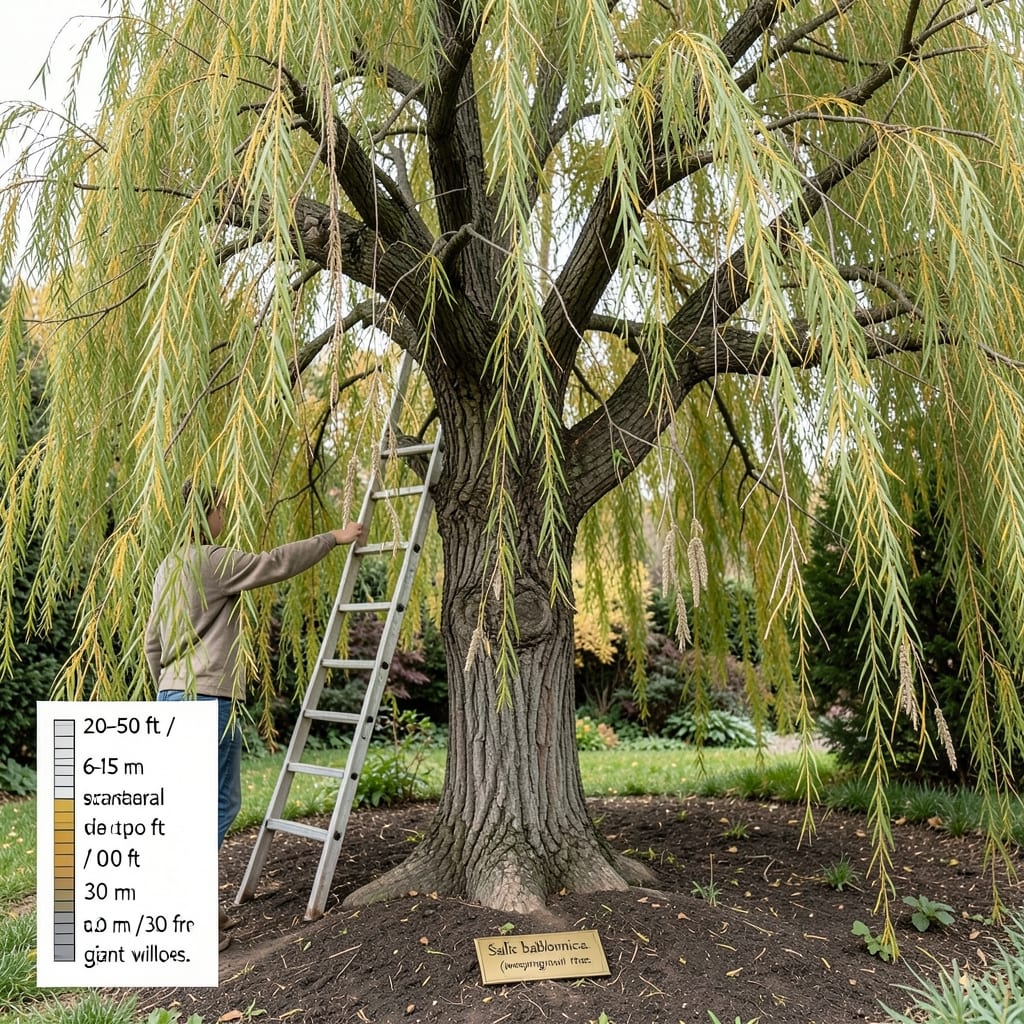
Have you ever wondered just how tall can a willow tree grow when planted in your backyard? Some varieties of this fast-growing 🌳 can shoot up to over 100 feet, making them nature's skyscrapers. Whether you're dreaming of a towering privacy screen or a stunning landscape feature, willows deliver impressive height potential.
The key to their rapid growth lies in their species—weeping willows, for example, can reach 50 feet in just a few decades, while black willows might top out at 60 feet or more. These trees thrive in USDA Zone 6a and beyond, making them a great choice for many climates. But before you plant, it's important to understand how their size affects your space and maintenance needs.
If you're considering adding a willow to your landscape, you'll want to know how to encourage that sky-high growth while keeping it manageable. Proper planting in spring (March-April), consistent watering, and strategic pruning can help you steer their growth in the right direction. Let's explore how to harness their natural speed without losing control.
From the fastest-growing varieties to practical tips for managing their size, you'll discover everything you need to turn your yard into a willow wonderland. Ready to grow a tree that reaches for the sky? Let's get started.


Willow tree height limits: fastest-growing varieties and their sky-high potential
Willow trees are nature's fastest-growing giants, with some varieties reaching heights that rival skyscrapers. The black willow (Salix nigra) often leads the pack, soaring to 60-80 feet tall in ideal conditions. Meanwhile, the weeping willow (Salix babylonica) can stretch even taller—up to 100+ feet—with its graceful, drooping branches creating a dramatic canopy.
These towering trees thrive in USDA Zone 6a and beyond, making them perfect for gardeners with space to spare. Their rapid growth—sometimes 3-5 feet per year—means you'll see dramatic changes within just a few seasons. But not all willows grow equally; pussy willow (Salix discolor) varieties stay shorter at 15-25 feet, while corkscrew willows (Salix matsudana) can reach 20-30 feet.
Here’s how their height compares to everyday objects: A mature weeping willow’s height equals 3-4 stories, while a black willow can match a 5-story building. This makes them ideal for creating privacy screens or adding dramatic focal points to large landscapes.
🌳
| Variety | Max Height | Growth Rate | Best For |
|---|---|---|---|
| Weeping Willow (Salix babylonica) | 100+ ft | 3-5 ft/year | Privacy screens, dramatic landscapes |
| Black Willow (Salix nigra) | 60-80 ft | 2-4 ft/year | Erosion control, wetland restoration |
| Pussy Willow (Salix discolor) | 15-25 ft | 1-2 ft/year | Small gardens, ornamental features |
| Corkscrew Willow (Salix matsudana) | 20-30 ft | 2-3 ft/year | Unique foliage, small yards |
| White Willow (Salix alba) | 50-70 ft | 3-4 ft/year | Fast shade, large properties |
When choosing a willow for your garden, consider your space and climate. Weeping willows need plenty of room to sprawl, while black willows tolerate wet soils and thrive near ponds or streams. If you're in a drier climate, opt for white willow, which still grows tall but adapts better to varied moisture levels.
One of the most impressive records comes from a weeping willow in California, which reached 105 feet tall with a canopy spanning 120 feet wide. This variety’s rapid growth makes it a favorite for landscapers looking to create instant shade or privacy. However, their size also means they’re not suited for small yards or urban settings without careful planning.
For those with limited space, consider dwarf varieties like Salix caprea, which max out at 15-20 feet but still offer the willow’s signature fast growth and ornamental value. These smaller trees are perfect for container gardening or adding height to mixed borders without overwhelming your landscape.
🌿
Understanding these height limits helps you plan for long-term maintenance, including pruning and root management. In the next section, we’ll explore how to maximize willow growth while keeping it under control—so you can enjoy their sky-high beauty without the headaches.
Willow tree height limits: fastest-growing varieties and their sky-high potential
Willow trees are nature's speed demons, capable of reaching staggering heights—some varieties even surpassing 100 feet under ideal conditions. Their rapid growth makes them perfect for creating instant privacy screens or dramatic landscape focal points. But not all willows grow equally tall, and choosing the right variety depends on your space and climate.
The Black Willow (Salix nigra) often leads the height race, with mature specimens reaching 60-80 feet in the wild. Meanwhile, the Weeping Willow (Salix babylonica) can stretch up to 50 feet with its iconic drooping branches. Even the Pussy Willow (Salix discolor), known for its fuzzy catkins, can grow 20-30 feet tall.
🌳 Visual Comparison: Imagine a Weeping Willow reaching the height of a 5-story building—that's the kind of dramatic impact these trees deliver when given the right conditions. Their growth rate is equally impressive, with some varieties adding 3-5 feet per year in their prime.
| Variety | Mature Height | Growth Rate | Best For |
|---|---|---|---|
| Black Willow | 60-80 ft | 3-5 ft/year | Privacy screens, erosion control |
| Weeping Willow | 40-50 ft | 2-4 ft/year | Dramatic landscapes, water features |
| White Willow | 50-70 ft | 3-5 ft/year | Wildlife habitats, wetland restoration |
| Pussy Willow | 20-30 ft | 1-3 ft/year | Small gardens, ornamental features |
Climate plays a crucial role in determining how tall your willow will grow. These trees thrive in USDA Zones 5-9, where they can take full advantage of moist, well-drained soil and full sun exposure. In cooler climates, growth may slow slightly, but with proper care, they'll still reach impressive heights over time.
For gardeners with limited space, consider dwarf varieties like the Dwarf Pussy Willow, which tops out at 10-15 feet while still offering the willow's signature charm. Even these smaller versions grow faster than many ornamental trees, making them a great compromise for urban gardens.
🌿 Whether you're aiming for a backyard skyscraper or a compact ornamental feature, willows deliver height potential that's hard to match. The key is selecting the right variety for your space and giving it the ideal growing conditions to reach its full sky-high potential.