
Flowers
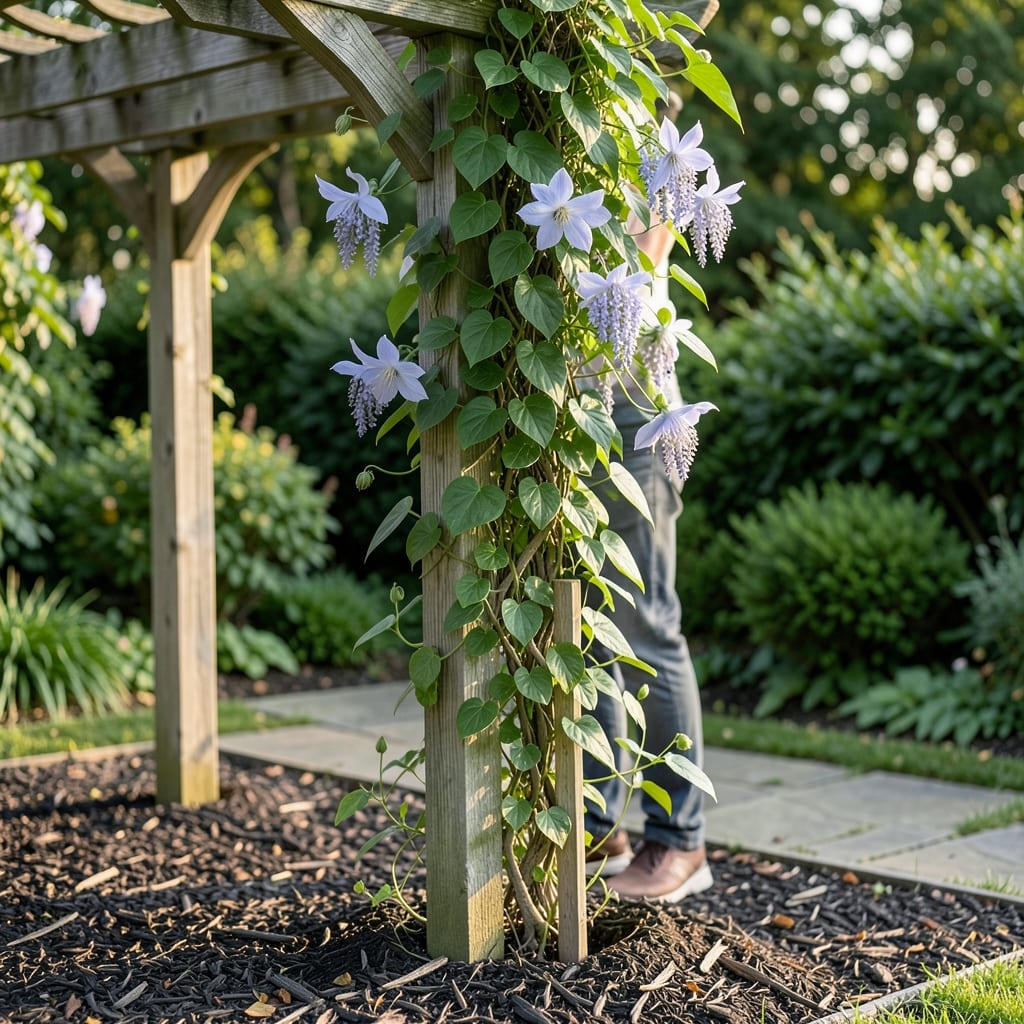
If you’ve ever wondered how tall clematis 🌸 can grow, the answer might surprise you—some varieties stretch taller than a basketball hoop, reaching heights of 20 feet or more with the right conditions!
This stunning vine isn’t just a pretty face; it’s a gardening game-changer that can transform bare walls, trellises, or even old fences into lush vertical gardens. Whether you’re dreaming of a dramatic backyard focal point or just want to fill an empty corner, understanding clematis growth habits is the key to success.
Not all clematis are created equal—some stay compact at just 3-6 feet, while others climb aggressively, demanding sturdy support. In this guide, I’ll break down the height ranges by variety, share pruning secrets to control growth, and help you pick the perfect support structure for your garden.
Ready to turn your space into a clematis wonderland? Let’s dive into how these versatile vines can reach their full potential—and how you can guide their growth like a pro.


Clematis growth heights by variety: from compact to sky-high climbers
Clematis varieties span an impressive height range, from compact dwarf varieties perfect for small gardens to giant climbers that can scale two-story buildings. The key to unlocking their full potential lies in understanding their growth habits and selecting the right variety for your space.
Most clematis fall into four height categories: dwarf (3-6 ft), medium (6-10 ft), large (10-15 ft), and giant climbers (15-20+ ft). Your choice depends on available space, sunlight, and the dramatic effect you want to create in your garden.
Here’s a quick look at how different clematis varieties compare in height and growth habits:
| Variety | Height Range | Growth Habit | Best For |
|---|---|---|---|
| Dwarf Varieties | 3-6 ft | Compact, bushy | Small gardens, containers, window boxes |
| Medium Varieties | 6-10 ft | Moderate climber | Trellises, fences, small arbors |
| Large Varieties | 10-15 ft | Aggressive climber | Large walls, pergolas, tall fences |
| Giant Climbers | 15-20+ ft | Fast-growing, vigorous | Large structures, arbors, building facades |
For example, the ‘Jackmanii’ clematis is a large variety that can reach 12-15 feet with proper support, while the ‘Niobe’ variety stays more compact at 6-10 feet. If you’re aiming for dramatic vertical gardens, consider ‘Multi Blue’, which can climb 15-20 feet and create a stunning blue cascade.
One of the most fascinating aspects of clematis growth is how their height develops over time. In their first year, most varieties grow just 2-3 feet, but by their second year, they can double in height, reaching 5-8 feet. By year three, many varieties hit their mature height range, especially with proper care and support.
It’s important to note that pruning group also influences height. For instance, Group 1 clematis (early bloomers) often grow taller and require less aggressive pruning, while Group 3 clematis (late bloomers) may need more frequent pruning to control height and encourage flowering.
If you’re working with limited space, consider dwarf varieties like ‘Fascination’ or ‘Betty Corning’, which stay under 6 feet but still produce stunning blooms. For a bold statement, ‘Perle d’Azur’ can climb 15-20 feet, making it perfect for large trellises or arbors.
Remember, the height of your clematis isn’t just about the variety—it’s also about the support structure you provide. A sturdy trellis or arbor can encourage upward growth, while inadequate support may limit their potential. We’ll dive deeper into support structures in the next section!
🌿
Support structures for clematis: how to choose based on plant height
Choosing the right support structure for your clematis isn’t just about aesthetics—it’s about giving your vine the physical support it needs to reach its maximum height safely. A weak trellis or flimsy arbor can snap under the weight of a 15-foot vine, while the wrong material may rot or corrode over time.
For dwarf varieties (3–6 ft), a simple small trellis or even a sturdy wire mesh will do the trick. But for giant climbers (10–20 ft), you’ll need something far more robust, like a metal arbor or a wooden fence with horizontal slats for grip.
| Clematis Height | Recommended Support | Material Tips | Spacing Needs |
|---|---|---|---|
| 3–6 ft (Dwarf) | Small trellis, wire mesh, or obelisk | Lightweight PVC, bamboo, or metal | 12–18 inches from base |
| 6–10 ft (Semi-Dwarf) | Medium trellis, arbor, or fence | Pressure-treated wood or galvanized metal | 18–24 inches from base |
| 10–20 ft (Standard/Giant) | Tall arbor, pergola, or sturdy wall | Heavy-duty metal, cedar, or brick | 24–36 inches from base |
When selecting a support, prioritize durability and stability. Clematis vines use petiolar tendrils to cling, so rough-textured surfaces (like brick or lattice) work best. Avoid smooth materials like glass or plastic, which won’t provide enough grip.
For DIY solutions, consider repurposing old ladder frames or metal cages from furniture. Just ensure the structure is grounded securely—a freestanding trellis should be buried 12 inches deep or weighted down to prevent tipping in wind.
Pro tip: If your clematis is climbing a wall or fence, leave a 6-inch gap between the vine and surface to prevent rot. Use soft ties (like twine or Velcro straps) to guide young vines until they’re strong enough to cling on their own.
With the right support, your clematis will thrive—and your garden will become a vertical masterpiece! 🌿