
Size
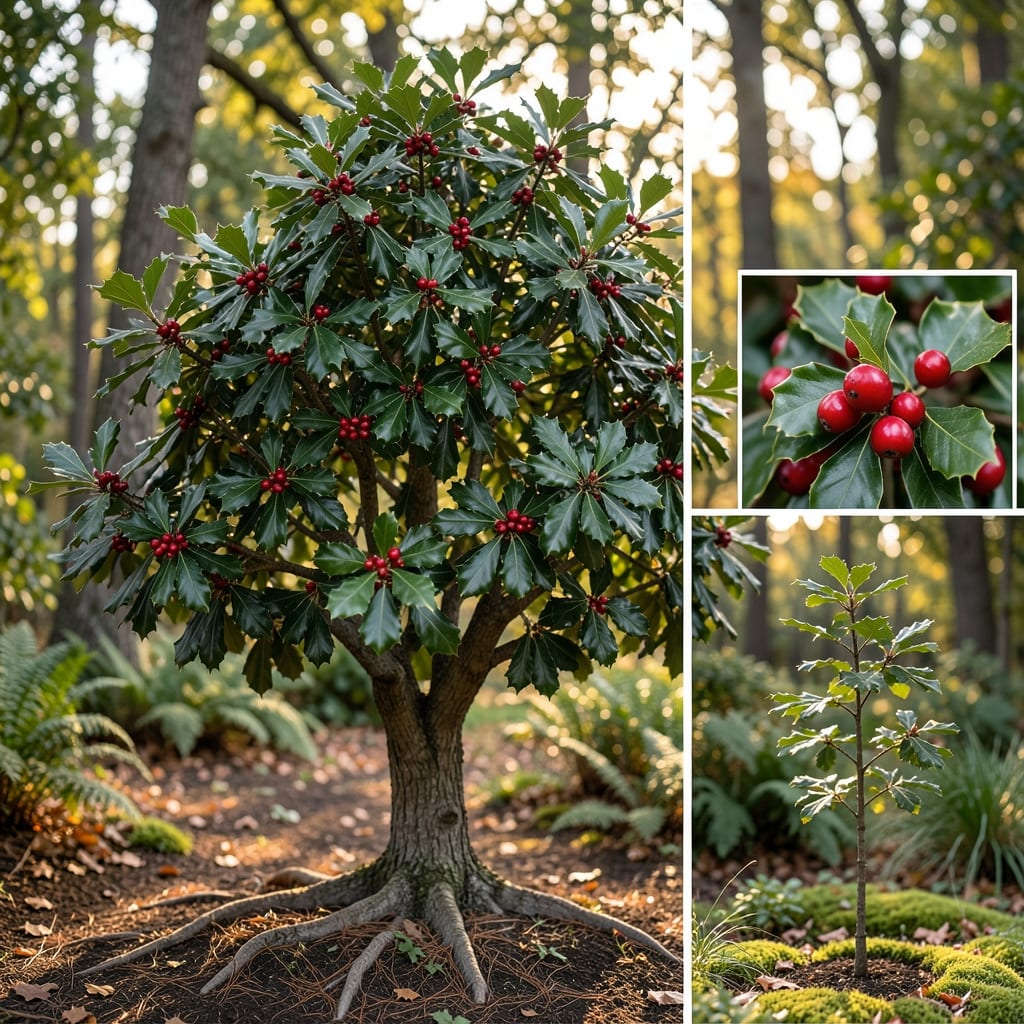
Wondering how tall can holly trees grow and whether they’ll dwarf your backyard or dominate your landscape? The answer might surprise you—these evergreens range from compact shrubs under 10 feet to towering trees that reach 40 feet or more, depending on the variety.
If you’re planning a privacy screen, a Holly Tree 🌳 like Ilex opaca (American Holly) can grow into a 25-40-foot giant, while dwarf varieties like 'Sky Pencil' stay neatly under 12 feet. The key is choosing the right species for your space—whether you want a low-maintenance hedge or a bold focal point.
But height isn’t the only factor. Growth rate, sunlight needs, and soil type all play a role in how big your holly will get. I’ll break down the fastest-growing types, how to control their size with pruning, and the best spots in your yard to plant them for optimal height control.
Ready to pick the perfect holly? Let’s explore the dwarf to giant spectrum—so you can decide if your yard needs a Holly Tree 🌳 that stays small or one that reaches for the sky.


Holly tree height guide: dwarf to giant species compared
Holly trees come in a stunning range of sizes, from dwarf varieties perfect for small gardens to towering giants that dominate landscapes. The American Holly (Ilex opaca) can reach 25-40 feet tall, while English Holly (Ilex aquifolium) typically stays between 15-30 feet. Even within these species, cultivars vary dramatically—some stay under 10 feet while others grow like small trees.
If you're short on space, dwarf holly varieties like 'Sky Pencil' or 'Blue Prince' are ideal—they max out at 8-12 feet but still deliver glossy foliage and berries. For larger properties, standard holly trees like 'Burford Holly' or 'Nellie R. Stevens' can soar to 30-40 feet, creating a year-round privacy screen or dramatic focal point.
The key difference lies in their growth habits: some grow as multi-stemmed shrubs while others develop a single trunk. Even within the same species, pruning practices can influence height—aggressive pruning keeps them compact, while neglect lets them reach their full potential.
Here’s how the most popular holly varieties compare in terms of mature height, growth rate, and ideal planting scenarios:
| Variety | Mature Height | Growth Rate | Best For |
|---|---|---|---|
| Sky Pencil Holly | 8-12 ft | Slow (6-12 in/year) | Small gardens, containers |
| Blue Prince Holly | 10-15 ft | Moderate (12-18 in/year) | Hedges, foundation plantings |
| American Holly | 25-40 ft | Fast (18-24 in/year) | Privacy screens, large yards |
| English Holly | 15-30 ft | Moderate (12-18 in/year) | Ornamental focal points |
| Burford Holly | 30-40 ft | Fast (18-24 in/year) | Tall hedges, windbreaks |
For fastest growth, American Holly and Burford Holly lead the pack, adding 18-24 inches per year under ideal conditions. These varieties thrive in full sun to partial shade and well-draining soil, which accelerates their height gain. In contrast, dwarf holly cultivars grow just 6-12 inches annually, making them perfect for container gardening or small urban yards.
If you’re planting near a house or fence, leave at least 10 feet of clearance for dwarf varieties and 20+ feet for standard holly trees. Their spreading roots can also encroach on foundations, so plant them 5-10 feet away from structures to avoid damage.
One common misconception is that all holly trees grow tall—many are actually shrub-like with multiple stems. For example, 'Dwarf Burford' stays under 10 feet but produces abundant berries, while 'Nellie R. Stevens' grows to 20-30 feet with a single trunk. The difference often comes down to cultivar selection and pruning habits.
For wildlife benefits, taller holly trees provide food and shelter for birds and mammals, thanks to their bright red berries. However, if you’re concerned about messy berries, opt for female-only cultivars (like 'Blue Princess') that produce fewer berries or male pollinators to limit fruit production.
Whether you want a Holly Tree 🌳 that stays small or one that reaches for the sky, the right species can transform your landscape. Next, we’ll explore how to choose the perfect holly for your space—considering height, sunlight, and soil needs.
Holly tree height guide: dwarf to giant species compared
Holly trees come in a stunning range of heights, from towering giants that reach 40 feet to dwarf varieties that stay under 10 feet. The species you choose will determine whether your holly becomes a privacy screen, a focal point, or a hedge. For example, the American Holly (Ilex opaca) can grow 25-40 feet, while 'Blue Prince' holly stays compact at just 6-8 feet. Understanding these differences helps you plan your landscape with precision.
If you're working with limited space, dwarf holly varieties like 'Sky Pencil' (8-10 feet) or 'Little Gem' (12-15 feet) are ideal for containers or small yards. On the other hand, standard holly trees like English Holly (Ilex aquifolium) can grow 15-25 feet, making them perfect for larger properties or as ornamental trees. The key is matching the holly's mature height to your available space and design goals.
Here’s how the most popular holly species stack up in terms of height:
| Variety | Mature Height (ft) | Growth Habit | Best For |
|---|---|---|---|
| American Holly (Ilex opaca) | 25-40 | Tree-like, upright | Privacy screens, large yards |
| English Holly (Ilex aquifolium) | 15-25 | Tree or large shrub | Ornamental focal points |
| 'Sky Pencil' Holly | 8-10 | Narrow, columnar | Containers, small spaces |
| 'Blue Prince' Holly | 6-8 | Compact, rounded | Hedges, borders |
| 'Little Gem' Holly | 12-15 | Upright, narrow | Small yards, urban gardens |
When selecting a holly, consider not just height but also growth rate. For instance, American Holly grows 2-4 feet per year in ideal conditions, while dwarf varieties like 'Sky Pencil' grow much slower, adding only 6-12 inches annually. This means a 10-foot holly could take 5-10 years to mature, depending on the variety. Planning for this growth ensures your holly fits your landscape timeline.
Another factor influencing height is pruning. Regular pruning can keep even large holly trees like American Holly under control, while neglect can lead to overgrowth and an unruly shape. If you’re unsure about pruning, opt for a dwarf variety that requires minimal maintenance. For example, 'Blue Prince' naturally stays small, making it a low-maintenance choice for busy gardeners.
Finally, think about your yard’s sunlight and soil. Holly trees thrive in partial shade to full sun, but their height can be influenced by these conditions. For instance, full sun may encourage faster growth in some varieties, while shade can keep them more compact. Always check the specific needs of your chosen holly to ensure it reaches its full potential—whether that’s a towering giant or a neat dwarf.