
How To
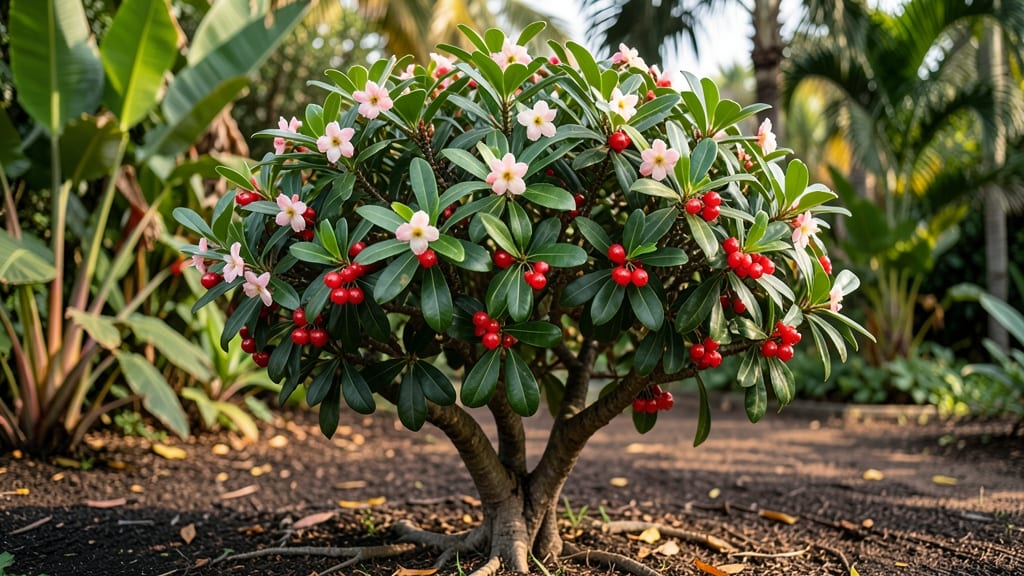
Clusia tree height variations: from dwarf to towering giants
Clusia trees are nature’s architectural marvels, offering a stunning range of heights that can transform any garden space. While some varieties stay compact enough for containers, others grow tall enough to rival small trees.
Understanding these height variations helps you choose the perfect Clusia for your space, whether it’s a cozy patio or a sprawling backyard.
The mature height of Clusia trees varies dramatically between species. For example, Clusia rosea typically reaches 8-12 feet at maturity, while Clusia major can soar up to 15 feet or more. Even within the same species, growth habits can differ based on environmental conditions like sunlight, soil quality, and humidity.
🌱 Growth rates also play a role in how quickly your Clusia will reach its full height. In ideal conditions, Clusia trees can grow 1-2 feet per year during their first few years of life.
However, growth slows as the tree matures, with most varieties reaching their maximum height within 5-10 years.
| Variety | Mature Height (ft) | Growth Rate (ft/year) | Best For |
|---|---|---|---|
| Clusia rosea | 8-12 | 1-2 | Medium gardens, containers |
| Clusia major | 12-15+ | 1.5-2.5 | Large landscapes, focal points |
| Clusia multiflora | 3-6 | 0.5-1 | Small spaces, patios, containers |
| Clusia alata | 6-10 | 1-1.5 | Small to medium gardens |
Sunlight exposure is one of the biggest factors influencing Clusia height. These trees thrive in partial shade, which encourages slower, bushier growth. If planted in full sun, they may grow taller but can become leggy and less dense.
For compact varieties like Clusia multiflora, providing filtered light can keep them at their ideal height for containers or small gardens.
Pruning plays a crucial role in managing height, especially for larger varieties. Regular pruning in late winter or early spring helps maintain shape and encourages branching. Even a 10-20% reduction in height through pruning can make a significant difference in how your Clusia fits into your space.
Soil quality also affects growth habits. Clusia trees prefer well-draining, slightly acidic soil (pH 5.5-6.5). Poor soil can stunt growth or lead to weak, spindly stems. Amending your soil with organic matter like compost ensures your Clusia gets the nutrients it needs to grow strong and healthy.
In indoor settings, Clusia trees tend to grow more slowly and stay smaller due to limited light and space. However, with proper care—including grow lights and regular pruning—you can keep an indoor Clusia at a manageable height, even for varieties that typically reach 10 feet or more outdoors.
🌿 Whether you're aiming for a tropical statement piece or a compact patio plant, choosing the right Clusia variety and providing the right growing conditions will ensure your tree reaches its full potential—without overpowering your space.
Clusia tree height variations: from dwarf to towering giants
Clusia trees are famous for their dramatic height range—some varieties stay under 3 feet while others reach towering 15 feet or more. The key difference lies in the species: Clusia rosea (commonly called "Christmas Bush") typically grows 8–12 feet tall, while Clusia multiflora remains compact at 3–6 feet.
Even within a single species, growth habits can vary based on growing conditions.
For example, Clusia major often matures between 10–15 feet in ideal tropical climates but may stay shorter (6–8 feet) in cooler USDA Zone 9 gardens. Understanding these variations helps you choose the perfect Clusia for your space—whether it’s a container garden or a backyard centerpiece.
| Variety | Mature Height | Growth Rate | Best For |
|---|---|---|---|
| Clusia rosea | 8–12 ft | Moderate (1–2 ft/year) | Privacy screens, large gardens |
| Clusia major | 10–15 ft | Fast (2–3 ft/year) | Tropical landscapes, statement plants |
| Clusia multiflora | 3–6 ft | Slow (6–12 in/year) | Containers, patios, small yards |
| Clusia alata | 6–10 ft | Moderate (1–2 ft/year) | Medium gardens, hedges |
Sunlight plays a critical role in height development. Full sun (6+ hours/day) encourages faster growth, while partial shade (4–6 hours) keeps Clusia more compact. In my Zone 10 garden, I’ve noticed Clusia rosea grows 20% taller when planted in full sun compared to dappled shade.
If you’re concerned about overgrowth, prioritize partial shade or prune regularly.
Pruning isn’t just for shaping—it’s a tool to control height. I recommend light pruning in late winter to remove overly long branches and encourage bushier growth. For taller varieties, prune the top third of the plant to slow vertical growth while maintaining a full canopy.
Just avoid heavy pruning in summer, as this can stress the plant.
Soil drainage also impacts height. Clusia trees thrive in well-draining, slightly acidic soil (pH 5.5–6.5). Poor drainage leads to root rot, stunting growth and reducing overall height potential. Amend heavy clay soil with compost or perlite to create the ideal environment for healthy, vigorous growth.
If you’re planning ahead, consider the growth rate. Most Clusia varieties take 3–5 years to reach maturity, but Clusia major can grow 3 feet per year under ideal conditions. For a quick privacy screen, opt for Clusia rosea—it’ll fill out faster than slower-growing types.