
Trees
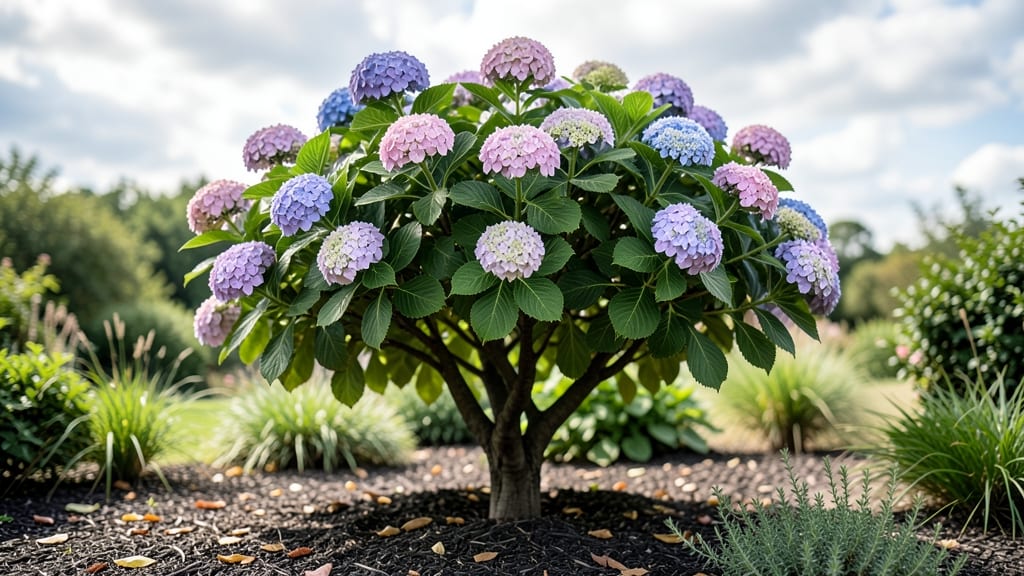
Hydrangea tree height by variety: which types stay compact vs. sky-high?
Choosing the right hydrangea variety is the first step to controlling its height. Some types naturally stay compact, while others can reach 20 feet tall if left unchecked.
For small yards, dwarf varieties like 'Little Lime' (Hydrangea paniculata) max out at just 3-5 feet, making them perfect for containers or foundation plantings.
On the opposite end, standard hydrangea trees like 'Grandiflora' (Hydrangea macrophylla) can tower up to 15 feet or more. Their rapid growth—2-3 feet per year—means regular pruning is essential to prevent them from overshadowing your patio or deck.
Here’s how to match your space with the right variety:
| Variety | Mature Height | Growth Rate | Best For |
|---|---|---|---|
| 'Little Lime' (H. paniculata) | 3–5 ft | 1–2 ft/year | Containers, small yards |
| 'Annabelle' (H. arborescens) | 4–5 ft | 1.5–2 ft/year | Privacy screens, borders |
| 'Limelight' (H. paniculata) | 6–8 ft | 2–3 ft/year | Medium yards, hedges |
| 'Grandiflora' (H. macrophylla) | 10–15 ft | 3+ ft/year | Large properties, focal points |
| 'Nikko Blue' (H. macrophylla) | 8–12 ft | 2–3 ft/year | Shade gardens, woodland edges |
When planting, always check the spacing recommendations for your chosen variety. For example, 'Limelight' needs 6–8 feet between plants to avoid overcrowding, while dwarf types like 'Little Lime' can thrive just 3 feet apart in containers or garden beds.
Soil quality also affects height—poor drainage or nutrient-deficient soil can stunt growth, while rich, moist soil encourages rapid vertical expansion. If your hydrangea starts growing taller than expected, it might be a sign to adjust your fertilizer routine or prune more aggressively.
For fast-growing varieties like 'Grandiflora', plan for annual pruning to maintain your desired height. Even dwarf types may need light pruning to encourage bushier, fuller growth rather than leggy stems.
Pro tip: If you love the look of large hydrangeas but lack space, consider training them as a multi-stem shrub instead of a single trunk. This creates a wider, more compact silhouette while still showcasing those stunning blooms.
Remember, hydrangea height isn’t set in stone—with the right care, even a sky-high variety can be tamed to fit your garden’s vision. Start by choosing a variety that aligns with your space, then use pruning and soil management to fine-tune its growth.
Next, we’ll dive into the pruning secrets that’ll keep your hydrangea at your ideal height—no matter which variety you choose. ✂️
Pruning secrets to control hydrangea tree height naturally (step-by-step guide)
Pruning is the secret weapon for controlling hydrangea tree height while keeping them lush and blooming. The key is timing—prune at the right season and use the correct technique to encourage bushier, more compact growth instead of tall, leggy stems.
Most hydrangeas bloom on new wood, so late winter or early spring is ideal for shaping without sacrificing flowers.
Start by removing dead or diseased branches first—they sap energy and can spread problems. Next, cut back any overly long stems to about 1/3 of their length, making clean cuts just above a leaf node or bud.
This encourages the plant to branch out horizontally rather than shoot upward. For panicle hydrangeas, you can prune more aggressively in late winter, as they bloom on new growth.
🌿 Step-by-Step Pruning Guide
- Step 1: Prune in late winter/early spring (before buds swell).
- Step 2: Remove dead/diseased branches first with clean cuts.
- Step 3: Cut back 1/3 of last year’s growth to encourage bushiness.
- Step 4: Shape the outer canopy to control width and height.
- Step 5: Avoid summer pruning unless removing spent blooms.
For mophead and lacecap hydrangeas, which bloom on old wood, prune more lightly in summer after flowering to avoid cutting off next year’s blooms. Focus on thinning out overcrowded branches and shaping the plant’s natural form. Use sharp, bypass pruners for clean cuts—dull tools crush stems, inviting disease.
If your hydrangea has already outgrown its space, don’t panic! You can gradually reduce height over 2-3 years by pruning back 1/3 of the tallest stems each year. This prevents shock while still reshaping the plant. Pair pruning with annual mulching to protect roots and encourage compact growth.
Common mistakes like pruning too late or cutting into old wood can stunt blooms or leave your hydrangea looking bare. Always step back and assess the plant’s shape before making cuts—aim for an open, airy structure that allows sunlight to reach the center.
With patience, your hydrangea will thrive at your desired height!
Pro tip: Label your cuts if pruning multiple hydrangeas—this helps track progress year over year. Over time, you’ll develop an eye for the perfect balance between height control and abundant blooms. 🌸