
How To
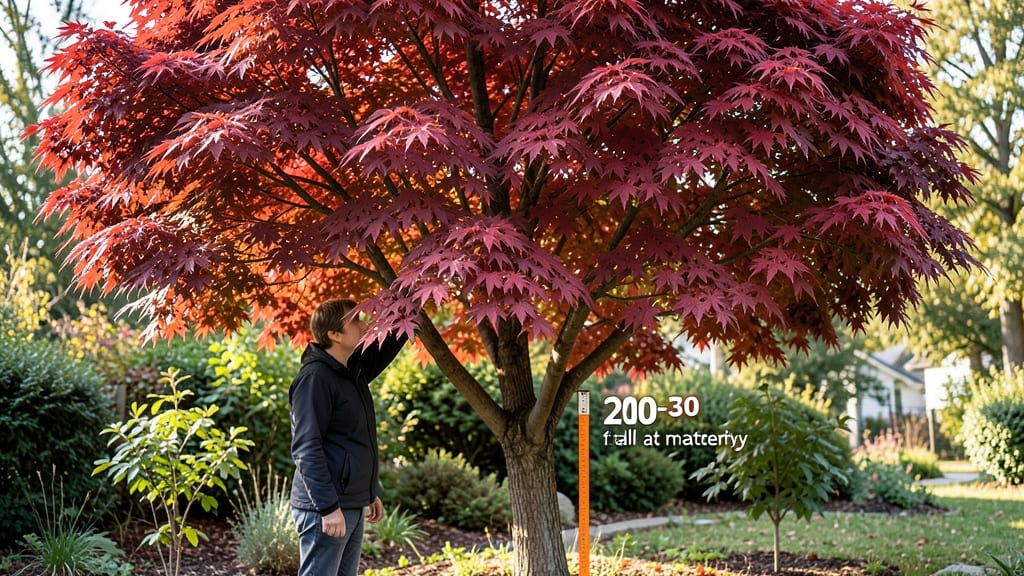
Wondering how tall do red maples grow before they become the centerpiece of your landscape? The answer might surprise you—these stunning 🌳 trees can reach heights of 40 to 60 feet under ideal conditions, making them one of nature’s most dramatic vertical statements.
But here’s the twist: not all red maples follow the same growth script. Some varieties stay compact, perfect for smaller yards, while others shoot up like skyscrapers, casting shade for generations.
Whether you’re planning a backyard retreat or a grand entrance for your property, understanding these height variations is the key to making the right choice.
In this guide, I’ll break down the mature heights of popular red maple cultivars, share what influences their growth, and give you practical tips to manage their size—so you can enjoy their beauty without the unexpected surprise of a towering giant.
Ready to turn your landscape vision into reality? Let’s dive into the details that will help you pick the perfect red maple for your space.

Red maple tree height by variety: from dwarf to giant sizes
Red maples (Acer rubrum) are among the most versatile trees for landscaping, offering stunning fall colors and adaptable growth habits. But their mature height can vary dramatically—from compact 15-foot dwarfs to towering 60-foot giants.
Choosing the right variety for your space is key to balancing beauty and practicality in your garden design.
The standard red maple typically reaches 40-60 feet tall at maturity, making it a natural choice for large properties or as a focal point in open landscapes. However, newer cultivars have been bred to stay smaller, perfect for urban yards, small gardens, or even large containers.
Let’s explore the most popular varieties and their mature heights.
🌳 Visual Comparison: Imagine a 60-foot red maple—that’s taller than a 4-story building! Whether you need a shade provider or a statement tree, there’s a red maple variety to fit your vision.
For urban gardeners with limited space, 'Armstrong' or 'Red Sunset' are excellent choices, staying under 35 feet tall while still delivering vibrant fall foliage. Meanwhile, 'October Glory' is perfect for those with ample room, as it can reach 60 feet—ideal for parks or large estates.
When planning your landscape, consider the spread of the tree, which is often 2/3 the height. A 60-foot-tall tree will likely spread 40 feet wide, so position it with power lines, sidewalks, and neighboring properties in mind. Always check local municipal tree ordinances before planting near structures.
Pro tip: Dwarf varieties like 'Red Sunset' can be grown in large containers (20+ gallons) for patios or balconies, but they’ll still need full sun and regular watering to thrive. Just remember, even dwarf red maples will outgrow their containers eventually—plan for repotting or ground planting in 5-10 years.
🌿 Whether you’re aiming for a shade canopy, seasonal color, or a wildlife-friendly habitat, selecting the right red maple variety ensures your tree will flourish without overwhelming your space.
How fast do red maples grow? Growth rates & timeline to mature height
Red maples are known for their rapid early growth, but their ultimate height depends on variety, climate, and care. On average, they grow 12-24 inches per year in ideal conditions, reaching mature heights between 40-60 feet in 20-30 years.
Some fast-growing varieties, like 'Armstrong,' can add 3 feet per year in their youth.
The first 3 years are critical—your young red maple will shoot up 3-5 feet annually if planted in well-draining soil with full sun exposure.
By year 5, expect 10-15 feet of height, with the canopy spreading wider than the trunk. Proper spacing from day one prevents future root competition.
🌱
| Age | Height Range | Growth Rate | Key Milestones |
|---|---|---|---|
| Year 1 | 3-5 ft | 12-24 in/year | Establishes root system |
| Year 3 | 10-15 ft | 24-36 in/year | Canopy begins forming |
| Year 10 | 25-35 ft | 12-24 in/year | Full structural growth |
| Year 20+ | 40-60 ft | 6-12 in/year | Mature height reached |
Climate plays a huge role—red maples in southern USDA zones (7-9) grow 20-30% faster than those in northern zones (4-6).
For example, a 'October Glory' in Georgia may hit 50 feet in 20 years, while the same variety in Minnesota might take 30 years to reach 40 feet. Soil moisture is another game-changer: Drought stress can stunt growth by 50%.
Watch for these growth red flags: yellowing leaves, stunted height increases (under 6 inches/year), or cracked bark from poor watering. Healthy red maples develop smooth gray bark and vibrant red fall foliage by age 5.
If your tree isn't meeting these benchmarks, check for compacted soil or root competition.
To accelerate growth, mulch annually with 3-4 inches of organic mulch and fertilize in early spring with a balanced 10-10-10 formula. Avoid over-fertilizing—too much nitrogen can boost leaf growth at the expense of vertical height.
For urban planting, consider dwarf varieties like 'Autumn Flame,' which max out at 15-25 feet.
🌿