
Companion Plants
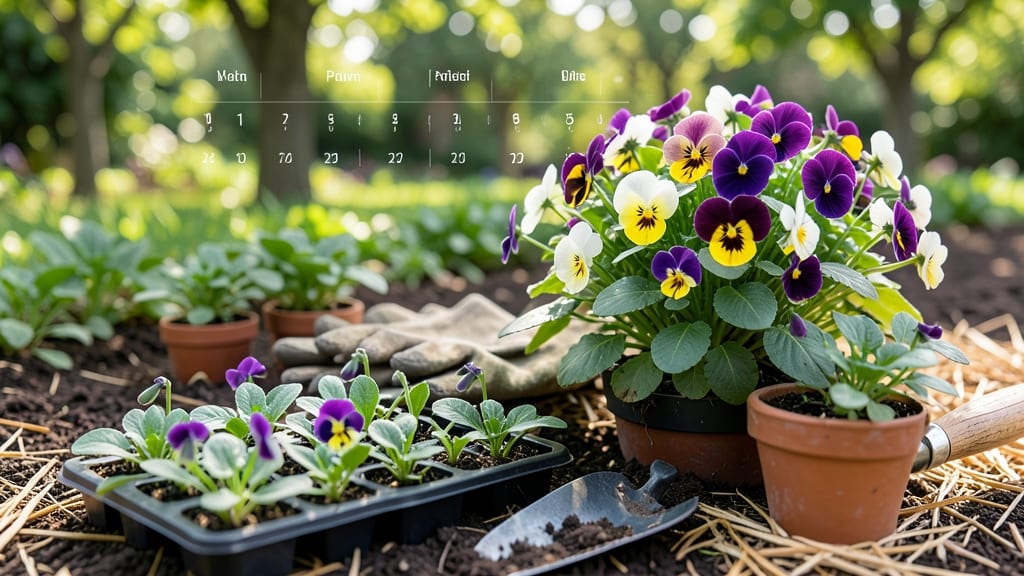
If you're dreaming of vibrant 🌸 pansies brightening your Northeast garden, timing your planting could mean the difference between a stunning spring display and a sad, wilted disappointment.
The key to success lies in understanding your local frost dates and microclimates - because that 2-week window between too early and too late can make all the difference in zones 5b-7a.
I've seen gardeners in New England rush to plant pansies in early spring only to watch them freeze back when unexpected frost hits. Or worse, plant them too late and miss out on those cheerful blooms entirely.
The good news? With the right approach, you can extend your pansy season from early spring right through to fall - but you need to know exactly when to make that first move.
What if I told you that planting pansies just 4-6 weeks before your first frost in fall can give you a second burst of color? Or that some varieties actually thrive better when planted in late summer for an early spring show?
The Northeast's diverse climate means your neighbors might be planting at completely different times than you - and that's where local knowledge becomes your secret weapon.
Let me show you exactly how to read your microclimate, adjust for urban heat islands or lake breezes, and choose the perfect planting window for your specific zone. We'll cover everything from soil prep to companion planting so your pansies not only survive but thrive through our unpredictable Northeast seasons.
Northeast pansy planting calendar by USDA hardiness zones (3-8)
Timing your pansy planting in the Northeast depends on your USDA zone and whether you want spring or fall blooms. Pansies are cool-season flowers, so they thrive when temperatures stay below 75°F.
In zones 3-8, this means two key planting windows: early spring (before last frost) and late summer/early fall (before summer heat sets in).
Most gardeners in the Northeast focus on spring planting for vibrant early blooms, but fall planting can give you color well into winter. The challenge? Frost dates vary wildly—even just 50 miles apart.
For example, Zone 3 areas like Burlington, VT, may see frost as late as June 15, while Zone 7 areas like Washington, DC, might have their last frost by April 15.
Here’s how to align your planting with your zone’s average frost dates. Use these as guidelines, but always check your local NOAA frost calendar or ask fellow gardeners in your area—they’ll know the real last frost date.
| USDA Zone | Avg. Last Frost | Spring Planting Window | Fall Planting Window | Best Varieties |
|---|---|---|---|---|
| Zone 3 (e.g., Buffalo, NY) | May 15 | April 15–May 1 | August 15–September 1 | Matrix, Cool Wave |
| Zone 4 (e.g., Syracuse, NY) | May 1 | April 1–April 15 | August 1–August 15 | Sorbet, Glacier |
| Zone 5 (e.g., Philadelphia, PA) | April 15 | March 15–April 1 | July 30–August 15 | Majestic, Rocket |
| Zone 6 (e.g., Baltimore, MD) | April 1 | February 28–March 15 | July 15–July 30 | Ice King, Sweetheart |
| Zone 7 (e.g., Washington, DC) | March 15 | February 1–February 15 | June 30–July 15 | Eclipse, Olympic |
| Zone 8 (e.g., Richmond, VA) | February 28 | January 15–February 1 | June 15–June 30 | Sorbet, Glacier |
*Adjust dates 1-2 weeks earlier for early-blooming varieties or later for late-season pansies.
If you’re planting for spring blooms, aim to get your pansies in the ground 6-8 weeks before your last frost date. This gives roots time to establish before warm weather arrives. For fall planting, wait until 4-6 weeks before your first
How microclimates in the Northeast affect pansy planting times
Your Northeast garden might feel like one zone, but microclimates can shift pansy planting times by 2-4 weeks. Urban heat islands, lake breezes, and elevation changes create pockets where frost arrives earlier—or lingers later—than official zone averages.
Ignoring these factors risks frost damage or missed blooms when pansies struggle in summer heat.
For example, a city rooftop garden in Zone 6 might experience 5°F warmer nights than a rural farm just 10 miles away. Meanwhile, areas near Great Lakes or mountain valleys can have cooler microclimates that extend the growing season by weeks.
Understanding these variations helps you time pansies perfectly for your specific spot.
🌆 Urban areas: Pavement and buildings trap heat—plant pansies 2 weeks later than rural zones.
🏔️ Mountain slopes: Cooler air pools—plant 2 weeks earlier than valley floors.
🌊 Lake-effect zones: Delayed frost—extend fall planting by 3-4 weeks.
To spot your microclimate, observe how nearby plants behave. If hostas or calendulas thrive in your garden when official frost dates say they shouldn’t, you likely have a warmer microclimate.
Conversely, if kale bolts early in summer, your area may be hotter than average. Use these clues to adjust pansy planting by 1-3 weeks from zone averages.
Wind exposure also plays a trick. Exposed sites dry out faster and feel 3-5°F colder at night, while sheltered spots near fences or buildings stay warmer. If your garden sits in a wind tunnel, opt for low-growing pansy varieties like 'Matrix' or 'Cool Wave' to minimize stress.
For wind-protected areas, you can push planting dates 1-2 weeks earlier in spring or later in fall.
Pro tip: Use a home weather station or check local community garden forums for real-time frost reports. Many Northeast gardeners share updates on first/last frost dates that differ from NOAA averages.
For instance, Burlington, VT (Zone 4) gardeners often plant pansies by May 10—weeks after the official last frost date—because of late spring chills.
When in doubt, err on the side of caution. Pansies handle light frost (down to 20°F for cold-hardy varieties), but hard freezes will kill them. If your microclimate runs hot, prioritize fall planting for cool-season blooms before summer heat sets in.
With these adjustments, you’ll maximize your pansy season—from early spring to late fall—no matter where you garden in the Northeast. 🌸