
Companion Plants
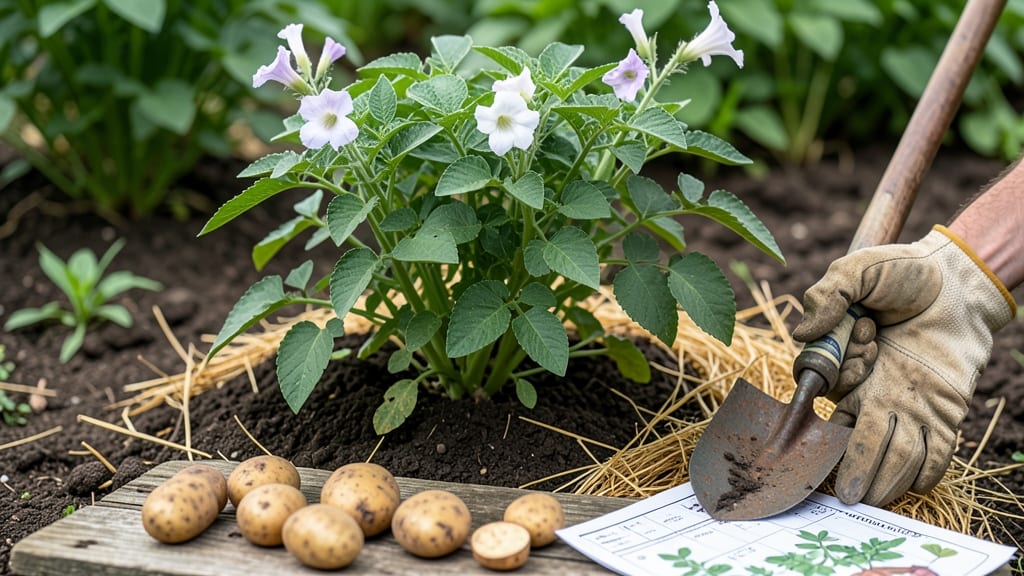
If you've ever planted potatoes in Michigan only to watch frost nip your crop before it even takes off, you're not alone.
The key to avoiding this common gardener's nightmare is knowing exactly when to plant potatoes in Michigan—and it all starts with understanding your local frost dates and soil temperatures.
Michigan's 5b-6b climate means your planting window can feel like a tightrope walk between early spring warmth and late frosts. But here's the good news: with the right timing, you can enjoy crisp, homegrown 🥔 as early as July and extend your harvest well into summer.
The secret lies in planting 4-6 weeks before your last frost date, typically around mid-April for most regions.
In this guide, I'll walk you through the exact soil temperature rules, regional variations across Michigan, and how to choose potato varieties that thrive in your specific zone. Whether you're a seasoned gardener or just starting, these tricks will help you beat frost and grow a bumper crop.
Ready to turn your Michigan garden into a potato powerhouse? Let's dive into the soil temperature secrets that make all the difference between a disappointing harvest and a goldmine of spuds.
Michigan potato planting calendar: frost dates and soil temperature rules
Michigan’s short growing season and unpredictable frost patterns demand precise timing for potato planting. Unlike warmer climates, your last frost date isn’t the only factor—soil temperature plays an equally critical role. Potatoes thrive when soil reaches at least 50°F, even if air temperatures hover near freezing.
This means you might plant 4-6 weeks before your official last frost date in many Michigan regions.
For most of Michigan’s Lower Peninsula (USDA Zones 5b-6a), the average last frost date falls around April 15. However, the Upper Peninsula (Zone 5a) often sees frost lingering until May 1. These dates are guidelines—actual planting windows shift based on soil warmth, not just calendar dates.
Here’s the golden rule: Wait until soil temperatures consistently hit 50°F before planting. In southern Michigan, this could mean planting as early as late March, while northern regions may need to wait until mid-April.
Using a soil thermometer (or even a DIY test like the "potato test") takes the guesswork out of timing.
Michigan’s frost-free growing season typically spans 150 days, which is tight for potatoes needing 90-120 days to mature. Early varieties like Yukon Gold (90 days) give you the best margin, while late varieties like Red Pontiac (120 days) require perfect timing to avoid frost damage.
Pro tip: Plant in stages every 2 weeks to spread out your harvest. This insurance strategy ensures at least one batch matures before frost, even if spring delays your initial planting.
For example, if you plant Yukon Gold on April 1, follow with another batch on April 15—this way, you’ll have new potatoes in July and storage potatoes in August.
Michigan’s first frost typically arrives around mid-October, but early frosts can sneak in as soon as September 20 in northern areas. To maximize your harvest, prioritize early-maturing varieties (under 90 days) for late summer crops.
For storage potatoes, aim to harvest before October 1 to avoid tuber damage.
Don’t let late spring frosts fool you into planting too early. Cold soil slows germination, leading to stunted plants and poor yields. If your soil is below 50°F in early April, wait—patience pays off with stronger, healthier potato plants.
I’ve seen gardeners rush planting in March only to end up with sprouted but non-yielding tubers.
For container gardening in Michigan, start seed potatoes indoors 6-8 weeks before your last frost date. Use black plastic pots (to absorb heat) and place them in a sunny window or under grow lights.
Transplant outdoors once soil warms, but be prepared to protect with row covers if frost threatens.
Remember: Michigan’s climate is unpredictable, but with these soil temperature rules and regional adjustments, you’ll avoid the heartbreak of frost-killed potatoes. The key is flexibility—adjust your planting window based on actual soil conditions, not just the calendar.
How to test soil temperature for perfect potato planting in Michigan
Michigan’s spring weather can be as unpredictable as a snowstorm in May, making soil temperature the true decision-maker for potato planting. Unlike air temperature, soil warmth dictates when your seed potatoes will sprout consistently—aim for 45–50°F for early varieties and 50–55°F for late-season types.
Without testing, you might plant too early and risk frost damage or too late and miss peak harvest windows.
Most gardeners skip this step, but I’ve learned the hard way that a soil thermometer (just $10 at garden centers) saves weeks of guesswork. Stick it 4 inches deep—the depth you’ll plant your potatoes—and check readings at 10 AM when soil is warmest.
If it’s below 45°F, wait; above 55°F, and you’re golden. Pro tip: Morning frost can drop soil temps overnight, so always test after sunrise.
No thermometer? Try the DIY potato test: Bury a raw potato 4 inches deep in your garden bed. Dig it up the next morning—if it’s soft and dented, your soil is too cold.
If it’s firm but slightly bruised, you’re in the sweet spot. This trick works surprisingly well, especially for Upper Peninsula gardeners where soil warms slower.