
Plants
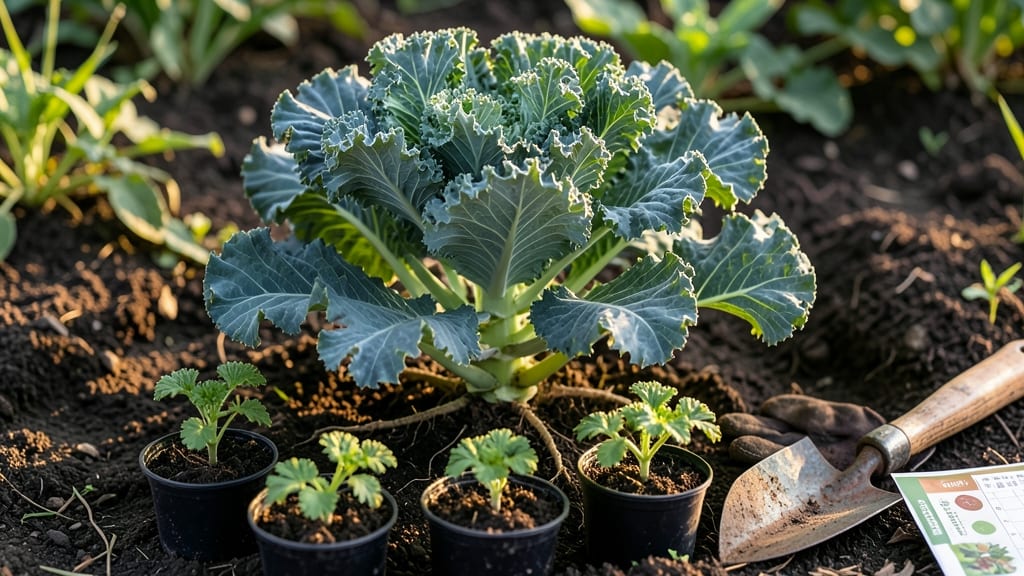
Michigan kale planting calendar by hardiness Zone (5-6)
Michigan's USDA hardiness zones 5b-6b create unique challenges for kale growers. The key is planting when soil temperatures reach 40°F (4°C)—cold enough to avoid bolting but warm enough for germination.
Spring planting starts 4-6 weeks before last frost, while fall planting begins 60-80 days before first frost to ensure maturity.
Northern Michigan (Zone 5b) has a shorter growing season, so focus on early spring and late summer plantings. Southern Michigan (Zone 6b) offers more flexibility, allowing two full harvests per year with proper timing. Always check your local frost dates—they can vary by 1-2 weeks between regions.
For spring planting, aim for mid-March to early April in Zone 6b and late April to early May in Zone 5b. Use row covers if nighttime temps dip below 25°F (-4°C) to protect young seedlings.
In fall, plant late July to early August for a harvest before winter sets in.
Soil temperature is critical—kale seeds won't germinate well below 40°F (4°C). Use a soil thermometer to confirm readiness. If planting in cold, wet springs, opt for transplants instead of direct sowing to avoid rot.
| Planting Window | Zone 5b (Northern MI) | Zone 6b (Southern MI) | Key Notes |
|---|---|---|---|
| Spring Planting | Late April - Early May | Mid-March - Early April | Use row covers for frost protection; soil temp ≥40°F |
| Fall Planting | Late July - Early August | Late July - Early September | Plant 60-80 days before first frost for maturity |
| Soil Temp for Germination | 40-50°F (4-10°C) | 40-50°F (4-10°C) | Use transplants if soil is too cold for direct sowing |
| Harvest Window | June - October | June - November | Harvest outer leaves first to extend season |
Succession planting is your secret weapon in Michigan. For spring crops, make weekly sowings every 2-3 weeks from April to June. This ensures a continuous harvest through summer and into fall. In fall, plant every 3 weeks from July until mid-August to maximize yield before frost.
Microclimates play a huge role in Michigan. Urban areas like Detroit (Zone 6b) can be 2-3°F warmer than rural farmland, allowing for earlier spring plantings. If you're near large bodies of water (like the Great Lakes), expect cooler, slower starts—delay planting by 1-2 weeks compared to inland areas.
Always monitor your garden's microclimate by checking local weather stations or using garden sensors. For example, Grand Rapids (Zone 6a) may have earlier last frosts than Detroit, while Traverse City (Zone 5b) will need later plantings. Adjust your schedule accordingly to avoid frost damage or bolting.
Pro tip: Use black plastic mulch in early spring to warm soil faster and extend your planting window by 1-2 weeks. This is especially helpful in Zone 5b where springs can be unpredictably cold. Just remove the mulch once soil reaches 50°F (10°C) to prevent overheating.
Remember, fall kale often tastes sweeter after a light frost—this is when Michigan gardeners get their best harvests. Plant red Russian kale or Winterbor kale for maximum frost tolerance and enjoy fresh greens well into December if you time it right.
Best frost-resistant kale varieties for Michigan gardens
Michigan’s cool-season climate makes kale a perfect fit, but not all varieties handle our unpredictable frosts equally. Choosing the right frost-resistant types ensures sweet, tender leaves even after light freezes. I’ve grown these top performers in my own Zone 5b garden, and they consistently deliver.
For direct sowing in spring or fall, Winterbor and Red Russian are my go-tos—they tolerate 20-25°F temperatures without bolting. If you prefer transplanting for faster harvests, Lacinato (Dinosaur Kale) and Vates stand up to late-season frosts while maintaining flavor.
These varieties also resist common Michigan pests like aphids and cabbage worms.
Variety
Cold Hardiness
Flavor Profile
Planting Method
Winterbor
20°F+ (survives light frost)
Sweet, tender, mild
Direct sow or transplant
Red Russian
15°F+ (bolts at 80°F)
Peppery, slightly bitter
Direct sow only
Lacinato (Dinosaur)
25°F+ (tender after frost)
Earthy, robust, slightly bitter
Transplant preferred
Vates
20°F+ (sweetens after frost)
Buttery, mild, sweet
Direct sow or transplant
Avoid Curly Kale for Michigan’s winters—it bolts quickly in spring heat and struggles with late-season frosts. Instead, prioritize Winterbor for extended harvests (it tastes sweeter after frost!) or Vates for buttery texture.
For container gardening, Red Russian thrives in pots and handles urban microclimates better than larger varieties.
Pro tip: Mix varieties for succession planting. Sow Winterbor in early spring and Vates in late summer to stretch your harvest from June through November. Just remember—thin seedlings to 12-18 inches apart to prevent crowding and disease.
🌱