
How To
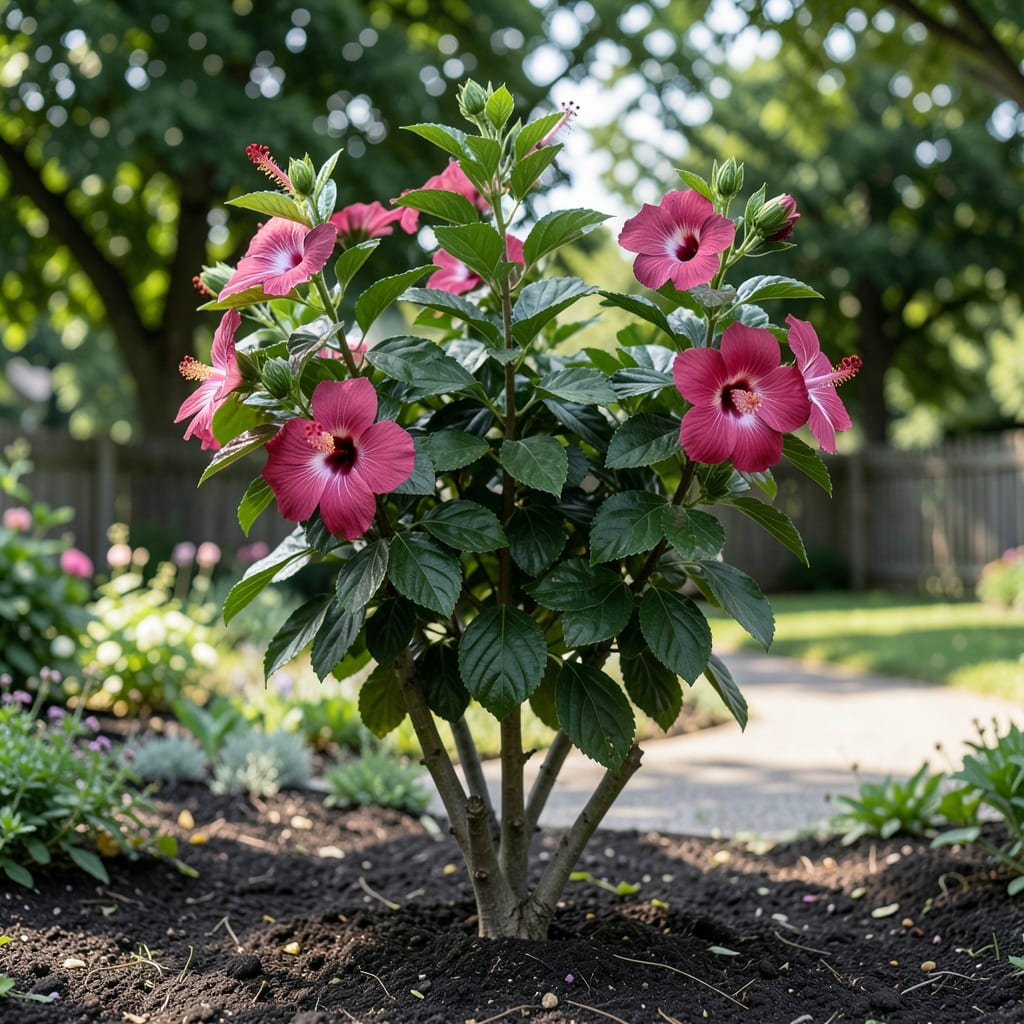
Wondering how tall hibiscus do they grow before they become a garden giant? The answer depends on the variety—some stay compact while others reach towering heights that’ll make your neighbors take notice!
If you’re planning your garden layout, knowing these heights is key to choosing the right hibiscus for your space. Whether you want a 3-foot dwarf variety for a small patio or a 15-foot tropical beauty as a statement plant, the options are endless.
In this guide, I’ll break down 10 popular hibiscus types and their mature sizes, so you can pick the perfect fit for your yard. You’ll also discover how pruning and climate affect their growth—because even the tallest hibiscus can be managed!
Ready to find the ideal hibiscus for your garden? Let’s dive into the details and help you make the best choice for your outdoor space.


Hibiscus plant height guide: 10 popular varieties and their mature sizes
Hibiscus plants are stunning additions to any garden, but their mature heights can vary dramatically—from petite patio-friendly varieties to towering tropical giants. If you're wondering "how tall do hibiscus grow", the answer depends entirely on the specific type you choose.
For example, the Hibiscus syriacus (commonly called rose of Sharon) typically reaches 8-12 feet tall, making it perfect for privacy screens, while the Hibiscus rosa-sinensis (tropical hibiscus) can soar up to 15 feet in ideal conditions. Dwarf varieties like Hibiscus 'Pride of Hawaii' stay a manageable 3-5 feet, ideal for containers or small gardens.
Below, I’ve organized 10 popular hibiscus varieties by their mature heights, so you can visualize which will fit your space best. Whether you need a compact bush or a statement plant, there’s a hibiscus for every garden size!
🌸
| Variety | Mature Height (ft) | Growth Habit | Best For |
|---|---|---|---|
| Hibiscus 'Pride of Hawaii' | 3-5 | Dwarf, bushy | Containers, small gardens |
| Hibiscus 'Lil Kim' | 4-6 | Compact, upright | Patio borders, foundation plants |
| Hibiscus syriacus (Rose of Sharon) | 8-12 | Shrub, multi-stemmed | Privacy screens, hedges |
| Hibiscus rosa-sinensis (Tropical Hibiscus) | 10-15 | Tree-like, single-trunk | Tropical landscapes, focal points |
| Hibiscus 'Dwarf Yesterday' | 3-4 | Bushy, spreading | Window boxes, balconies |
| Hibiscus 'Lord Baltimore' | 6-8 | Upright, arching branches | Mixed borders, shrub beds |
| Hibiscus 'Southern Belle' | 5-7 | Bushy, multi-branched | Foundation planting, mass plantings |
| Hibiscus 'Blue Chiffon' | 6-10 | Tall, slender stems | Cut flowers, cottage gardens |
| Hibiscus 'Arctic Blue' | 4-6 | Compact, rounded | Urban gardens, small yards |
| Hibiscus 'Lady Stanley' | 8-12 | Vigorous, upright | Large gardens, naturalized areas |
As you can see, the height of hibiscus plants ranges from 3 feet to over 15 feet, so your choice depends
How to choose hibiscus varieties based on garden space and climate
Selecting the right hibiscus isn’t just about flower color—your garden space and climate zone play huge roles in determining which varieties will thrive. A 3-foot dwarf hibiscus might be perfect for a balcony, while a 12-foot tropical giant needs room to shine in a backyard or landscape border.
First, consider your USDA hardiness zone. Most hibiscus fall into two main categories: tropical hibiscus (like Hibiscus rosa-sinensis) and hardy hibiscus (like Hibiscus syriacus). Tropical types need zones 9-11 and can’t handle frost, while hardy varieties survive zones 5-9 and even tolerate light freezes.
Next, think about your sunlight exposure. All hibiscus love full sun (6+ hours daily), but some varieties, like the Hibiscus moscheutos, can handle partial shade in hot climates. If your garden gets intense afternoon sun, opt for heat-tolerant varieties like 'Lady Baltimore' or 'Southern Belle'.
For small spaces, dwarf hibiscus like 'Mini Mauve' (3-4 feet) or 'Lil' Kim' (2-3 feet) are ideal. These fit perfectly in containers, window boxes, or tight borders. If you have a large yard or privacy hedge needs, consider 'Dwarf Blue' (5-6 feet) or 'Pride of Hoboken' (6-8 feet).
🌿
| Variety | Height | Best For | Climate Zones |
|---|---|---|---|
| Hibiscus rosa-sinensis (Tropical) | 6-12 ft | Large gardens, containers (dwarf types) | 9-11 |
| Hibiscus syriacus (Hardy) | 8-12 ft | Privacy screens, borders | 5-9 |
| Hibiscus moscheutos (Swamp Rose) | 4-6 ft | Ponds, wet areas, containers | 4-9 |
| 'Dwarf Blue' Hibiscus | 3-5 ft | Small gardens, borders | 6-10 |
| 'Lil' Kim' Hibiscus | 2-3 ft | Containers, patios, small spaces | 9-11 |
Don’t forget to check your soil type—hibiscus prefer well-draining, slightly acidic soil (pH 6.1-6.5). If your yard has heavy clay, amend it with compost or sand to improve drainage. For container gardening, use a lightweight potting mix with perlite to prevent root rot.
Finally, if you’re in a windy area, taller hibiscus may need staking or support to prevent damage. Varieties like 'Pride of Hoboken' have strong stems, while tropical types might need bamboo stakes or trellises for extra stability.
With these factors in mind, you’ll be able to pick a hibiscus that not only fits your space but also thrives in your local climate—giving you years of stunning blooms with minimal fuss! 🌸