
Light Requirements
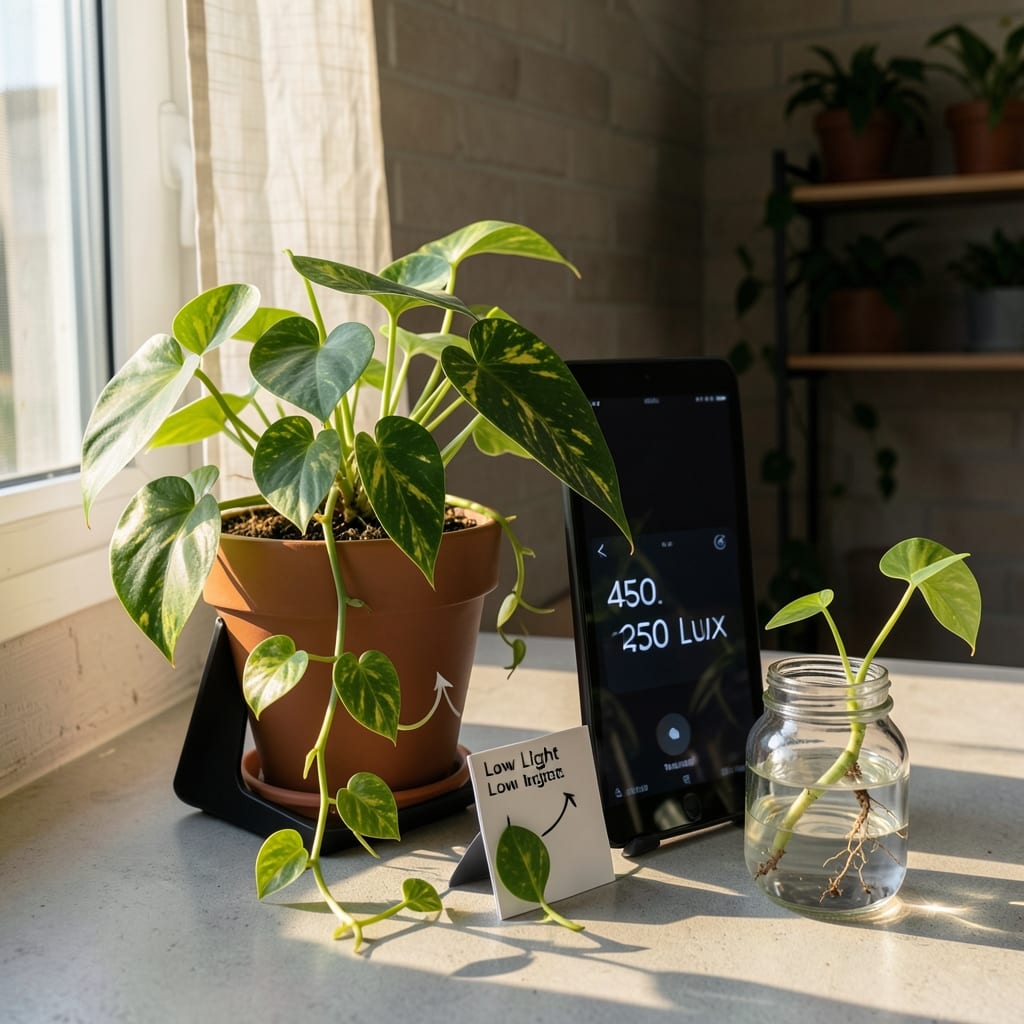
If your 🌿 pothos plant looks like it’s fighting for its life—leggy stems, faded leaves, or crispy edges—you’re probably guessing wrong about how much light it actually needs.
The truth is, pothos is one of the most forgiving plants out there, but it still thrives best in bright indirect light—think of it as the Goldilocks of houseplants. Too little light, and it stretches desperately toward the nearest window; too much, and those gorgeous leaves start to crisp or burn. I’ve seen this struggle firsthand, and the fix is simpler than you’d think.
In this guide, I’ll break down the exact light zones your pothos prefers—whether you’re dealing with a dim office corner, a sunny south-facing window, or even artificial lighting. You’ll learn how to spot the signs of light stress and adjust your setup in just 3 simple steps for a plant that looks as vibrant as the day you brought it home.
Ready to turn your pothos from a sad, straggly vine into a lush, thriving centerpiece? Let’s get started.

Pothos light requirements: the 3 brightness zones for optimal growth
Your pothos plant (Epipremnum aureum) thrives in bright indirect light, but it’s surprisingly adaptable. Understanding the three light zones—low, medium, and bright indirect—will help you place it perfectly for lush growth and vibrant variegation. Too little light causes leggy stems, while too much leads to brown leaf tips or sunburn. Let’s break down each zone and how to spot them in your home.
First, identify your home’s natural light sources. A north-facing window provides the gentlest light, ideal for pothos. East or west windows offer medium brightness, while south-facing windows deliver intense, direct light—too harsh for this tropical vine. Use these zones as your guide to avoid common mistakes like placing your pothos in a dark corner or direct sunlight.
🌿 Pothos Light Zones: What to Expect
| Zone | Light Type | Leaf Color | Growth Speed | Ideal Placement |
|---|---|---|---|---|
| Low Light | Dim, filtered (e.g., 10+ feet from window) | Pale green, minimal variegation | Slow, leggy stems | North-facing window or under fluorescent lights |
| Medium Light | Bright indirect (e.g., 3-6 feet from east/west window) | Rich green with creamy yellow variegation | Moderate, compact growth | Behind sheer curtains or in a well-lit room |
| Bright Indirect | Filtered sun (e.g., 1-3 feet from north window) | Deep green with bold yellow patterns | Fast, bushy growth | Near a window with diffused light or under grow lights |
In low light, your pothos will stretch toward any available light source, producing long, sparse stems with small leaves. This is its survival mode—think of it as a starvation signal. If you notice this, move your plant closer to a window or supplement with a 12-inch fluorescent grow light. The goal is to mimic its natural dappled forest-floor habitat where light filters through canopy leaves.
For medium light, your pothos will reward you with compact growth and vibrant variegation. This is the sweet spot for most growers, especially if you’re aiming for a full, bushy plant. Place it 3-6 feet from an east- or west-facing window or 1-2 feet from a north-facing window. If your home lacks natural light, a south-facing window with sheer curtains can work—just ensure no direct rays touch the leaves.
In bright indirect light, your pothos will grow faster and fuller, with deeper green leaves and more pronounced variegation. However, be cautious—direct sunlight (even for an hour) can cause brown patches or crispy edges. If your pothos is near a south-facing window, place it at least 5 feet away or use a light-colored curtain to diffuse the rays. A rotating schedule (turn the pot ¼ turn weekly) ensures even growth.
Pro tip: Variegated pothos (like ‘Marble Queen’ or ‘Golden Pothos’) need more light than solid green varieties to maintain their creamy patterns. If the yellow fades to green, it’s a sign your plant is light-deprived. Conversely, if the edges turn brown or white, it’s getting too much direct sun. Adjust accordingly by moving it closer or farther from the light source.
Don’t have a north-facing window? No problem. Fluorescent grow lights (like a 15W bulb on a timer for 12-14 hours/day) can replicate ideal conditions. Place the light 6-12 inches above the plant and adjust the height as it grows. For office setups, a desk lamp with a daylight bulb works well—just keep it 1-2 feet away to avoid overheating the leaves.
Remember, pothos are forgiving—they’ll survive in low light for months, but they’ll never reach their full potential without the right brightness. Aim for medium light as your baseline, then tweak based on your plant’s leaf color and growth pattern. With the right placement, your pothos will thrive year-round, even in the darkest corners of your home.
Watch for these visual cues to fine-tune your pothos’s light exposure: healthy leaves = perfect placement; leggy stems = more light needed; brown tips = too much sun. Small adjustments make a big difference in your plant’s happiness and health.
How to adjust your home’s lighting for a thriving pothos
If your pothos isn’t thriving, the issue might be light placement—not just quantity. Even in low-light spaces, you can create the perfect bright indirect light environment with a few simple tweaks. Start by rotating your plant every 2-3 weeks to ensure even growth and prevent leggy stems from stretching toward one light source.
For south-facing windows, use sheer curtains to diffuse harsh sunlight and prevent leaf burn. If your pothos sits near a west-facing window, watch for afternoon sun—move it back 2-3 feet by late summer to avoid brown leaf tips or crispy edges. East-facing windows are ideal year-round, offering gentle morning light without the intensity of midday sun.
🌿 Quick Fixes for Light Adjustments
- Rotate weekly: Turn pot ¼ turn to balance growth.
- Sheer curtains: Block 30-50% of direct sun for south/west windows.
- Grow lights: 6-8 hours of fluorescent or LED (12-15 inches away).
- Mirror trick: Place a mirror near the plant to reflect light into darker corners.
- Office setup: Fluorescent desk lamps work well for low-light offices.
If your home lacks natural light, supplemental grow lights are a game-changer. A 12-15 watt LED grow bulb (cool white or full spectrum) placed 12-18 inches above your pothos mimics bright indirect light. Run it for 6-8 hours daily—even in winter—to maintain vibrant variegation and compact growth. For office plants, fluorescent desk lamps (like those used for seedlings) work perfectly without overheating.
Watch for yellowing leaves—a classic sign of too much direct light—or pale, stretched stems (low light). Adjust by moving your pothos closer to or farther from the window in small increments. Pro tip: Test placement for 3-5 days before making permanent changes to avoid shocking the plant.
In bathrooms or hallways, group pothos with other low-light tolerant plants like snake plants or ZZ plants to create a microclimate. The humidity from showers can also benefit your pothos, reducing the need for extra misting. For dark basements or windowless rooms, a small LED grow light on a timer (like a Philips Hue) keeps your pothos happy year-round.
Remember, pothos are adaptable—they’ll survive in low light, but they’ll thrive with bright indirect light. Start with these adjustments, and you’ll see fuller leaves, richer variegation, and faster growth in just a few weeks. The key is observation: tweak as you go, and your pothos will reward you with lush, trailing beauty. 🌿