
Light Requirements
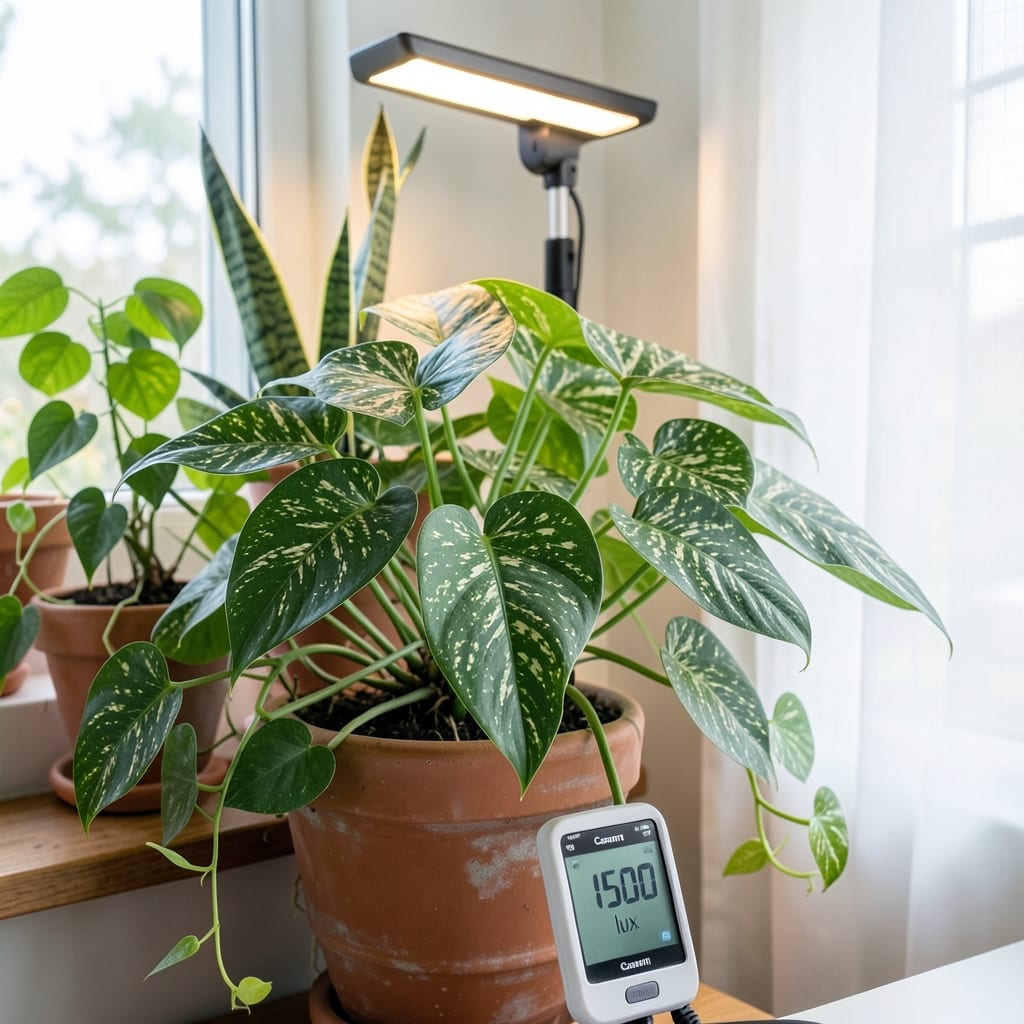
Arrowhead plant light requirements: the perfect balance between brightness and indirect sun
Your arrowhead plant (Syngonium) thrives in bright, indirect light, mimicking its natural tropical habitat. Unlike sun-loving succulents, this beauty burns easily under harsh rays. The key is finding that sweet spot where leaves stay vibrant but never crispy. I’ve learned this the hard way—my first arrowhead plant nearly died from too much afternoon sun!
Think of east-facing windows as the gold standard for arrowhead plants. These windows provide gentle morning sunlight without the intense heat of midday. A north-facing window also works well, especially in warmer climates where direct sun sneaks in. Even west-facing windows can work if you place the plant at least 6 feet away from the glass.
Here’s what happens when light is too low or too harsh: In dim corners, leaves stretch and lose color (a condition called etiolation). Too much direct sun causes brown patches or bleached spots. The goal? 4-6 hours of filtered light daily—enough to keep those arrowhead-shaped leaves popping with color.
| Light Condition | Ideal Placement | Leaf Color & Growth |
|---|---|---|
| Low Light (Under 2,000 lux) | North-facing window or 8+ feet from any window | Pale green leaves, leggy stems, slow growth |
| Bright Indirect (2,000-4,000 lux) | East/west window or 3-6 feet from south window | Deep green/variegated leaves, compact growth, healthy |
| Direct Sun (Over 6 hours) | South/west window without filter | Brown/yellow spots, crispy edges, stunted growth |
The lux level (measure of light intensity) matters more than you’d think. My variegated arrowhead plant—with those stunning white and pink stripes—needs at least 3,000 lux to maintain its patterns. Without enough light, the white sections fade to pale green. For solid green varieties, 2,000 lux suffices, but they’ll still grow faster with more light.
Pro tip: Rotate your plant quarter-turn weekly to ensure even growth. Arrowhead plants grow toward the light, so one side can become lopsided if left stationary. I place mine on a turntable tray for effortless rotation—game-changer for maintaining symmetry!
If you’re unsure about your space’s light, try this shadow test: Place a white piece of paper near your plant at noon. If the shadow is sharper than a pencil line, the light is too direct. If it’s fuzzy like a watercolor blend, you’ve got the perfect indirect glow.
For variegated varieties, like ‘Pink Allusion’ or ‘White Butterfly’, light becomes even more critical. These plants need more light to fuel their colorful foliage. Without it, they revert to plain green—like a watercolor painting left in the dark. I’ve seen this happen firsthand with my ‘White Coral’ arrowhead!
In summer months, when sunlight intensifies, move your arrowhead plant away from south-facing windows or use a sheer curtain to diffuse the light. I swear by a light-filtering mesh screen—it’s like giving your plant a tropical sunblock!
Remember: Consistency is key. Sudden light changes can shock your arrowhead plant, causing leaf drop. If you’re adjusting its location, do it gradually over 1-2 weeks. Think of it like acclimating to a new climate—slow and steady wins the race.
🌿
Arrowhead plant light requirements: the perfect balance between brightness and indirect sun
Your arrowhead plant (Syngonium) thrives in bright indirect light, mimicking its natural tropical habitat. Unlike sun-loving succulents, this beauty hates direct afternoon sun, which can scorch its delicate leaves. Think of it as a shade-loving diva that still needs plenty of ambient brightness to show off its stunning variegation.
In ideal conditions, your arrowhead plant should receive 4-6 hours of bright indirect light daily. This means placing it near an east-facing window where morning sun gently filters through, or a north-facing window that provides consistent, soft light. South-facing windows can work too, but only if you use a sheer curtain to diffuse the harsh rays.
Here’s how to visualize the perfect light setup for your arrowhead plant:
| Light Condition | Description | Best Placement |
|---|---|---|
| Bright Indirect | 4-6 hours of filtered light, like dappled sunlight | East or north window, 3-6 feet away |
| Low Light | Survives but grows slowly; leaves lose variegation | West window with curtain or artificial grow light |
| Direct Sun | Burns leaves; causes yellowing or browning | Avoid south windows without diffusion |
The science behind your arrowhead plant’s light needs lies in its tropical origins. In the wild, these plants grow under the canopy of larger trees, where they receive dappled sunlight rather than harsh overhead rays. When you replicate this environment indoors, you’ll see healthier growth and more vibrant foliage. For example, a variegated arrowhead plant will show off its creamy white or pink patterns best when it gets enough indirect light.
If you notice your plant’s leaves stretching toward the light (a condition called etiolation), it’s begging for more brightness. On the flip side, if the edges of the leaves turn brown or crispy, it’s getting too much direct sun. The key is to observe and adjust—move your plant a few inches closer or farther from the window every few weeks to find its sweet spot.
For multi-level shelves or offices with limited natural light, consider rotating your arrowhead plant quarter-turns weekly. This ensures all sides get equal exposure and prevents lopsided growth. Even in low-light conditions, your arrowhead plant can survive, but it’ll reward you with lush, vibrant growth when you give it the bright indirect light it craves.
Pro tip: Place your arrowhead plant near a west-facing window in winter when days are shorter. The gentle afternoon light will help it stretch less and maintain its shape until spring arrives. With the right light balance, your arrowhead plant will thrive for years, becoming a stunning centerpiece in any room.