
Orchid Care
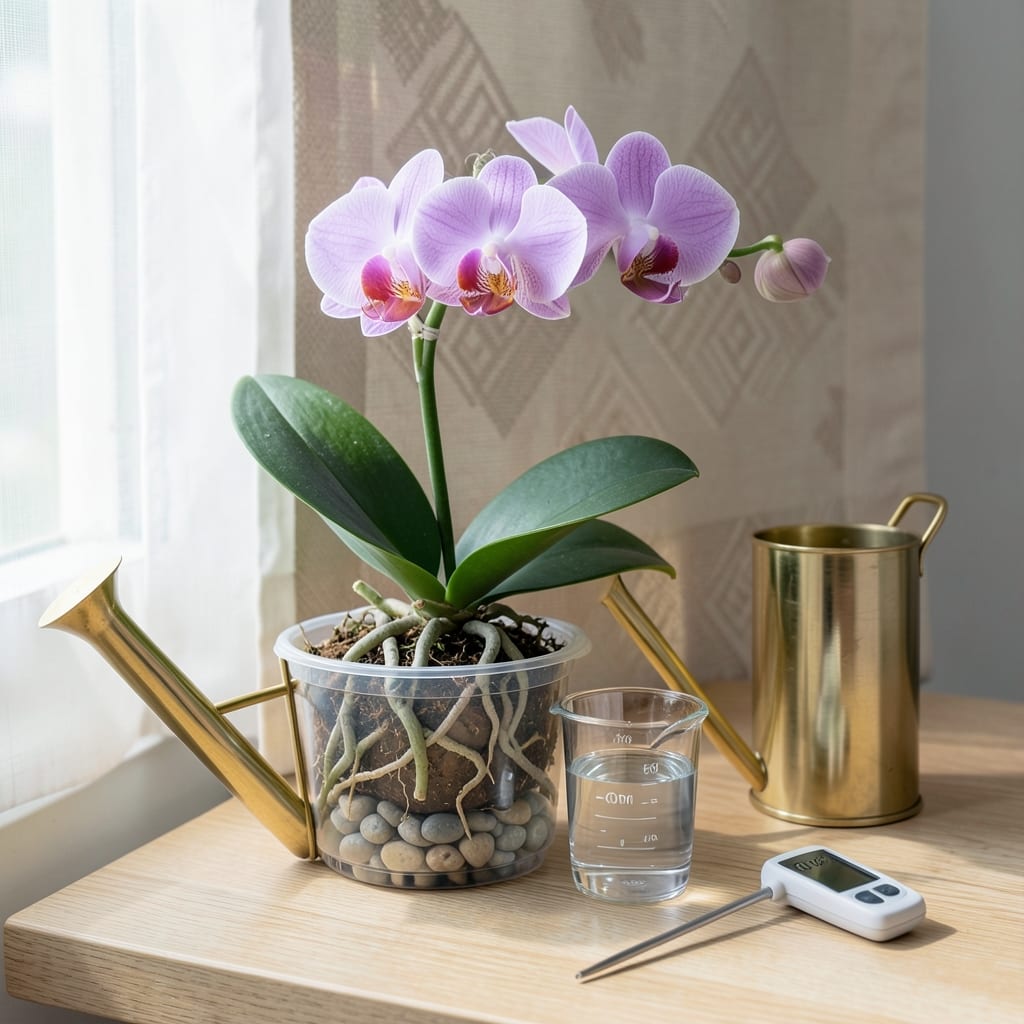
Watering your 🌸 orchids in a dry environment can feel like walking a tightrope—too much water and you risk root rot, too little and your plant wilts. The key isn’t just following a rigid schedule but learning how your orchid actually feels, especially when humidity drops below 40%. What if I told you the secret to perfect watering lies in a simple leaf test?
Most guides suggest watering orchids every 5–7 days, but that rule flies out the window when your home feels like a desert. Dry air speeds up moisture loss, so your orchid might need water sooner—or later—than you think. The trick is paying attention to subtle cues, like wrinkled leaves or a pot that’s lighter than expected.
In this guide, I’ll break down exactly how to adjust your watering routine based on your orchid’s needs, not just the calendar. We’ll cover everything from the leaf wrinkle test to seasonal tweaks, so you can keep your orchids thriving without guessing. Let’s get started.
Whether you’re dealing with a Phalaenopsis or a Cattleya, understanding these signals will save you from over- or underwatering—both of which can stunt growth or worse. Ready to master the art of orchid hydration in dry climates?
How to test orchid leaves for proper watering frequency in dry conditions
In dry environments, orchids rely on their leaves to signal when they need water. The leaf wrinkle test is my go-to method—simply press a leaf gently between your fingers. If it feels soft or wrinkled, it’s time to water. This method works best when humidity drops below 40%, which is common in arid climates.
For a more precise approach, I use a moisture probe or stick my finger 1-2 inches deep into the orchid mix. If the mix feels dry at this depth, your orchid needs hydration. Avoid relying solely on a schedule, as dry air accelerates moisture loss, making orchids thirstier faster than in humid conditions.
Step-by-Step Leaf Test Guide for Dry Environments
- Step 1: Inspect leaves for wrinkles or puckering—signs of dehydration.
- Step 2: Press a leaf gently; if it doesn’t spring back, water immediately.
- Step 3: Check leaf color—yellowing or graying indicates stress.
- Step 4: For Phalaenopsis orchids, leaves should feel plump and firm.
- Step 5: Water thoroughly until water drains from the pot’s bottom.
Dry air also affects leaf texture. Healthy orchid leaves should feel smooth and slightly firm. If they feel leathery or brittle, your orchid may be chronically underwatered. In contrast, mushy or translucent leaves signal overwatering—a common mistake in dry climates where people compensate by overdoing it.
Humidity plays a critical role. In environments with 30-40% humidity, I water my orchids every 5-7 days. But when humidity drops below 30%, I reduce the interval to every 3-5 days. Use a hygrometer to monitor levels and adjust accordingly.
For Cattleya orchids, which thrive in slightly drier conditions, I wait until the pseudobulbs shrivel slightly before watering. This variety stores water differently, so their leaves won’t wrinkle as quickly. Always tailor your approach to the specific orchid variety and its natural habitat.
Another trick I use is the "shake test". Gently shake the pot—if it feels light and dry, it’s time to water. This method is especially useful for Vanda orchids, which grow on bark and dry out faster in dry air. Combine this with the leaf test for the most accurate reading.
If your orchid’s leaves develop brown tips, it’s often a sign of low humidity rather than overwatering. In dry climates, I place a humidity tray under the pot or group orchids together to create a microclimate. This mimics their natural tropical habitat while adapting to arid conditions.
Remember, orchids in dry environments need less frequent but deeper watering. A 10-minute soak in room-temperature water ensures roots absorb moisture without sitting in excess water. Always empty the saucer afterward to prevent root rot, a silent killer in dry climates.
Finally, observe your orchid’s growth patterns. Healthy orchids produce new roots and leaves regularly. If growth stalls, it’s a sign to reassess your watering routine. Adjust based on the season—summer heat increases evaporation, while winter dormancy reduces water needs.
Optimal watering schedule for orchids in dry environments by season
Dry climates throw orchid watering schedules into chaos, but with the right adjustments, you can keep your plants thriving year-round. The key is understanding how seasonal temperature shifts and humidity fluctuations change your orchid’s hydration needs. In summer, when temperatures soar above 90°F, orchids lose moisture 30% faster than in cooler months, while winter’s dry air creates a false sense of security—your orchid still needs water, just less frequently.
For most Phalaenopsis orchids in dry environments, I follow a 7–10 day watering cycle during summer, increasing to every 5–7 days when humidity drops below 30%. In winter, when indoor heating kicks in, I extend the interval to every 14–21 days, but never let the roots dry out completely. The goal is to mimic their natural tropical rhythms while adapting to arid conditions.
Orchid Watering Schedule by Season in Dry Climates
| Season | Humidity Range | Watering Frequency | Key Adjustments |
|---|---|---|---|
| Spring | 30–50% | Every 7–10 days | Increase frequency if leaves wrinkle |
| Summer | 20–40% | Every 5–7 days | Water in early morning to reduce evaporation |
| Fall | 35–55% | Every 10–14 days | Reduce if nights are cool |
| Winter | 25–45% | Every 14–21 days | Avoid cold water; use room temp |
Temperature swings also play a role. When daytime highs reach 100°F, I water my orchids every 4–5 days to prevent dehydration, but I always check the leaf test first. In contrast, during winter’s dry heat from furnaces, I water every 3 weeks unless the pot feels unusually light. The key is balancing root health with environmental stress—orchids in dry climates need deeper watering but less frequently.
For Cattleya orchids, which store water in their pseudobulbs, I adjust the schedule to every 10–14 days in summer and every 21–28 days in winter. These orchids are more drought-tolerant, so I wait until the pseudobulbs shrink by 20–30% before watering. This variety’s natural resilience makes them ideal for dry environments, but they still need occasional deep soaks to prevent root shrinkage.
Another critical factor is pot material. Orchids in clay pots dry out faster than those in plastic, so I water clay-potted orchids 2–3 days earlier than plastic-potted ones. Terracotta’s porous nature helps regulate moisture, but it also means more frequent checks. If you’re using a humidity tray, reduce watering by 25% since the tray adds moisture to the air around the plant.
Never water orchids on a strict calendar. Instead, combine the leaf test, shake test, and seasonal adjustments for the best results. For example, if your orchid’s leaves feel firm but the pot is light, water immediately—even if it’s not your scheduled day. Dry climates demand flexibility, and your orchid’s signals should always override the clock.
One final tip: Morning watering is non-negotiable in dry environments. Watering in the early hours (before 10 AM) gives leaves time to dry, reducing the risk of fungal infections that thrive in humid microclimates. Avoid evening watering, as damp leaves overnight can lead to bacterial spots—a common issue in dry climates where humidity spikes at night.