
Trees
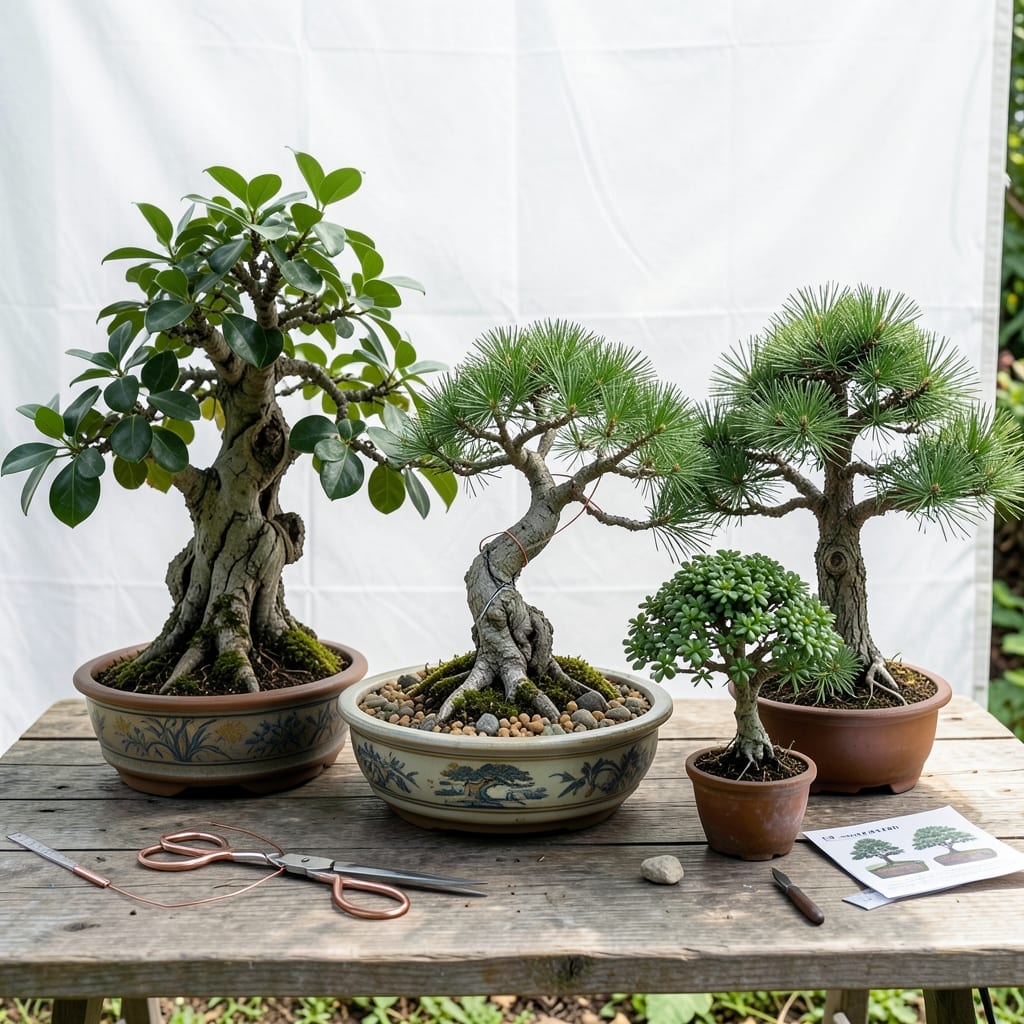
Natural height ranges of bonsai trees by species: smallest to tallest
Bonsai trees are famous for their miniature size, but their potential height varies dramatically depending on the species and cultivation techniques. While most bonsai stay between 1 to 3 feet tall, some varieties can grow much taller—even up to 10 feet or more—if given the right conditions. The key lies in understanding each species' natural growth patterns and how they translate into bonsai form.
For example, Japanese black pine (Pinus thunbergii) and Chinese elm (Ulmus parvifolia) are classic bonsai choices that typically max out around 2 to 3 feet when trained properly. Meanwhile, Ficus retusa (Ginseng Ficus) and Juniper (Juniperus procumbens) can grow significantly taller if not pruned aggressively. Your choice of species directly impacts how tall—or short—your bonsai can become.
The smallest bonsai varieties, like miniature junipers (Juniperus species) or dwarf azaleas (Rhododendron species), often stay under 6 inches tall when fully trained. These are ideal for desk displays or small shelves. On the other hand, large outdoor bonsai, such as Japanese maples (Acer palmatum) or Chinese scholar trees (Ficus microcarpa), can reach 6 to 10 feet while still maintaining their artistic proportions.
Here’s how natural growth habits influence bonsai height:
Some gardeners are surprised to learn that bonsai trees can grow taller than expected if not properly maintained. For instance, a Ficus retusa left unpruned indoors can easily exceed 6 feet, while a Japanese black pine in optimal outdoor conditions might reach 4 feet without intervention. The secret to controlling height lies in understanding each species' growth rate and applying the right techniques.
For example, fast-growing species like Chinese elm or Ficus require more frequent pruning to keep them compact, while slow-growing junipers or azaleas need less aggressive maintenance. If you're aiming for a miniature bonsai under 1 foot, focus on species like dwarf junipers or azaleas. For a statement-piece bonsai that can reach 5 feet or more, consider Japanese maples or large Ficus varieties.
One common misconception is that all bonsai stay small naturally. In reality, many bonsai species are simply pruned and trained to stay small. Without these techniques, they would grow to their full natural height—just like any other tree. For instance, a Japanese maple bonsai might only be
How pruning, training, and age affect bonsai tree height growth
Controlling your bonsai's height isn't just about cutting branches—it's an art of growth management through precise techniques. Pruning, wiring, and root restriction work together to shape both size and structure. For example, a Ficus retusa (fig) can grow 6+ feet tall in nature but stays under 2 feet with consistent pruning. The key is timing: prune just after new growth appears to avoid shock.
Young bonsai trees respond best to defoliation—removing leaves to force smaller, denser growth. This technique works wonders on Juniperus procumbens (dwarf juniper), reducing vertical growth by 30-50% over a season. However, over-pruning can stress the tree, leading to stunted or weak growth. Balance is everything—think of it like sculpting with living wood.
Cons: Risk of shock, slower recovery
Cons: Slower height reduction, less dramatic changes
Age plays a critical role in how tall your bonsai can grow. A 5-year-old Azalea bonsai might max out at 18 inches with proper care, while a 50-year-old Ficus could reach 3 feet if neglected. Older trees have thicker trunks and more established roots, making drastic height reductions riskier. Always prune 1/3 of the canopy or less per session to avoid permanent damage.
Wiring is another powerful tool for height control, especially for upright-growing species like Pine or Elm bonsai. By gently bending branches downward, you redirect growth energy into width rather than height. Leave wires on for 2-4 months max—longer risks scarring the bark. Pair this with root pruning during repotting to further limit vertical expansion.
Don't underestimate the power of pot size and root restriction. A bonsai in a 1-gallon pot will grow slower than one in a 3-gallon pot, even with identical pruning. For miniature varieties like Cotoneaster, use shallow, wide pots to encourage bushier growth. The smaller the pot, the more you'll need to prune roots—just trim 1/3 of the root ball every 2-3 years.
Remember, every bonsai has a natural growth ceiling based on its species. A Juniper will never grow as tall as a Maple, no matter how much you prune. Research your tree's mature height range before committing to a size goal. With patience and precision, you can guide even the fastest-growing bonsai into a harmonious miniature form.