
Size
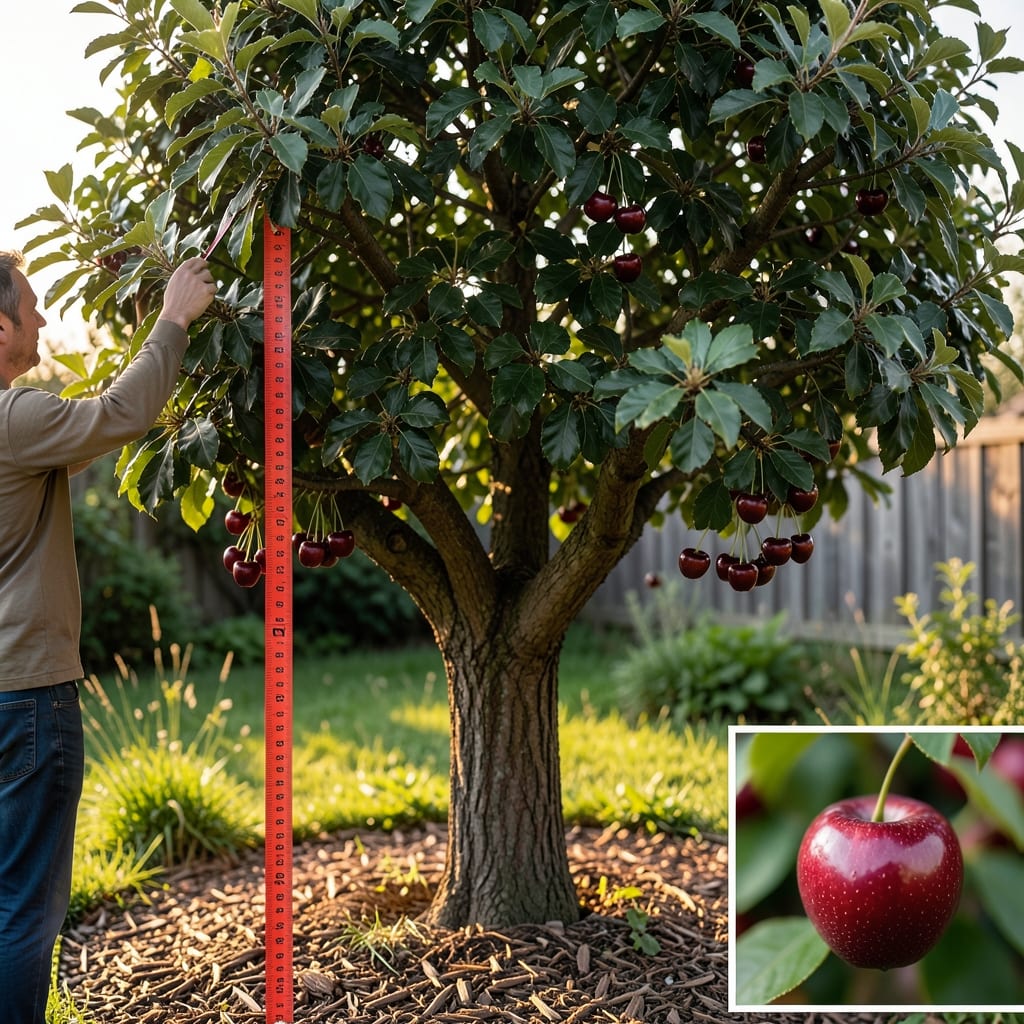
If you’re dreaming of juicy 🍒 Bing cherries but wondering how tall do Bing cherry trees grow, here’s the good news: your yard doesn’t need to be the size of a farm. The height of Bing cherry trees can vary dramatically—from towering giants to compact varieties that fit snugly in small gardens or even containers.
Standard Bing cherry trees typically reach 15–25 feet at maturity, but that’s not your only option. With the right variety, you can enjoy sweet Bing cherries without sacrificing valuable outdoor space. Whether you’re in USDA Zone 6a or another region, we’ll break down how to choose the perfect size for your needs.
Curious about how fast they grow or whether pruning can keep them manageable? I’ll share expert tips to control their height while maximizing fruit production. Plus, we’ll tackle common questions like, “Do Bing cherry trees stay small?” and “How do I keep mine from getting too tall?”
Let’s dive into the details so you can grow your dream cherry tree—no matter how limited your space may be.

Standard Bing cherry tree height: what to expect in full-grown varieties
When you picture a Bing cherry tree, the first thing that might come to mind is its impressive height. Standard Bing cherry trees (Prunus avium) typically reach a mature height of 15–25 feet, making them a classic choice for orchards or large backyard gardens. These trees thrive in USDA Zones 5–8 and require ample space to develop their full potential.
In their first year, Bing cherry trees grow 2–4 feet tall, with rapid growth spurts in years two and three, reaching 6–10 feet and 12–15 feet, respectively. By the time they’re fully mature, their height can rival a two-story house, which is why planning your garden layout is essential.
Climate plays a significant role in how tall Bing cherry trees grow. In warmer regions like Zone 8, these trees may grow taller and faster due to longer growing seasons. Conversely, in cooler climates like Zone 5, growth might be slightly slower, but they’ll still reach their full height over time.
If you’re wondering whether standard Bing cherry trees stay small, the answer is no—unless you actively manage their growth through pruning. Without intervention, these trees will continue to grow taller, which can be challenging in smaller yards or urban settings.
For optimal fruit production, Bing cherry trees need 6+ hours of full sun daily and well-draining soil. Their height also affects their root system, which can spread 10–15 feet wide, so planting them too close to structures or other plants can lead to competition for nutrients and water.
Here’s a quick breakdown of what to expect with standard Bing cherry trees:
If the thought of a 20-foot-tall tree in your backyard feels overwhelming, don’t worry. There are space-saving alternatives, like dwarf and semi-dwarf Bing cherry varieties, that can fit even the smallest gardens. These varieties maintain the same delicious flavor but stay under 12 feet tall, making them perfect for patios, balconies, or small urban yards.
For now, if you’re committed to a standard Bing cherry tree, plan for its mature height by planting it at least 15 feet away from fences, buildings, or other trees. This spacing ensures proper airflow, reduces disease risk, and allows for easy harvesting with a ladder.
Ready to explore compact options? In the next section, I’ll introduce you to the top 5 space-saving Bing cherry tree varieties that keep height under control while delivering abundant fruit. You’ll be surprised at how much flavor you can enjoy in a small footprint!
Top 5 space-saving Bing cherry tree varieties under 12 feet
If standard Bing cherry trees feel too tall for your space, you’ll love these compact varieties that deliver the same sweet flavor in a fraction of the footprint. These dwarf and semi-dwarf options stay under 12 feet tall while producing abundant fruit—perfect for patios, small yards, or even large containers. Whether you’re in USDA Zone 6a or another region, these varieties thrive with proper care.
Below is a comparison of the top 5 space-saving Bing cherry varieties, including their mature heights, yield potential, and care requirements. Each option balances compact growth with delicious fruit production, making them ideal for urban gardeners or those with limited outdoor space.
For containers, choose varieties like Bing Improved or Montmorency, which thrive in 15–20 gallon pots with well-draining soil. These compact trees need 6+ hours of sun daily and regular watering to prevent drought stress. In small yards, Stella or Lapins are excellent choices—they produce fruit early and require minimal pruning to maintain their height.
If you’re in a colder climate (Zone 5 or 6), consider Montmorency or Black Republican, which handle frost better than some other varieties. For warmer regions (Zone 8+), Bing Improved or Lapins will flourish with consistent moisture and protection from afternoon heat.
Pro tip: Pair compact Bing cherry trees with self-pollinating varieties like Stella to ensure fruit production without needing a second tree. For cross-pollination, plant Black Republican near another Bing cultivar for better yields.
Ready to transform your small space into a cherry orchard? In the next section, I’ll share expert pruning techniques to keep your Bing cherry tree at your desired height while maximizing fruit production—no matter which variety you choose! 🌱