
How To
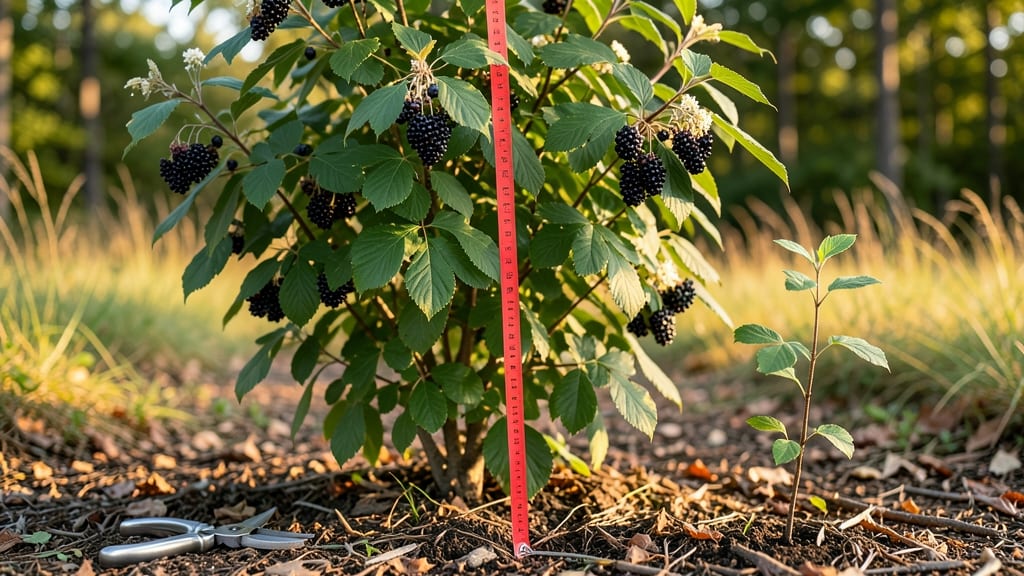
If you're dreaming of growing elderberry bushes but worried how tall they can grow, here's the good news: these plants offer surprising flexibility in size. While some varieties can reach towering heights of 12 feet, others stay compact—making them perfect for even the smallest yards.
Understanding how tall elderberry bushes grow helps you plan your garden layout with confidence. Whether you're working with 6a zone conditions or limited space, choosing the right variety ensures you get the berries you love without sacrificing your outdoor area.
Let's explore the height ranges and space-saving options that make elderberries a great fit for any garden.
The key to managing elderberry growth lies in selecting the right cultivar and using smart pruning techniques. Some varieties like 'York' stay under 6 feet, while others like 'Black Beauty' can reach their full 12-foot potential.
With the right approach, you can enjoy these productive plants without them taking over your landscape.
Ready to discover how to maximize your space while growing elderberries? We'll cover everything from variety selection to pruning tips that keep these bushes in check. Your perfect elderberry garden is closer than you think!

Elderberry bush height guide: standard varieties and their growth patterns
If you're planning to grow elderberries, knowing their mature height is crucial for spacing and placement. Most elderberry bushes reach 6 to 12 feet tall, but their growth patterns vary by species and growing conditions.
The two most common varieties—Sambucus canadensis (American elderberry) and Sambucus nigra (European elderberry)—have distinct growth habits that will influence your garden layout.
The American elderberry (Sambucus canadensis) typically grows 8 to 12 feet tall with a spread of 6 to 10 feet. It’s a fast-growing shrub that can reach its mature height in just 3 to 5 years under ideal conditions.
Meanwhile, the European elderberry (Sambucus nigra) tends to be slightly shorter, usually 6 to 10 feet tall, with a more compact spread of 5 to 8 feet.
Climate plays a significant role in elderberry growth. In warmer climates (USDA Zones 6-9), elderberries grow faster and reach their full height more quickly. In cooler regions or high-altitude areas, growth may be slower, with mature heights on the shorter end of the spectrum.
For example, in Zone 5 or colder, you might see elderberries max out at 6 to 8 feet tall.
Growth rate is another key factor. Elderberries can grow 2 to 4 feet per year in their first few years, especially when young and healthy. After reaching maturity, their growth slows, but they continue to produce new branches and berries annually. This rapid early growth is why proper spacing is essential—planting too close can lead to overcrowding and reduced fruit production.
Here’s a quick comparison of how elderberry height varies by variety and location:
| Variety | Mature Height | Spread | Growth Rate (First 3 Years) | Best For |
|---|---|---|---|---|
| Sambucus canadensis (American) | 8–12 ft | 6–10 ft | 2–4 ft/year | Large gardens, hedges, wildlife habitats |
| Sambucus nigra (European) | 6–10 ft | 5–8 ft | 1–3 ft/year | Small gardens, containers, urban areas |
| Dwarf Varieties (e.g., 'Black Beauty') | 4–6 ft | 3–5 ft | 1–2 ft/year | Balconies, patios, small yards |
When planning your elderberry garden, consider not just height but also spread. Elderberries have a wide canopy, so they need ample space to avoid shading out nearby plants. For example, a 10-foot-tall elderberry with a 8-foot spread will occupy a significant footprint.
If you’re planting multiple bushes, space them 8 to 10 feet apart to ensure proper airflow and sunlight penetration.
Another factor to consider is trellising or espaliering. If space is limited, you can train elderberries to grow vertically, reducing their spread while maintaining height. This technique is especially useful for small gardens or containers, where horizontal growth would be restrictive.
Just be prepared to invest time in pruning and support structures to keep the plant in check.
For those in urban or suburban settings, choosing a dwarf variety like 'Black Beauty' or 'York' can be a game-changer. These compact elderberries stay under 6 feet tall and are perfect for growing in large containers or along fences.
They still produce abundant berries but require far less space than their standard counterparts.
Understanding elderberry height isn’t just about aesthetics—it’s about fruit production and plant health. Overcrowded bushes produce smaller yields and are more susceptible to diseases like powdery mildew. By selecting the right variety for your space and giving it room to grow, you’ll set your elderberries up for success.
Ready to plan your elderberry garden? Start by measuring your space and choosing a variety that fits your layout. Whether you have a sprawling backyard or a cozy balcony, there’s an elderberry perfect for you!
Best space-saving elderberry varieties for small gardens and containers
If your garden space is limited but you still dream of harvesting sweet elderberries, don’t worry—there are compact elderberry varieties that thrive in tight spots!
While standard elderberries can reach 6–12 feet tall, these space-saving cultivars stay shorter and more manageable, making them perfect for containers, small yards, or urban gardens. Let’s explore the best options for maximizing yield without sacrificing space.
One of my favorite dwarf elderberry varieties is the ‘Black Beauty’, which typically grows 6–8 feet tall but stays bushier and more controlled than its taller cousins.
Another top pick is ‘York’ elderberry, a hybrid that tops out around 5–7 feet—ideal for container growing or tight garden beds. These varieties not only save space but also produce abundant fruit with minimal pruning.
For those with ultra-small spaces, consider ‘Adams’ elderberry, a semi-dwarf variety that maxes out at 5–6 feet. It’s perfect for balcony gardens or patio planters with 15–20 gallon containers. Just ensure your container has drainage holes and depth for strong root growth—elderberries hate soggy feet!
| Variety | Mature Height | Spread | Best For |
|---|---|---|---|
| ‘Black Beauty’ | 6–8 ft | 5–6 ft | Small yards, hedges |
| ‘York’ | 5–7 ft | 4–5 ft | Containers, urban gardens |
| ‘Adams’ | 5–6 ft | 3–4 ft | Balconies, patio planters |
When planting compact elderberries, prioritize well-draining soil and full sun to partial shade—even dwarf varieties need at least 6 hours of sunlight daily for optimal fruit production. In containers, mix compost into the soil to boost nutrients, and mulch around the base to retain moisture.
Just remember: elderberries are thirsty plants, so water deeply 2–3 times per week during dry spells.
For container growing, choose a pot at least 18 inches wide and deep to accommodate roots. If you’re placing your elderberry near a fence or trellis, train young stems to grow vertically—this not only saves space but also makes harvesting easier.
Prune lightly in late winter or early spring to encourage bushier growth and improve airflow, reducing the risk of fungal diseases like powdery mildew.
Pro tip: If you’re short on horizontal space but have vertical room, trellis your elderberry! Use a strong trellis or arbor to guide the bush upward, turning it into a living privacy screen while keeping it contained.
Just be sure to prune regularly to prevent overgrowth—even dwarf varieties can get leggy if neglected.
With the right variety and care, you can enjoy homegrown elderberries—even in the smallest of spaces! Whether you opt for ‘Black Beauty’ in a raised bed or ‘Adams’ in a balcony planter, these compact cultivars prove that big flavor doesn’t require big gardens. 🫐