
Trees
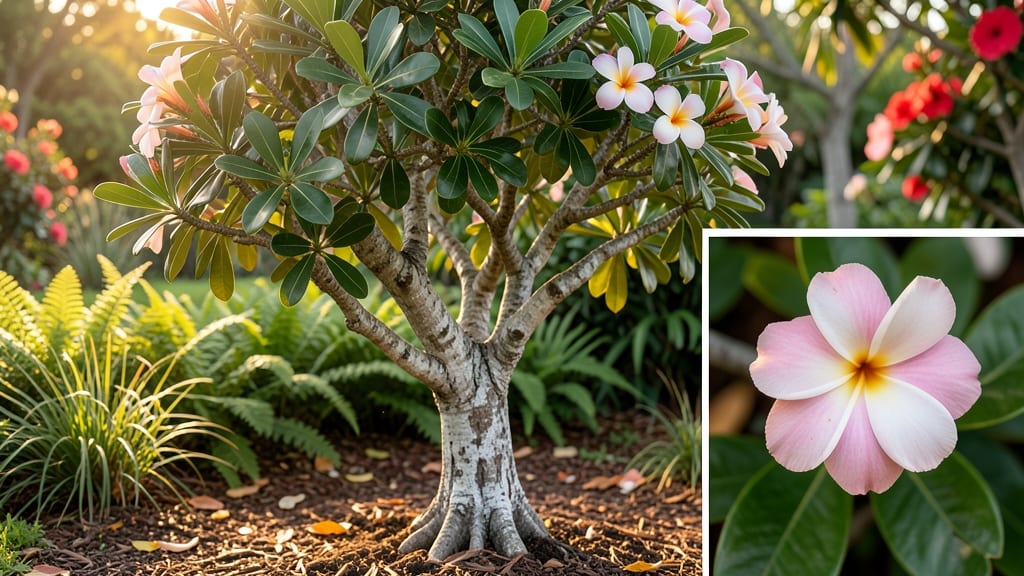
Plumeria tree height by variety: from dwarf to giant species
Plumeria trees are stunning tropical plants known for their intoxicating fragrance and vibrant blooms, but their mature size can vary dramatically. Some varieties stay small enough for containers, while others grow into towering trees.
Understanding these differences helps you choose the perfect plumeria for your space—whether it's a balcony, patio, or backyard.
Most plumeria trees reach maturity between 6 and 20 feet, but the variety you select will determine whether your tree becomes a compact shrub or a sprawling giant.
For example, Plumeria rubra (commonly called frangipani) often grows between 10 and 15 feet in ideal conditions, while Plumeria obtusa can stretch up to 20 feet if left unpruned.
If you're limited on space, dwarf varieties like Plumeria 'Ice Cream' or 'Pink Dawn' typically stay between 3 and 5 feet, making them perfect for pots or small gardens.
Meanwhile, standard varieties like Plumeria 'Singapore White' can reach 10 to 15 feet in just a few years, so they’re better suited for larger landscapes.
Here’s a quick comparison to help you visualize the differences:
| Variety | Mature Height (ft) | Growth Rate | Best For |
|---|---|---|---|
| Plumeria rubra | 10-15 ft | Moderate | Backyards, borders |
| Plumeria obtusa | 15-20 ft | Fast | Large gardens, privacy screens |
| Plumeria 'Ice Cream' | 3-5 ft | Slow | Containers, patios |
| Plumeria 'Pink Dawn' | 4-6 ft | Moderate | Small gardens, pots |
| Plumeria 'Singapore White' | 10-15 ft | Fast | Landscaping, hedges |
| Plumeria 'Hawaiian Snow' | 6-10 ft | Moderate | Medium-sized spaces |
When planning your plumeria’s placement, consider not just its mature height but also its spread. Many varieties grow wider than they do tall, so leave at least 6 to 10 feet of space between trees to allow for airflow and sunlight penetration.
This is especially important for larger varieties like Plumeria obtusa, which can develop a sprawling canopy if unchecked.
If you’re growing plumeria in containers, dwarf varieties are your best bet. A 5-gallon pot works well for 3- to 5-foot varieties, while larger containers (15+ gallons) can accommodate semi-dwarf types like Plumeria 'Hawaiian Snow'.
Just remember: root-bound plants grow slower, so upgrade your pot size every 2-3 years to encourage healthy growth.
Climate also plays a role in height. In USDA zones 10-12, plumeria trees thrive year-round and can grow faster due to consistent warmth. However, in cooler climates, they may grow more slowly or require container culture to survive winters indoors.
If you’re in a warmer zone, expect your plumeria to reach its mature height 2-3 years faster than in cooler regions.
For those who love the idea of a plumeria but worry about its size, don’t fret! With the right variety and care, you can enjoy these fragrant beauties in almost any space.
Whether you opt for a compact dwarf or a tall standard, understanding their growth habits ensures your plumeria will thrive—and stay the perfect size for your garden.
🌺
How to control plumeria tree height: pruning, training, and container tips
Managing the height of your plumeria tree starts with understanding its natural growth habits. Most varieties grow 6 to 20 feet tall, but with the right techniques, you can keep them compact—even in containers. The key is pruning at the right time and using container training for dwarf varieties.
For bushier growth, prune your plumeria in late winter or early spring, just before new growth begins. This encourages multiple branches to form, reducing vertical growth. Always use sterilized pruning shears to prevent disease, and cut just above a leaf node to promote healthy regrowth.
🌿 Step-by-Step Pruning Guide
- Step 1: Wait until spring when new leaves emerge.
- Step 2: Remove dead or weak branches first for better airflow.
- Step 3: Cut 1/3 of the plant’s height to encourage bushiness.
- Step 4: Prune after flowering to avoid sacrificing blooms.
- Step 5: Disinfect tools with rubbing alcohol between cuts.
If you’re growing plumeria in containers, choose pots that are at least 12 inches wide and deep for dwarf varieties like Plumeria rubra. Smaller pots restrict root growth, which naturally limits height.
For standard varieties, opt for 18-inch pots and prune aggressively to keep them under 10 feet tall.
Another trick is topping, where you cut the main stem just above a leaf node to force lateral branches. This works best on young plumeria trees and can reduce height by 30-50% over a growing season. Just be patient—it may take a year to see dramatic changes in shape.
For indoor plumeria care, place your tree near a south-facing window to maximize sunlight, which slows vertical growth. Rotate the pot every few weeks so all sides get equal light, preventing lopsided growth.
If your plumeria starts stretching toward the light, it’s time to move it closer to the window or supplement with a grow light.
Remember, plumeria trees grow fastest in warm climates with full sun exposure. In cooler zones, growth slows naturally, making height management easier. With consistent pruning and proper container care, you can enjoy a fragrant, manageable plumeria that fits your space perfectly.