
How To
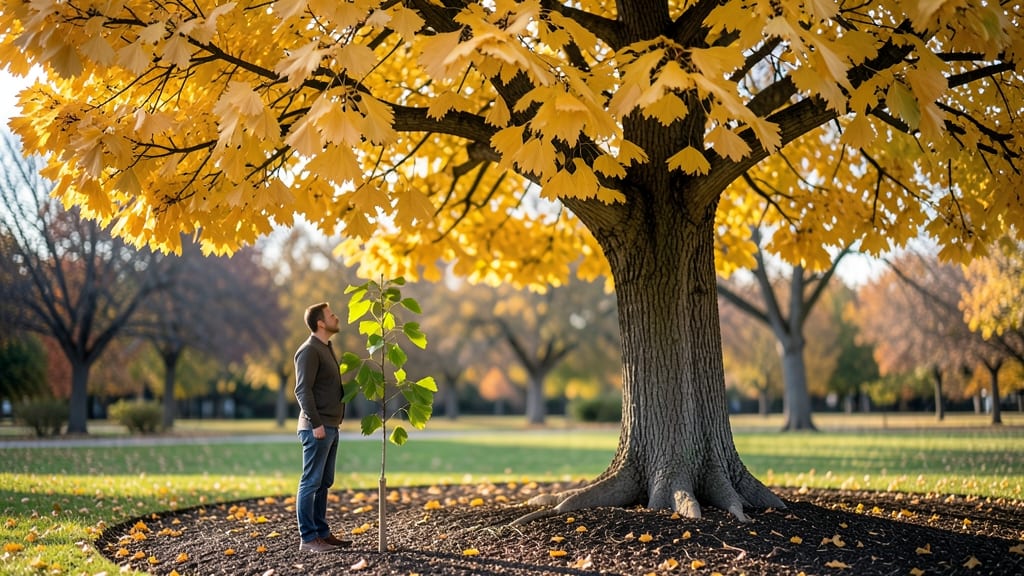
Wondering how tall does a ginkgo tree grow before it outgrows your backyard? You’re not alone—many homeowners assume these majestic 🌳 Ginkgo Trees need sprawling yards to shine. The good news? With the right variety, you can enjoy their iconic golden foliage without sacrificing your lawn’s space.
Standard ginkgo trees can tower 30 to 100 feet tall, but compact cultivars like 'Fastigiata' or 'Horstmanii' stay under 30 feet, making them perfect for urban gardens. Whether you’re in USDA Zone 6a or beyond, choosing the right type ensures your ginkgo thrives without becoming a neighborhood giant.
Planting in spring (April–May) gives your tree the best start, and with proper care—like well-drained soil and full sun—you’ll watch it grow steadily while keeping its height manageable. Let’s explore the best space-saving options so you can enjoy this living fossil without the worry.
From dwarf varieties to pruning tips, we’ll cover everything you need to know to pick the perfect ginkgo for your yard. Ready to add a touch of ancient beauty to your outdoor space? Let’s get started.

Ginkgo tree height guide: mature sizes by variety
When I first planted my ginkgo tree, I assumed it would eventually tower over my backyard like a skyscraper. The reality? Standard Ginkgo biloba trees can grow an astonishing 30 to 100 feet tall, making them one of the tallest ornamental trees for landscapes.
But here’s the good news: not all ginkgos reach those heights. Some varieties stay compact enough for even the smallest urban yards.
The mature height of a ginkgo depends entirely on its cultivar. While the iconic 'Adonis' variety can shoot up to 80 feet, others like 'Fastigiata' grow in narrow, columnar shapes reaching 50 to 60 feet.
Then there are the true space-savers: 'Troll' and 'Saratoga', which max out at 15 to 30 feet—perfect for patios or foundation plantings.
Growth rates also vary dramatically. A standard ginkgo might grow 1 to 2 feet per year during its prime, while dwarf varieties grow just 6 to 12 inches annually. This slower growth means you can plan your landscape around their eventual size without waiting decades for them to mature.
Here’s what you need to know about ginkgo tree heights—including how to choose the right variety for your space:
| Variety | Mature Height | Growth Rate | Best For |
|---|---|---|---|
| 'Adonis' | 80–100 ft | 1–2 ft/year | Large estates, parks |
| 'Fastigiata' | 50–60 ft | 1–1.5 ft/year | Narrow spaces, streetscapes |
| 'Horstmanii' | 40–50 ft | 1 ft/year | Medium yards, privacy screens |
| 'Troll' | 15–20 ft | 6–12 in/year | Small yards, containers |
| 'Saratoga' | 25–30 ft | 8–12 in/year | Urban gardens, patios |
If you’re working with limited space, the 'Troll' or 'Saratoga' varieties are game-changers. These compact ginkgos deliver the same stunning golden autumn foliage and pest-resistant benefits without overwhelming your landscape. For example, a 'Troll' ginkgo will fit neatly in a 10-foot-wide planting circle, while still providing year-round interest.
One common misconception is that all ginkgos need full sun to reach their maximum height. While sunlight does influence growth, the real height determinant is the cultivar’s genetics. Even in partial shade, a 'Troll' will rarely exceed 20 feet, whereas a 'Adonis' will still climb toward the sky.
This makes them far more adaptable to urban environments where sunlight is limited.
For those with small yards, I recommend planting your ginkgo near a south-facing wall or fence. This not only maximizes sunlight exposure but also creates a natural windbreak for your home.
Just be sure to leave at least 10 feet of clearance for the 'Saratoga' variety or 15 feet for the 'Troll' to prevent root competition with nearby plants.
Another pro tip: If you’re concerned about future growth, consider starting with a container-grown ginkgo. Nurseries often sell 3-to-5-year-old trees that are already established, so you can skip the slow early growth phase. Just
Finally, don’t forget that ginkgo trees have extensive root systems. Even compact varieties can spread 2 to 3 times their canopy width. This means a 15-foot-tall 'Troll' could have roots extending 30 to 45 feet in all directions. Always check your property lines before planting!
Best low-growing ginkgo varieties for urban gardens
If your yard is more postage stamp than pasture, don’t dismiss ginkgo trees—some varieties stay remarkably compact while delivering the same stunning fall color. The key? Choosing a low-growing cultivar like 'Troll' or 'Saratoga', which top out at just 25 feet or less.
These aren’t just space-savers; they’re designed to thrive in urban landscapes where every inch counts.
For example, Ginkgo biloba 'Troll' reaches a modest 15–20 feet at maturity, making it ideal for small backyards or even large containers (with proper root pruning). Its columnar shape also saves horizontal space, letting you plant it near patios or driveways without blocking views.
Meanwhile, 'Saratoga' hits 25–30 feet—still dwarf compared to its wild relatives—and boasts a pyramidal form that’s perfect for street tree plantings.
🌱
| Variety | Mature Height | Spread | Best For |
|---|---|---|---|
| 'Troll' | 15–20 ft | 8–12 ft | Containers, small yards |
| 'Saratoga' | 25–30 ft | 15–20 ft | Street trees, medium yards |
| 'Fastigiata' | 30–40 ft | 12–15 ft | Narrow spaces, alleys |
| 'Horstmanii' | 20–25 ft | 10–15 ft | Urban gardens, parks |
To maximize their ornamental value, prioritize pruning in late winter while the tree is dormant. Focus on removing crossing branches or those growing inward to maintain the desired shape.
These varieties also benefit from regular mulching—a 3-inch layer of organic mulch around the base helps retain moisture and suppresses weeds, which is especially helpful in urban heat islands.
One common misconception is that smaller ginkgos produce less vibrant fall color. Not true! All ginkgo varieties—even the dwarf types—turn a golden yellow in autumn, though the intensity may vary slightly based on sun exposure.
For the deepest hues, plant your ginkgo in a full-sun location with at least 6 hours of direct light daily.
For container growing, 'Troll' is your best bet, but remember: ginkgos have extensive root systems. Choose a pot with drainage holes and a minimum 20-gallon capacity for a mature tree.
Move containers to a protected spot in winter if temperatures dip below 10°F—these trees are hardy but not frost-proof in pots.
✂️