
How To
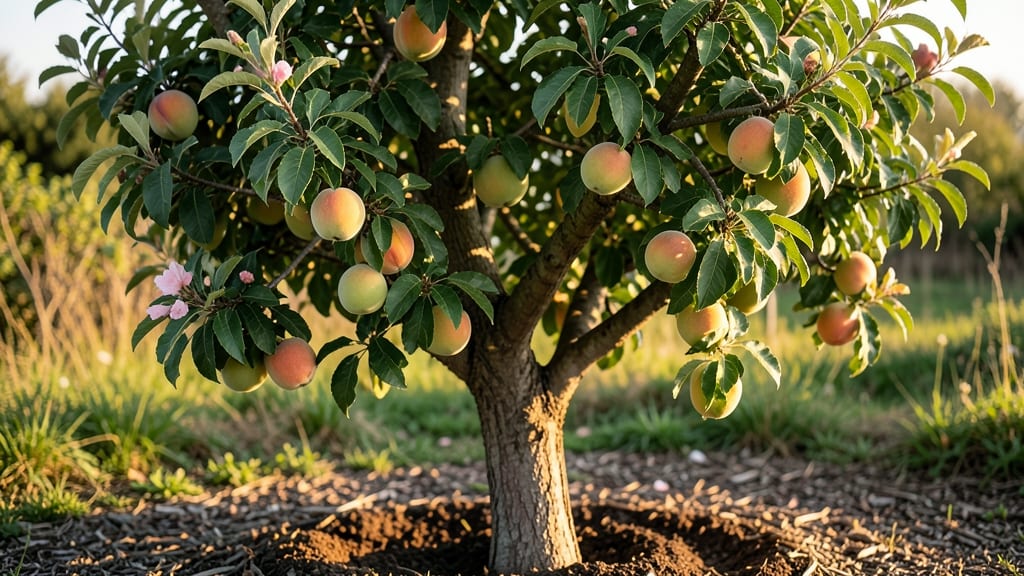
If you're dreaming of a lush 🍑 peach tree in your backyard, one question looms large: how tall will it grow? The answer isn't one-size-fits-all—some varieties stay manageable at just 6-12 feet, while others stretch toward 25 feet like a backyard giant.
The good news? You can choose a size that fits your space perfectly.
Whether you're working with a cozy urban garden or a sprawling rural plot, understanding peach tree height is the key to smart planting. Dwarf varieties are ideal for containers or small yards, while standard trees need room to reach their full potential.
I'll break down the options so you can pick the perfect match for your growing conditions.
Curious about how fast your tree will grow? Most peach trees hit 10-12 feet in just 3 years, but proper pruning can keep them even smaller. The right spacing and care make all the difference—let's explore what works best for your climate and garden layout.
From compact dwarf varieties to towering standard trees, we'll cover everything you need to know. Ready to find the perfect peach tree for your space? Let's get started!

Peach tree height by variety: dwarf, semi-dwarf, and standard sizes explained
If you're dreaming of a backyard peach tree but worried about space, don't fret! The height of a peach tree varies dramatically by variety, from compact dwarf trees perfect for small yards to towering standard varieties that need room to stretch.
Choosing the right size ensures your tree thrives without overwhelming your landscape.
For home gardeners, dwarf peach trees (6–12 feet) are ideal—they fit neatly into patios, containers, or even urban backyards. Semi-dwarf varieties (12–16 feet) strike a balance, while standard peach trees (16–25 feet) are better suited for rural properties or commercial orchards.
Let’s break down the options so you can pick the perfect fit for your space.
🌱 Key Takeaway: Your peach tree’s mature height is the #1 factor in planning its location, pruning needs, and even fruit yield. A 6-foot dwarf might produce just as many peaches as a 20-foot standard—it just depends on care and variety!
| Variety Type | Mature Height | Best For | Fruit Yield | Notes |
|---|---|---|---|---|
| Dwarf | 6–12 ft | Containers, small yards, urban gardens | High (per square foot) | Requires staking; needs regular pruning |
| Semi-Dwarf | 12–16 ft | Medium backyards, patios | Very High | Balanced size; minimal pruning needed |
| Standard | 16–25 ft | Large properties, orchards | High (total volume) | Needs space; pruning essential for shape |
Let’s dive into the specifics. Dwarf peach trees, like the popular 'Bonanza' or 'Redhaven' dwarf varieties, top out at 8–12 feet—perfect for balconies or small gardens. These trees are grafted onto dwarfing rootstock, which restricts their growth while keeping their fruit-bearing capacity intact.
If you’ve ever seen a peach tree in a large pot, it’s likely a dwarf!
For a middle-ground option, semi-dwarf varieties like 'Elberta' or 'Flavor Grenade' reach 12–16 feet at maturity. They’re sturdy enough for most backyards but still manageable with basic pruning. These are my personal favorites for home growers—they offer abundant fruit without requiring a full orchard’s worth of space.
On the other end of the spectrum, standard peach trees (e.g., 'Relenta' or 'Contender') can soar to 20–25 feet, making them better suited for rural settings or commercial orchards.
These trees produce larger fruit yields but need ample room to grow and regular pruning to maintain health and shape. If you’re planting near a fence or power line, a standard tree is a risky choice!
Pro tip: Always check the rootstock type when purchasing. Trees labeled as "dwarf" or "semi-dwarf" are grafted onto specific rootstocks (like Lovell or Halford), which control their height. Avoid "seed-grown" peach trees—they can grow unpredictably tall (often 25+ feet) and may not produce fruit as reliably.
One more thing to consider: growing conditions can influence height. Trees in full sun (6+ hours daily) and well-draining soil grow faster and may reach their mature height sooner. Poor soil or shade can stunt growth, but even then, a dwarf tree will rarely exceed its expected range.
For example, a 'Bonanza' dwarf peach tree in partial shade might stay around 8 feet instead of 10–12 feet.
Ready to pick your perfect peach tree? Measure your space, check the variety’s mature height, and factor in your pruning comfort level. With the right choice, you’ll be harvesting juicy peaches in just 2–3 years—no matter how tall (or short) your tree grows! 🍑
Peach tree height by variety: dwarf, semi-dwarf, and standard sizes explained
When planning your peach tree dream, size matters—especially if you're working with limited space. Peach trees come in three primary height categories: dwarf (6–12 ft), semi-dwarf (12–16 ft), and standard (16–25 ft).
Your choice depends on your garden layout, pruning goals, and whether you're growing for home harvests or commercial orchards. Let’s break down the options so you can pick the perfect fit for your backyard.
Dwarf varieties are the best for small spaces—ideal for urban gardens, containers, or patios. These trees reach maturity in just 3–5 years and produce fruit earlier than their taller counterparts. Semi-dwarf trees strike a balance, offering better fruit production than dwarfs while staying manageable for most homeowners.
Standard trees, meanwhile, are the majestic giants of orchards, requiring ample space but yielding the most fruit per tree.
| Variety Type | Mature Height | Best For | Fruiting Age |
|---|---|---|---|
| Dwarf (e.g., 'Bonanza', 'Redhaven') | 6–12 ft | Containers, small yards, urban gardens | 2–3 years |
| Semi-Dwarf (e.g., 'Elberta', 'J.H. Hale') | 12–16 ft | Home gardens, backyards with space | 3–5 years |
| Standard (e.g., 'Relax', 'Suncrest') | 16–25 ft | Orchards, large properties, commercial farms | 5–7 years |
If you're asking, "How tall will my peach tree grow?" the answer hinges on the rootstock used during grafting. Dwarf trees are grafted onto stunted rootstock like 'Lovell' or 'Nemaguard,' while standard trees use vigorous rootstock like 'Halford' or 'Nemared.'
The rootstock determines not just height but also cold hardiness and disease resistance, so choose wisely based on your climate zone.
For urban gardeners or those with limited space, dwarf varieties like 'Bonanza' or 'Redhaven' are game-changers. These trees can even thrive in large containers (20+ gallons) if given proper care. Just ensure your container has drainage holes and use a high-quality potting mix.
Semi-dwarf trees, like 'Elberta,' are my personal favorites for suburban backyards—they offer better fruit yields without overwhelming your landscape.
Standard trees, while impressive, require 15+ feet of clearance and are best suited for rural properties or commercial orchards. If you're planting near your home, consider the shadow they cast—a mature peach tree can block sunlight for hours, affecting nearby plants.
Always plant at least 15–20 feet away from structures to avoid root conflicts and ensure proper airflow for disease prevention.
Pro tip: If you love the idea of a peach tree but worry about height, start with a dwarf variety and prune aggressively in early years. With the right techniques, you can keep even a standard tree under 12 feet—more on that in the next section! 🪴