
How To
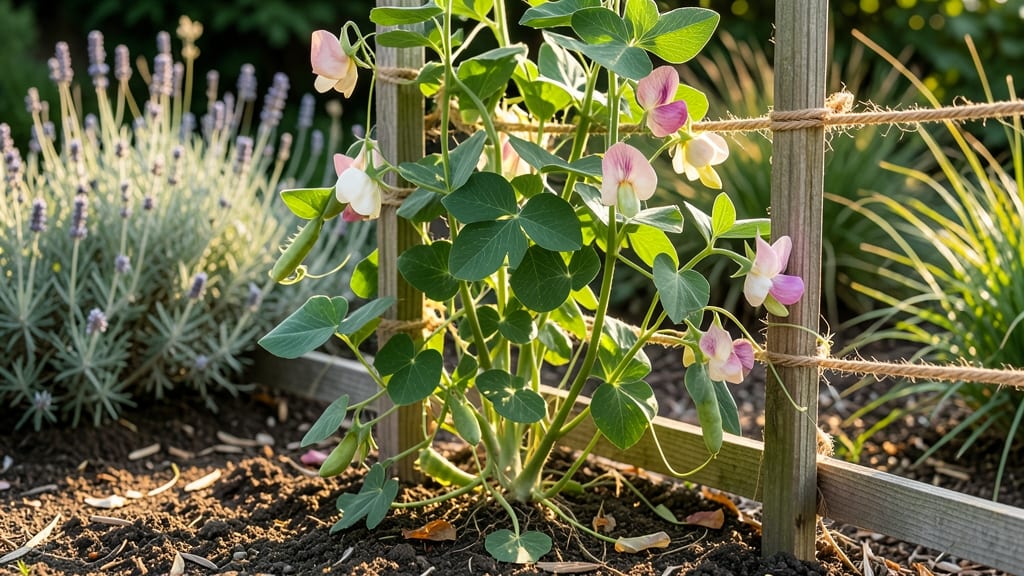
If you’ve ever wondered how tall will sweet peas grow in your garden, the answer might surprise you—these fragrant climbers can reach anywhere from 3 feet to towering heights of 10 feet, depending on the variety and care you provide.
With their delicate 🌸 blooms and sweet scent, sweet peas aren’t just pretty; they’re also some of the most dynamic plants in your garden, especially in USDA Zone 6a where they thrive.
The key to unlocking their full height potential lies in choosing the right variety and giving them proper support. Dwarf varieties stay compact, perfect for small gardens, while climbing types can scramble up trellises or fences, creating a stunning vertical display.
Whether you’re planning a spring garden or dreaming of a fragrant arbor, understanding their growth habits is the first step to success.
But here’s the catch: without the right trellising or pruning, even the tallest varieties can struggle to reach their maximum height.
I’ll show you exactly how to maximize their growth—from selecting the best support structures to maintaining healthy vines—so you can enjoy a garden bursting with color and fragrance from June to August.
Ready to transform your space? Let’s dive into the varieties, support needs, and growth tips that will help your sweet peas climb higher than ever before.

Sweet pea height by variety: dwarf to giant climbers explained
Sweet peas are versatile climbers with heights ranging from compact bush varieties to towering vines that reach 10 feet or more. The difference? Genetics, growing conditions, and—most importantly—support systems.
Without proper trellising, even the tallest varieties may sprawl or flop, limiting their potential. Let’s explore the height spectrum of sweet peas so you can choose the perfect variety for your space.
Most gardeners assume all sweet peas need 6-foot trellises, but that’s not always true. Dwarf varieties like 'Cupani' max out at 3-4 feet, making them ideal for containers or small gardens.
Meanwhile, standard climbers like 'Blue Moon' can easily surpass 8 feet with the right support. Understanding these differences helps you plan your garden layout and avoid overcrowding.
Here’s how sweet pea heights break down by category, including popular cultivars and their growth habits:
| Variety Type | Height Range | Growth Habit | Best For |
|---|---|---|---|
| Dwarf | 2–4 ft | Bushy, no climbing | Containers, borders |
| 'Cupani' | 3–4 ft | Compact, self-supporting | Small gardens, window boxes |
| Semi-Dwarf | 4–6 ft | Moderate climbing | Trellises, fences |
| 'Alaska' | 6–8 ft | Vigorous climber | Arbors, pergolas |
| Standard | 6–10 ft | Tall climber | Tall trellises, walls |
| 'Blue Moon' | 7–9 ft | Long vines, heavy blooms | Vertical gardens, arbors |
| 'Carnegie' | 8–10 ft | Extreme climber | Large trellises, pergolas |
If you’re growing standard climbers, plan for at least 8 feet of vertical space. Varieties like 'Carnegie' can exceed 10 feet if given strong support, while 'Alaska' typically tops out at 6-8 feet.
For container gardening, stick to dwarf or semi-dwarf types to avoid root-bound issues. Remember, height isn’t the only factor—vine strength and bloom density also vary by variety.
Some gardeners overlook the growth habit when selecting sweet peas. For example, 'Blue Moon' produces long, sprawling vines that need wide-spaced supports, while 'Cupani' stays neat and bushy without climbing.
Matching your variety to your garden structure ensures healthier plants and longer flowering seasons. A 6-foot trellis works for most climbers, but tall pergolas are better for varieties like 'Carnegie'.
Did you know? Sweet peas double their height in their second year if given proper care. That means a 4-foot vine in year one could reach 8 feet the following season
How to maximize sweet pea height: support systems & growth tips
Sweet peas thrive when given the right support—without it, their vines sprawl and struggle to reach their full potential. The right trellis or obelisk can push 'Blue Moon' varieties to 9 feet or more, while dwarf types like 'Cupani' only need a 3-foot fence.
Choosing the wrong structure, however, can lead to weak stems or tangled growth. Let’s explore how to set up your sweet peas for towering success.
Start by matching your support height to the variety. Tall climbers like 'Spencer' or 'Chrys' series demand sturdy 8-10 foot trellises, while semi-dwarf types (4-6 feet) can thrive on 5-foot obelisks.
Even dwarf varieties benefit from low wire cages (2-3 feet) to keep vines upright and flowers accessible. The key? Install supports at planting time—sweet peas twine naturally but need guidance early.
Material matters too. Wooden trellises offer durability but may rot over time, while powder-coated metal cages resist rust and last years. For space-saving gardens, consider freestanding obelisks—they’re lightweight, easy to move, and perfect for container growing. Pro tip: Add horizontal wires (every 12 inches) to give vines multiple paths to climb.
| Support Type | Best For Varieties | Height Range | Installation Tip |
|---|---|---|---|
| Trellis (Wood/Metal) | 'Blue Moon', 'Spencer' | 6–10 ft | Sink posts 18" deep |
| Obelisk (Freestanding) | 'Alaska', 'Cupani' | 4–8 ft | Place in full sun |
| Wire Cage (Low) | Dwarf hybrids | 2–4 ft | Use 16-gauge wire |
| Fence (Chain Link) | All varieties | 3–10 ft | Add twine for grip |
Pruning plays a huge role in height control. For taller varieties, pinch back the main stem at 18 inches to encourage bushier growth. Remove side shoots after 3–4 leaves to focus energy upward.
If you’re growing dwarf types, prune sparingly—just trim dead blooms to redirect nutrients. Never prune more than 1/3 of the plant at once, or you’ll shock the vine.
Soil and watering also impact height. Sweet peas need well-draining, slightly acidic soil (pH 6.0–7.0). Amend heavy clay with compost or perlite to prevent root rot, which stunts growth.
Water deeply 2–3 times per week—shallow watering leads to weak stems. Mulch with straw or wood chips to retain moisture and protect roots from temperature swings.
With the right support, pruning, and care, your sweet peas will reach their full height potential. Start with a sturdy trellis or obelisk, train vines weekly, and watch them climb toward the sky—where their fragrant blooms will attract bees and hummingbirds alike. 🌸