
Trees
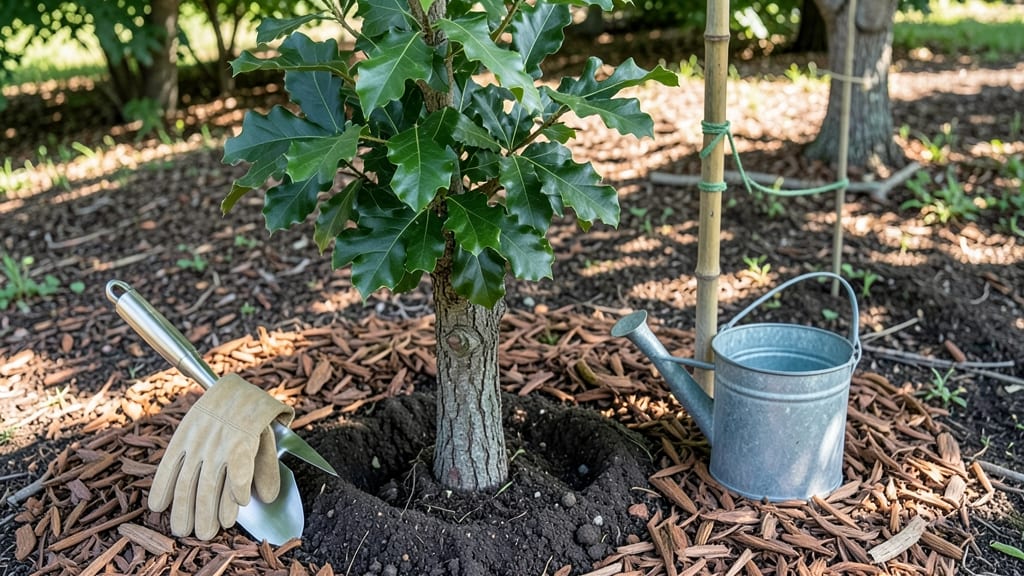
Planting an oak tree in Texas isn’t just about timing—it’s about giving your 🌳 oak tree the best chance to thrive in the Lone Star State’s extreme heat and soil conditions. Get the timing wrong, and you risk stunted growth, disease, or even death.
But choose the right window—like fall or early spring—and you’ll set the stage for a majestic, long-lived tree that becomes a centerpiece of your landscape.
Texas’s 8a-10b climate zones create unique challenges, from North Texas’s cooler winters to West Texas’s scorching summers. That’s why knowing whether to plant in October or February makes all the difference.
I’ll break down the best months for each region, so you can avoid common mistakes and give your oak tree the strong root growth it needs to survive.
Whether you’re planting a young sapling or transplanting a mature tree, the key is preparing the soil and choosing the right species for your area. Live oaks love East Texas’s humidity, while red oaks thrive in Central Texas’s alkaline soil.
I’ll share the critical factors that determine success—so you can skip the guesswork and get it right the first time.
Ready to plant an oak tree that will stand strong for decades? Let’s dive into the best months, soil prep tips, and care strategies tailored to your Texas region. Your future shade tree starts with the right timing.
Best months to plant oak trees in Texas by region (with soil prep tips)
Texas’s diverse climate means the best time to plant oak trees varies by region—from North Texas’s cooler winters to West Texas’s scorching summers. Fall (October-December) and early spring (February-March) are your golden windows, but East Texas’s humidity and West Texas’s drought demand tailored approaches.
Let’s break it down by region so you can plant with confidence.
In North Texas (USDA Zones 7b-8a), aim for November-December to avoid late frosts. The soil stays workable, and cooler temps reduce transplant shock. Central Texas (Zones 8a-9a) gardeners should plant in October-November or February-March, skipping the brutal summer heat.
Meanwhile, East Texas (Zones 8a-9b) benefits from fall planting (September-October) to outpace fungal risks from spring humidity.
West Texas (Zones 8b-10a) presents unique challenges—plant November-January to beat the drought. The key is soil moisture retention; clay soils here dry out fast, so amend with compost or organic matter before planting. Each region’s soil type—whether sandy, clay-heavy, or alkaline—also dictates prep work.
🌳
| Region | Best Planting Months | Soil Type | Prep Tips | Watering Strategy |
|---|---|---|---|---|
| North Texas | Nov-Dec or Feb-Mar | Clay-loam | Add compost; avoid compacting soil | Deep soak weekly (spring/fall) |
| Central Texas | Oct-Nov or Feb-Mar | Caliche (limestone) | Test pH (aim for 6.0-7.5); add gypsum if needed | Bi-weekly deep watering (avoid summer) |
| East Texas | Sep-Oct | Sandy loam | Mulch heavily (3-4 inches); improve drainage | Weekly in spring; reduce in summer |
| West Texas | Nov-Jan | Sandy or alkaline | Amend with peat moss; mulch to retain moisture | Deep water every 2-3 weeks (spring/fall) |
For all regions, avoid planting during Texas’s extreme heat (April-September). Young oak roots struggle to establish in 100°F+ soil, leading to shock or death. Instead, focus on soil aeration and mulching (3-4 inches of wood chips) to regulate temperature.
In East Texas’s humidity, prioritize well-draining soil to prevent root rot, while West Texas’s alkaline soils may need sulfur amendments to lower pH.
Pro tip: Bare-root saplings (not container-grown) handle Texas’s climate best. Their roots adapt faster to local soil conditions. If you must plant container-grown oaks, soak the root ball for 1-2 hours before transplanting to minimize shock.
This is especially critical in Central and West Texas, where drought stress is a year-round threat.
Timing isn’t the only factor—oak species selection also varies by region. Live oaks thrive in East and South Texas, while red oaks prefer North and Central Texas. Pin oaks do well in moist, well-drained soils like those in East Texas. Choose wisely to match your microclimate.
Once planted, monitor soil moisture for the first 2-3 years. Even drought-tolerant oaks need consistent watering during establishment. Use a moisture meter in West Texas to avoid over- or under-watering—the stakes are high in sandy soils.
In humid East Texas, focus on fungus prevention by keeping mulch 3 inches away from the trunk.
Remember: Patience is key. Oak trees grow slowly—expect
Critical factors that determine oak tree planting success in Texas heat
Texas’s scorching summers and unpredictable weather make oak tree planting a delicate balance. Beyond just picking the right month, factors like oak species, root health, and post-planting care can mean the difference between a thriving giant and a struggling sapling.
Let’s break down what truly matters when planting oaks in the Lone Star State.
Choosing the right oak species is your first critical decision. Live oaks (Quercus virginiana) dominate South and East Texas due to their drought tolerance, while red oaks (Quercus rubra) thrive in North Texas’s cooler winters. Pin oaks (Quercus palustris) handle Central Texas’s alkaline soils better.
Matching your tree to your region’s climate isn’t optional—it’s essential for survival.
Oak trees planted in Texas must: Avoiding transplant shock is another battle in Texas’s heat. Even healthy nursery trees struggle when uprooted. Always plant bare-root saplings in fall or early spring—never during summer’s peak (June-August). If you must plant in summer, do it on a cool, cloudy day and keep the root ball moist for 2-3 weeks post-planting. Shade cloth can save young leaves from sunburn during recovery. Recognizing early stress signs is crucial. Watch for yellowing leaves (chlorosis), wilting despite water, or cracked soil around the base—all red flags in Texas’s alkaline soils. Live oaks often show stress as leaf scorch along edges, while red oaks may develop brown patches on foliage. Act fast: prune damaged branches immediately and adjust watering (never let them dry out completely). Post-planting care in Texas’s summers isn’t just about watering—it’s about soil health. Amend clay-heavy soils (common in East Texas) with compost or gypsum to improve drainage, while sandy soils (West Texas) benefit from organic matter to retain moisture. A 3-inch layer of mulch (wood chips or pine straw) locks in moisture and regulates root-zone temperatures—critical when afternoon temps hit 100°F+. Timing isn’t everything, but these factors are non-negotiable. Even the best planting month fails if you ignore root flare exposure, water deeply but infrequently, and monitor for stress. Texas oaks reward patience—give yours the care it deserves, and you’ll have a century-old shade provider in your landscape. 🌳Key Takeaway