
Trees
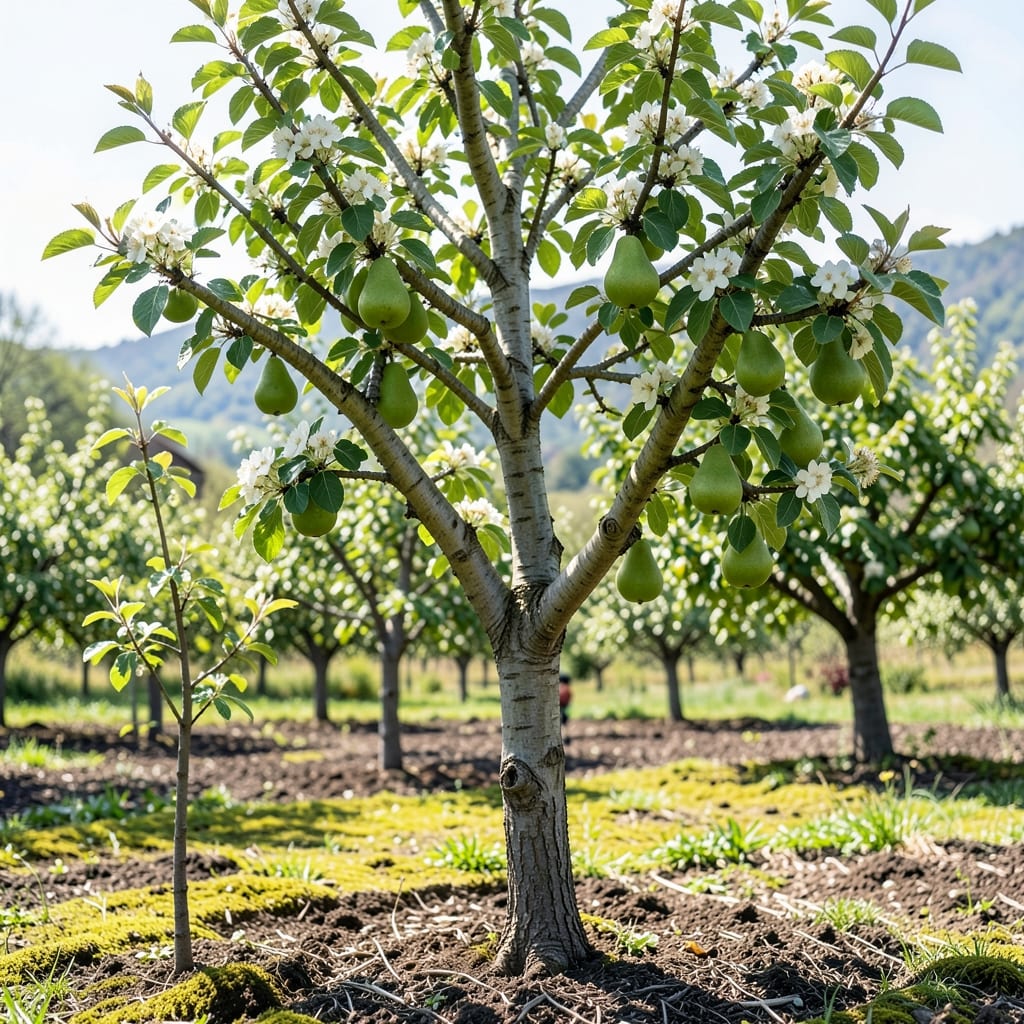
If you're dreaming of a backyard bursting with fresh 🍐 pears but worried about space, how tall can a pear tree grow could be the deciding factor for your dream garden. A standard pear tree can soar up to 50 feet—taller than a three-story house—while dwarf varieties stay compact at just 8-12 feet. The good news? With the right variety and pruning, you can grow pears in even the smallest yards without sacrificing fruit quality.
Choosing the perfect pear tree depends on your space and goals. Dwarf trees like 'Hood' or 'Moonglow' are ideal for containers or tight spots, while semi-dwarf varieties strike a balance for medium-sized gardens. But here's the key: even standard trees can be managed with strategic pruning to keep them under control. Let me show you how to pick the right size and shape for your garden.
Beyond variety, factors like soil quality, sunlight, and pruning techniques play a huge role in how tall your pear tree grows. In USDA Zone 6a, where spring planting is ideal, proper care can help your tree reach its full potential—or stay small enough for easy harvesting. Whether you're a first-time gardener or a seasoned pro, these insights will help you grow pears that fit your space perfectly.
Ready to turn your backyard into a pear paradise? We'll cover the best varieties for small spaces, pruning tips to control height, and even how to train your tree along a fence or wall. Let's get started!


Pear tree height by variety: dwarf to standard sizes explained
When planning your pear orchard—or even just one tree—understanding mature heights is critical. A standard pear tree can reach 30-50 feet, towering over your house, while dwarf varieties stay between 8-12 feet. The difference comes down to rootstock: dwarf trees are grafted onto stunted root systems, while standard trees grow on their own roots.
For most home gardeners, semi-dwarf varieties (12-18 feet) offer the best balance—tall enough for good fruit production but manageable with basic pruning. If space is tight, container-friendly dwarfs like 'Hood' or 'Moonglow' are game-changers, fitting perfectly in small yards or even large pots.
Here’s the key: spacing matters. A 20-foot standard pear tree needs 20-25 feet of clearance in all directions, while a 10-foot dwarf only requires 8-10 feet. Poor spacing leads to crowded branches, reduced airflow, and disease risks like fire blight.
Now, let’s break down the most popular varieties by height category—so you can pick the perfect fit for your space.
If you’re eyeing a standard pear tree for its classic look, consider planting it at the edge of your property where it won’t block sunlight or pathways. For example, the 'Bosc' pear, a standard variety, can grow up to 40 feet but produces large, flavorful pears worth the space.
For urban gardeners, dwarf varieties like 'Hood' (a fire blight-resistant choice) thrive in 5-gallon containers and can be moved seasonally. Just ensure the pot has drainage holes and you use well-draining potting mix to prevent root rot.
One common mistake? Underestimating wind exposure. Tall pear trees need protection from strong winds, which can snap branches. If you’re in a windy area, opt for a semi-dwarf or use staking for young trees until their roots establish.
Remember, height isn’t set in stone. With regular pruning, even a standard tree can be kept 10-15 feet tall—ideal for picking fresh pears from your kitchen window. We’ll dive deeper into pruning techniques in the next section to help you shape your tree just right.
Pruning techniques to control pear tree height in small gardens
If you’ve chosen a standard pear tree but need to keep it manageable, pruning is your best friend. The right cuts not only control height but also boost fruit production by improving airflow and sunlight penetration. For small gardens, aim to prune in late winter or early spring before new growth begins—this is when your tree is dormant but ready to respond to shaping.
Start with crown thinning, which removes dead or crossing branches from the center of the tree. This opens up the canopy, letting sunlight reach lower branches where most fruit develops. For height control, focus on heading back—cutting the tips of vertical shoots to encourage bushier growth. This technique works wonders for standard varieties like 'Bosc' or 'Seckel', keeping them under 15 feet even if they’re grafted on vigorous rootstock.
Here’s a step-by-step guide to pruning for height control, tailored for home gardeners with limited space:
- Step 1: Remove dead/diseased branches first—cut back to the main trunk or healthy bud.
- Step 2: Thin the canopy by removing 1/3 of dense branches to improve airflow.
- Step 3: Head back vertical shoots to 1/3 their length to encourage horizontal growth.
- Step 4: Prune water sprouts (fast-growing vertical shoots) to prevent height spikes.
- Step 5: Shape the outer form by trimming longest branches to create a balanced silhouette.
For ultra-compact spaces, consider espalier training, where you grow the tree flat against a fence or wall. This method keeps the tree under 6 feet tall while maximizing fruit production. Use horizontal branches trained along wires or trellises—ideal for dwarf varieties like 'Moonglow' or 'Hood'. Just remember: espalier requires regular pruning to maintain the flat shape.
One common pruning mistake is cutting too much at once, which can stress the tree and reduce fruit yield. Never remove more than 25% of the canopy in a single session. Also, avoid pruning in fall, as this can encourage new growth that won’t harden off before winter, making it vulnerable to cold damage.
With consistent pruning, even a 20-foot standard pear tree can be shaped into a 10-foot beauty—perfect for small backyards or urban gardens. Pair these techniques with proper spacing (as discussed earlier), and you’ll enjoy abundant pears without sacrificing your garden’s layout. Next, we’ll explore the best dwarf varieties for containers and tight spaces—ideal if you’re short on room but long on ambition!