
Trees
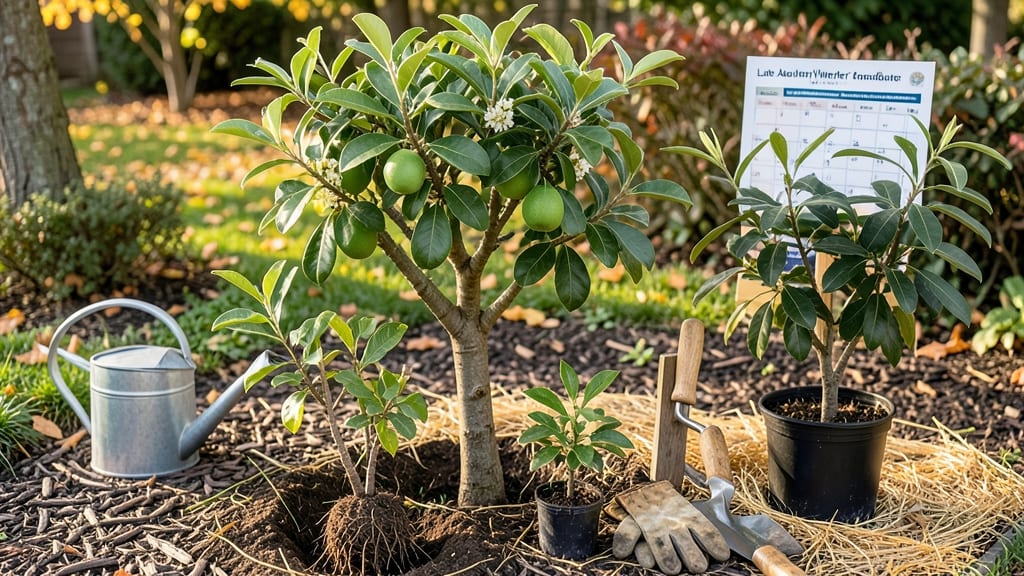
Planting fruit trees at the wrong time in New Zealand can mean years of disappointment—or no fruit at all. The North Island’s warmer winters and the South Island’s colder climate create wildly different planting windows, and getting it wrong means your tree might never bloom.
But with the right timing, you can ensure reliable harvests from apples to citrus.
I’ve seen gardeners in Auckland rush to plant in autumn only to watch their trees struggle, while those in Canterbury wait too long in spring and miss the ideal window. The key isn’t just the calendar—it’s understanding chill-hour requirements for each variety.
A peach tree in Northland needs far fewer cold hours than an apple tree in Otago, and mixing them up guarantees poor results.
This guide breaks down the exact months to plant based on your region, so you can match varieties to your local climate with confidence. Whether you’re working with bare-root saplings or container-grown trees, timing is everything. Let’s get your orchard off to the best start possible.
From frost-free Northland to the chilly slopes of the South Island, we’ll cover everything you need to know—so you can enjoy that first harvest without the guesswork. Ready to plant with precision?
Best planting times for fruit trees by New Zealand region and chill-hour requirements
New Zealand’s climate varies dramatically from the subtropical Northland to the cooler South Island, making timing critical for fruit tree success. Chill-hours—the number of hours below 7°C (45°F)—determine whether trees bloom and fruit.
In warm northern regions, low-chill varieties thrive, while cooler southern areas need high-chill apples or pears. Planting outside these windows risks poor fruit set or no harvest at all.
For bare-root trees, the best time is late winter to early spring (July–September) when soil is workable but frost risk is low. Container-grown trees can be planted year-round, but spring remains ideal for root establishment. Always check your region’s average frost dates—NIWA’s climate maps are a great resource.
Northland and Auckland (chill-hours: 200–500) should focus on subtropical varieties like loquats or citrus, planted in spring (September–November) to avoid summer heat stress. Meanwhile, Canterbury and Otago (chill-hours: 800–1,200) need high-chill apples or pears, planted in autumn (March–May) for winter dormancy.
| Region | Chill-Hours | Best Planting Window | Ideal Varieties |
|---|---|---|---|
| Northland | 200–500 | Sep–Nov | Loquat, Citrus, Feijoa |
| Auckland | 300–600 | Aug–Oct | Apple (Gala), Pear, Nectarine |
| Wellington | 600–900 | Mar–May | Apple (Braeburn), Cherry, Plum |
| Canterbury | 800–1,200 | Mar–Apr | Apple (Granny Smith), Pear, Apricot |
| Southland | 1,000–1,400 | Feb–Mar | Cherry, Plum, High-Chill Apple |
🌱 Note: Adjust for microclimates (e.g., frost pockets or sheltered valleys).
In Wellington (chill-hours: 600–900), partial-chill varieties like Gala apples or plums work well, planted in March–May to avoid late frosts. For stone fruits (peaches, nectarines), aim for April–May planting—they need 500–800 chill-hours and suffer if planted too early.
Microclimates matter! A sheltered valley in Southland might support low-chill varieties despite high average chill-hours, while a frost-prone hilltop in Canterbury could fail even high-chill trees. Use NIWA’s frost maps to spot risky areas, and plant windbreaks if needed.
Soil warmth is just as critical as chill-hours. Test soil temperature—it should be above 10°C (50°F) before planting. In cooler regions, use black plastic mulch to warm roots faster. For container planting, choose dwarf varieties and plant in late spring (November) to extend the growing season.
Always match rootstock to your climate. Malling 9 (dwarfing rootstock) thrives in warm regions, while MM111 handles cold winters better. Check with local nurseries like Plant & Food Research for region-specific recommendations.
Finally, prune lightly at planting to reduce transplant shock
How to match fruit tree varieties to your local chill-hours for guaranteed fruit set
New Zealand’s diverse microclimates mean a peach tree thriving in Northland might fail to fruit in Canterbury. The secret? Matching your chill-hour requirements to your region’s winter cold accumulation.
For example, high-chill varieties like 'Braeburn' apples need 800+ chill hours, while low-chill varieties like 'Anna' apples manage with just 300-400 chill hours. This simple step ensures your tree blooms reliably and produces fruit every season.
Start by checking your region’s average chill hours—available from NIWA or your local council. For instance, Auckland typically gets 400-600 chill hours, while Nelson averages 600-800 chill hours.
If you’re in a warmer zone, avoid high-chill varieties like 'Granny Smith' apples (which need 1,000+ chill hours) and opt for low-chill stone fruits like 'Redhaven' peaches (around 500 chill hours).
Here’s how to select the right varieties for your garden:
| Fruit Type | Chill-Hour Range | Best NZ Regions | Recommended Varieties |
|---|---|---|---|
| Apples | 300-400 | Northland, Bay of Plenty | 'Anna', 'Dorsett Golden' |
| Apples | 600-800 | Wellington, Nelson | 'Braeburn', 'Gala' |
| Peaches/Nectarines | 400-600 | Auckland, Hawke’s Bay | 'Redhaven', 'Suncrest' |
| Plums | 500-700 | Canterbury, Otago | 'Santa Rosa', 'Methley' |
| Citrus (e.g., Oranges) | 0-200 | Northland, Bay of Plenty | 'Navel', 'Valencia' |
If you’re unsure about your local chill hours, consider planting multiple varieties to cover different chill ranges. For example, pair a low-chill peach with a medium-chill plum to hedge your bets.
You can also source grafts from NZ nurseries like Orchard & Vine or Plant & Food Research, which specialize in chill-hour-matched varieties for NZ gardens.
For container-grown trees, chill-hour requirements can shift slightly due to urban heat islands. If you’re growing in pots, choose varieties with 100-200 fewer chill hours than your region’s average.
For example, a 'Fuji' apple (typically 800 chill hours) might struggle in a potted setup in Auckland, but a 'Golden Delicious' (around 600 chill hours) could thrive.
Pro tip: Monitor your tree’s buds in late winter. If they’re brown and shriveled instead of plump and firm, your tree isn’t getting enough chill hours. In this case, consider relocating the tree to a cooler microclimate or switching to a low-chill variety next planting season.
With the right match, you’ll enjoy reliable fruit set and bountiful harvests for years to come. 🌳