
Trees
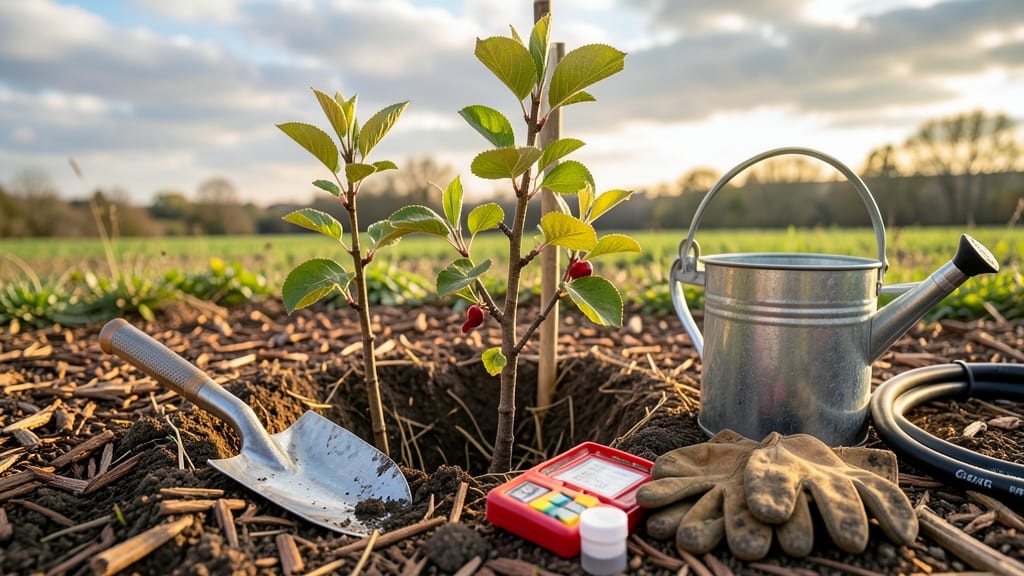
Timing your fruit tree planting in Washington can make all the difference between a thriving orchard and a frozen disappointment. With 5 distinct chill hour zones and varying frost patterns across the state, knowing when to plant isn't just helpful—it's essential for survival.
Whether you're in the rainy Puget Sound or the drier Columbia Basin, getting those roots in the ground at the right moment ensures your trees will flourish.
Most gardeners assume spring is the only window, but Washington's microclimates mean you might need to adjust your schedule by weeks—or even months.
I've seen firsthand how a misjudged planting date can leave trees vulnerable to late frosts, so let me show you the exact windows that work best for each region. You'll learn which varieties thrive in your specific zone and when soil temperatures are just right for planting.
From Honeycrisp apples in the West to Rainier cherries in Eastern Washington, the right timing depends on more than just the calendar. We'll cover how to read your local frost-free deadlines and prepare your soil for maximum success.
By the end, you'll have a clear roadmap to planting fruit trees that grow strong, bear fruit, and last for decades.
Don't let another planting season slip by without the confidence to get it right. Whether you're a first-time gardener or a seasoned orchardist, these insights will help you avoid common mistakes and set your fruit trees up for success from day one.
Let's get those trees in the ground the smart way.
Washington’s chill hour zones: matching fruit trees to your location
Washington’s diverse climate means not all fruit trees thrive everywhere. The state spans 5 chill hour zones, ranging from 200 to 1,200 hours of winter chill below 45°F. This chill requirement determines which fruit trees will fruit successfully in your area.
For example, apples need 500–1,000 chill hours, while peaches require 300–600 hours. Choosing the wrong variety could mean blooms but no fruit—or worse, a tree that struggles to survive.
Let’s break down the zones and the best fruit trees for each. Western Washington (Seattle area) typically falls into zones 7–8, with 300–600 chill hours, while Eastern Washington (Spokane/Yakima) sits in zones 4–6, with 600–1,200 chill hours.
Central Washington’s Columbia Basin can even hit 1,000+ chill hours, making it ideal for cold-hardy varieties like Tart cherries or Sour cherries.
Why chill hours matter: Fruit trees need this cold period to break dormancy and set buds for spring blooms. Without enough chill, trees may bloom late, get frost-damaged, or fail to produce fruit altogether. For instance, a ‘Honeycrisp’ apple tree planted in Zone 7 (Seattle) will thrive, but the same tree in Zone 4 (Spokane) might struggle—unless you choose a low-chill variety like ‘Enterprise’ apple.
Here’s how to match your location to the right trees using chill hour data from Washington State University Extension:
| Zone | Chill Hours | Best Fruit Trees | Notes |
|---|---|---|---|
| Zone 4–5 | 1,000–1,200 | Tart cherries, Sour cherries, ‘Zestar!’ apples, ‘Montmorency’ plums | Cold-hardy; ideal for Eastern WA (Spokane, Wenatchee). |
| Zone 6 | 600–900 | Sweet cherries, ‘Enterprise’ apples, ‘Lapins’ peaches, ‘Harvest Gold’ pears | Works for Central WA (Yakima, Wenatchee). Avoid low-chill varieties. |
| Zone 7 | 300–600 | ‘Honeycrisp’ apples, ‘Rainier’ cherries, ‘Redhaven’ peaches, ‘Bartlett’ pears | Perfect for Western WA (Seattle, Olympia). Needs winter protection if chill drops below 300. |
| Zone 8–9 | 200–400 | ‘Anna’ apples, ‘Satsuma’ plums, ‘Elberta’ peaches, Fig trees | Low-chill varieties only. Risk of frost damage in spring blooms. |
If you’re unsure about your chill hours, check Washington State University’s AgWeatherNet or use a chill hour calculator from local nurseries. For example, ‘Honeycrisp’ apples need 500–800 chill hours, so they’re a great fit for Zone 6–7 but risky in Zone 8.
Meanwhile, ‘Enterprise’ apples thrive in Zone 4–7 with just 300–600 chill hours, making them versatile.
Pro tip: Dwarf or semi-dwarf trees are ideal for Washington’s smaller home orchards. They mature faster and require less space, but still need the same chill hours as standard trees.
For example, a dwarf ‘Gala’ apple tree will fruit in 3–4 years compared to 6–8 years for a standard tree—perfect for impatient gardeners!
Once you’ve matched your zone to the right trees, the next step is timing your planting to avoid late frosts and ensure root establishment before winter. We’ll cover that in the next section, including region-specific frost-free deadlines for Western, Eastern, and Central Washington.
🌱
Frost-free deadlines by region: when to plant for maximum survival
Washington’s diverse climate means frost-free deadlines vary dramatically from Seattle’s coastal mildness to Spokane’s harsh winters. Timing your planting right ensures your young trees survive their first critical winter.
For Western Washington (Seattle, Olympia), aim to plant between late March and mid-April, when soil temperatures hit 50°F (10°C) and frost risk drops below 10%.
In Eastern Washington (Spokane, Wenatchee), wait until mid-April to early May—after the last frost date, which can be as late as May 15 in colder zones.
Central Washington (Yakima, Wenatchee) has a shorter window—plant between April 15 and May 1—because nights remain chilly longer. Always check your local USDA Plant Hardiness Zone (Washington ranges from Zone 6 to Zone 9) and microclimates (e.g., urban heat islands or valley bottoms).
For example, Pullman’s Zone 7 allows earlier planting than Mount Vernon’s Zone 8, even though they’re only 100 miles apart.
🌱
- 🌿 Western WA (Seattle, Olympia): Late March–Mid-April (soil 50°F, frost risk <10%)
- 🌿 Central WA (Yakima, Wenatchee): April 15–May 1 (avoid late frosts)
- 🌿 Eastern WA (Spokane, Pullman): Mid-April–Early May (wait for Zone 6 thaw)
- ⚠️ Microclimates: Urban areas plant 1–2 weeks earlier than rural zones
- ✅ Soil Test First: Aim for pH 6.0–7.0 before planting
If you’re in a high-elevation area (e.g., Mount Rainier foothills), delay planting until after May 10—these zones often see late spring frosts that can kill young trees.
For container-grown trees, you can plant 2–3 weeks earlier since they establish faster. Just ensure containers are buried halfway to stabilize roots and protect against wind.
Pro tip: Use a frost cloth for the first 2–3 weeks after planting to shield young trees from unexpected cold snaps. Pair this with mulching (4–6 inches of wood chips) to insulate roots.
In Eastern Washington, where winters are colder, add an extra layer of straw mulch around the base to prevent root heaving during freeze-thaw cycles.
For bare-root trees (cheaper but more delicate), plant them as soon as they arrive in early spring—they’ll establish roots before summer heat arrives. Container-grown trees are more flexible; you can plant them up to June 1 in most of Washington, but avoid planting after July 15 to allow roots to harden off before winter.
🌡️ Always double-check your local agricultural extension office for last frost dates—they update annually based on climate trends. For example, Seattle’s last frost has shifted from April 15 to April 1 over the past decade due to warming.
Staying ahead of these shifts ensures your orchard thrives for decades.