
Trees
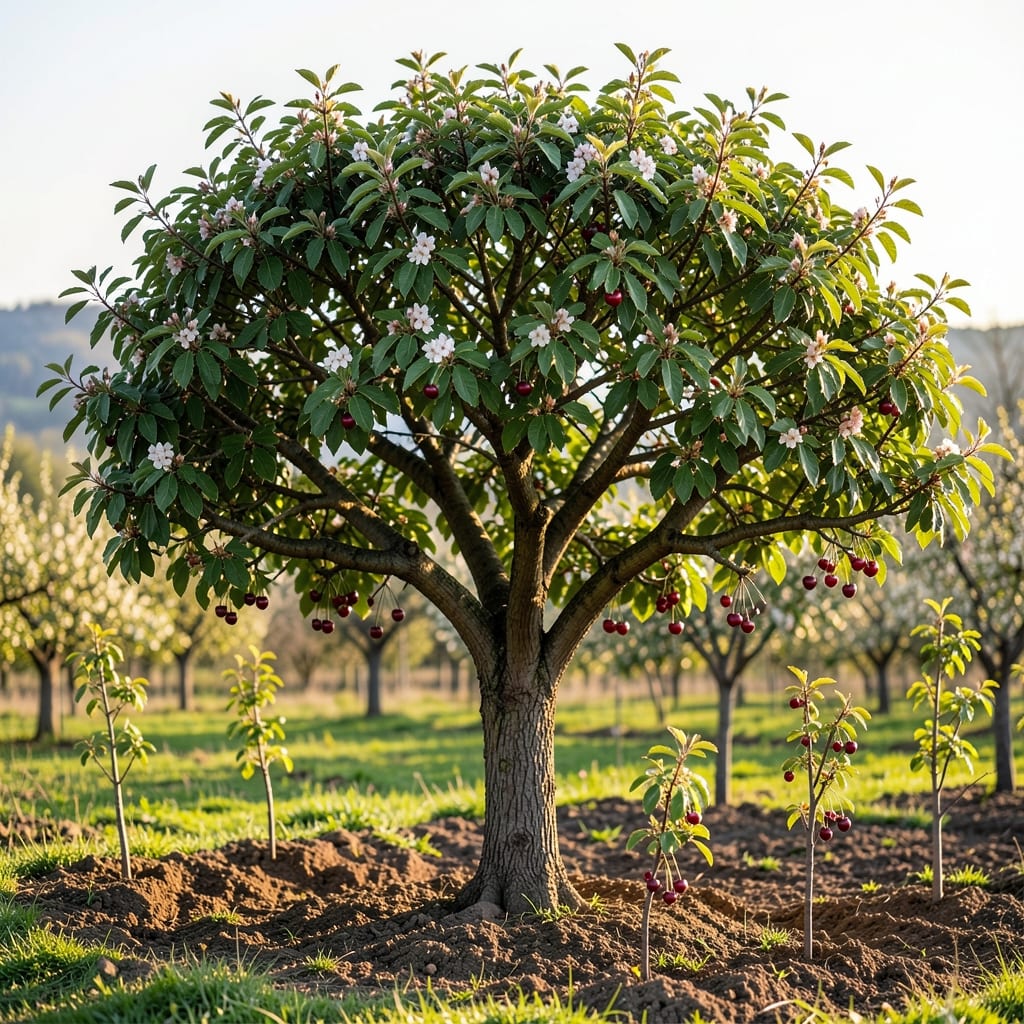
If you’ve ever dreamed of plucking fresh 🍒 cherries straight from your backyard—or just want to know how much space to leave for that towering tree—understanding how tall cherry trees grow is your first step. The truth? Your cherry tree’s future height depends more on its variety than your wishful thinking.
Picture this: a dwarf sweet cherry barely reaches your shoulders at 8–12 feet, while a wild black cherry could stretch taller than a telephone pole at 60–100 feet. That’s a 12-foot difference in just a few species! For home gardeners in USDA Zone 6a, choosing the right type isn’t just about aesthetics—it’s about whether your tree fits your yard, thrives in your climate, and actually produces fruit you can enjoy.
But here’s the kicker: even within the same category (like semi-dwarf or standard trees), growth rates vary wildly. A semi-dwarf might grow 12–18 feet in ideal conditions, while a neglected standard variety could lag behind—or shoot up unexpectedly. Pruning, soil, and sunlight play huge roles, and I’ll show you exactly how to steer your tree’s growth in the right direction.
Ready to pick the perfect cherry tree for your space? Let’s break down the heights, growth habits, and pro tips to keep your 🍒 tree at the size you want—without sacrificing those juicy summer rewards.


Cherry tree height by variety: dwarf to giant growth ranges explained
Cherry trees aren’t one-size-fits-all—they range from dwarf varieties that fit cozy backyards to giant black cherries that dwarf telephone poles. The variety you choose directly impacts your tree’s mature height, spacing needs, and even fruit production. For example, a Stella® sweet cherry stays neatly at 8–10 feet, while a wild black cherry can soar to 60–100 feet in the wild. Knowing these differences helps you avoid planting a 40-foot tree in your suburban yard—or missing out on fruit because you picked the wrong size.
Most cherry trees fall into three height categories: dwarf (8–12 feet), semi-dwarf (12–18 feet), and standard (20–40 feet). But even within these groups, growth habits vary. A semi-dwarf Bing cherry might top out at 15 feet, while a standard Montmorency tart cherry could reach 25 feet. Ornamental varieties like the Weeping Cherry add drama with their 15–25 foot cascading branches, perfect for focal points in larger gardens.
Here’s the key: dwarf and semi-dwarf varieties are bred for home gardens, offering easier harvesting and less pruning. Standard varieties, while impressive, need ample space (at least 20–30 feet between trees) and professional pruning to manage their size. If you’re in an urban area or small lot, dwarf or columnar cherries (like ‘Compact Stella’) are your best bet—they produce fruit without the space demands.
🌱
| Variety Type | Mature Height | Growth Rate (Annual) | Ideal Spacing | Best For |
|---|---|---|---|---|
| Dwarf Sweet Cherry (e.g., Stella®, Compact Stella) | 8–12 ft | 12–24 in | 10–15 ft apart | Containers, small yards |
| Semi-Dwarf Tart Cherry (e.g., Montmorency, Meteor) | 12–18 ft | 24–36 in | 15–20 ft apart | Home orchards, medium yards |
| Standard Sweet Cherry (e.g., Bing, Rainier) | 20–30 ft | 3–5 ft | 30–40 ft apart | Large properties, orchards |
| Ornamental Cherry (e.g., Weeping Cherry, Kwanzan) | 15–25 ft | 2–4 ft | 20–30 ft apart | Landscaping, focal points |
| Wild Black Cherry (Prunus serotina) | 60–100 ft | 4–6 ft | 50+ ft apart (wild) | Wild forests, large estates |
Sweet cherries (Prunus avium) tend to be taller than tart cherries (Prunus cerasus), with standard varieties often reaching 25–30 feet. Tart cherries, like the Montmorency, are more compact, making them ideal for smaller orchards. If you’re growing cherries for fruit production, prioritize dwarf or semi-dwarf varieties—they bear fruit earlier and more reliably than their taller counterparts.
Ornamental cherries, like the Kwanzan cherry or <
How fast do cherry trees grow? Annual height increases by type
Your cherry tree’s annual growth rate is just as important as its mature height—especially if you’re planning a home orchard or small-space garden. On average, dwarf cherry trees add 12–24 inches per year, while standard varieties can shoot up 2–4 feet annually under ideal conditions. That means a 10-foot dwarf might reach maturity in 5–7 years, while a 30-foot standard could take 15–20 years to fully develop.
Growth isn’t linear, though. Young cherry trees often experience rapid vertical spikes in their first 3–5 years, especially if planted in rich, well-draining soil with full sun. After that, growth slows as the tree focuses on fruit production and root expansion. For example, a Stella® sweet cherry (a popular dwarf) might grow 18 inches in Year 1, 2 feet in Year 2, and only 12 inches in Year 3 as it matures.
But here’s the catch: environmental factors can drastically alter these numbers. A semi-dwarf Bing cherry in USDA Zone 6a might grow 3 feet per year with perfect care, but the same tree in poor soil or partial shade could barely reach 1 foot annually. That’s why I always recommend testing your soil’s pH (6.0–7.0 ideal) and amending it with compost or organic matter before planting.
- 1️⃣ Dwarf varieties: 12–24" per year (e.g., Stella®, Lapins)
- 2️⃣ Semi-dwarf varieties: 2–3 feet per year (e.g., Montmorency, Meteor)
- 3️⃣ Standard varieties: 2–4 feet per year (e.g., Bing, Rainier)
- 4️⃣ Ornamental varieties: 1–2 feet per year (e.g., 'Black Tartarian', 'Okame')
Sunlight is another game-changer. Cherry trees thrive with 6+ hours of direct sun daily, but even partial shade can reduce growth by 30–50%. I once had a Stella cherry in a west-facing spot that grew 2 feet in Year 1, but moving it to full south sun doubled its growth in Year 2. If your yard has limited sun, opt for ornamental cherries like 'Kanzan', which tolerate partial shade better than fruiting varieties.
Pruning also plays a role in vertical growth. If you over-prune in early years, your tree may focus on leafy growth instead of height. My rule? Prune lightly in Year 1–2 (just to shape) and avoid heavy cuts until the tree is 3–5 feet tall. For fast vertical growth, remove competing branches and suckers at the base—this redirects energy upward. Just don’t go overboard, or you’ll sacrifice fruit production later.
Finally, climate matters. In warmer zones (7b+), cherry trees grow faster but may bloom too early, risking frost damage. In cooler zones (5a–6a), growth slows until spring temperatures stabilize. If you’re in a short-season area, choose early-blooming varieties like 'Lapins' or 'Sweetheart'—they mature faster and produce fruit sooner. For longer growing seasons, standard varieties like 'Bing' will stretch taller but take longer to bear fruit.